
Red Oases and Green Mountains: A Week in the Algerian Sahara from Timimoun to Assekrem
16–22 September 2024 · Adrar, Timimoun, El Menia (El Golea), Tamanrasset, Assekrem, Algiers · Regions: Algeria (Gourara, El Menia, Hoggar)
Fresh from the road trip from Monaco to Andorra, I flew out of Barcelona in mid-September 2024 with an unusual name on my boarding pass: Adrar, deep in the Algerian Sahara. The plan was one week in the desert, the first days with a group of friends, then alone all the way down to Tamanrasset and the Hoggar mountains. As a country collector I also had two more big white spots on my map of Africa to fill. Internet, I warned everyone, would be patchy.
Into the Sahara at Adrar
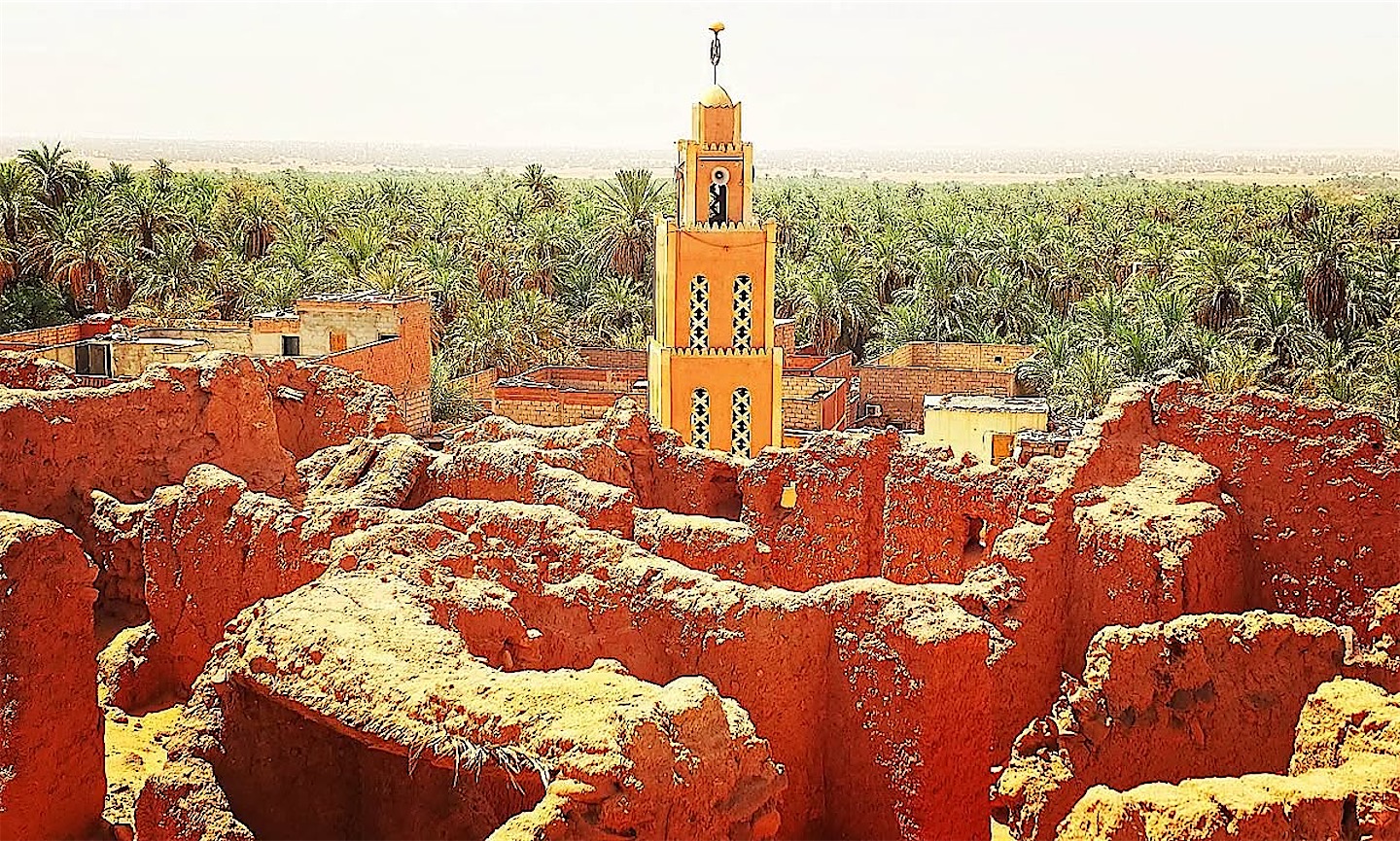
We started our desert trip in Adrar, a tidy town of red-painted buildings and the gateway to the oases of the southwest, and drove north-east towards Timimoun. The first small Sahara town on the way set the tone: crumbling walls of red mud, a slender minaret and a sea of date palms.
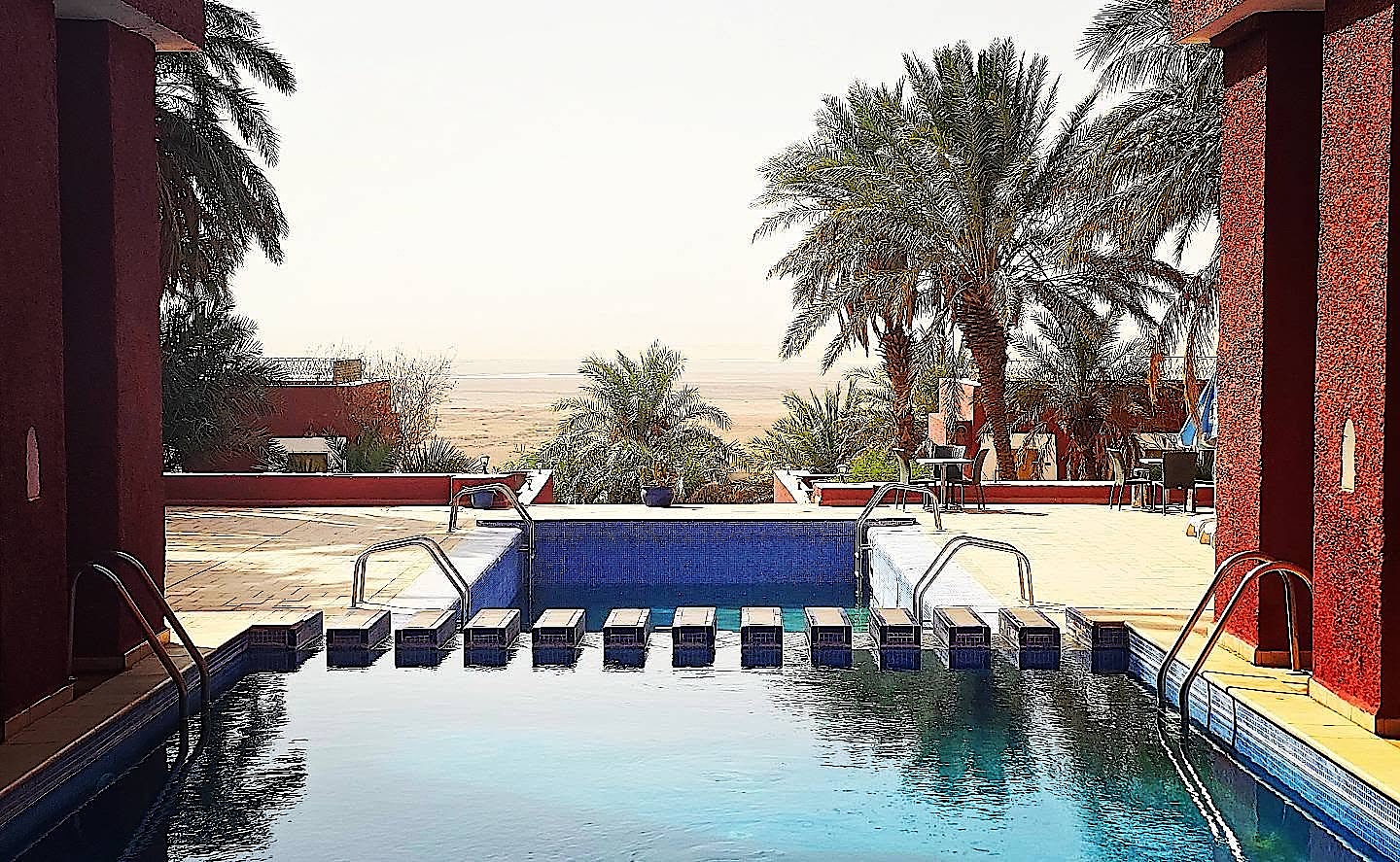
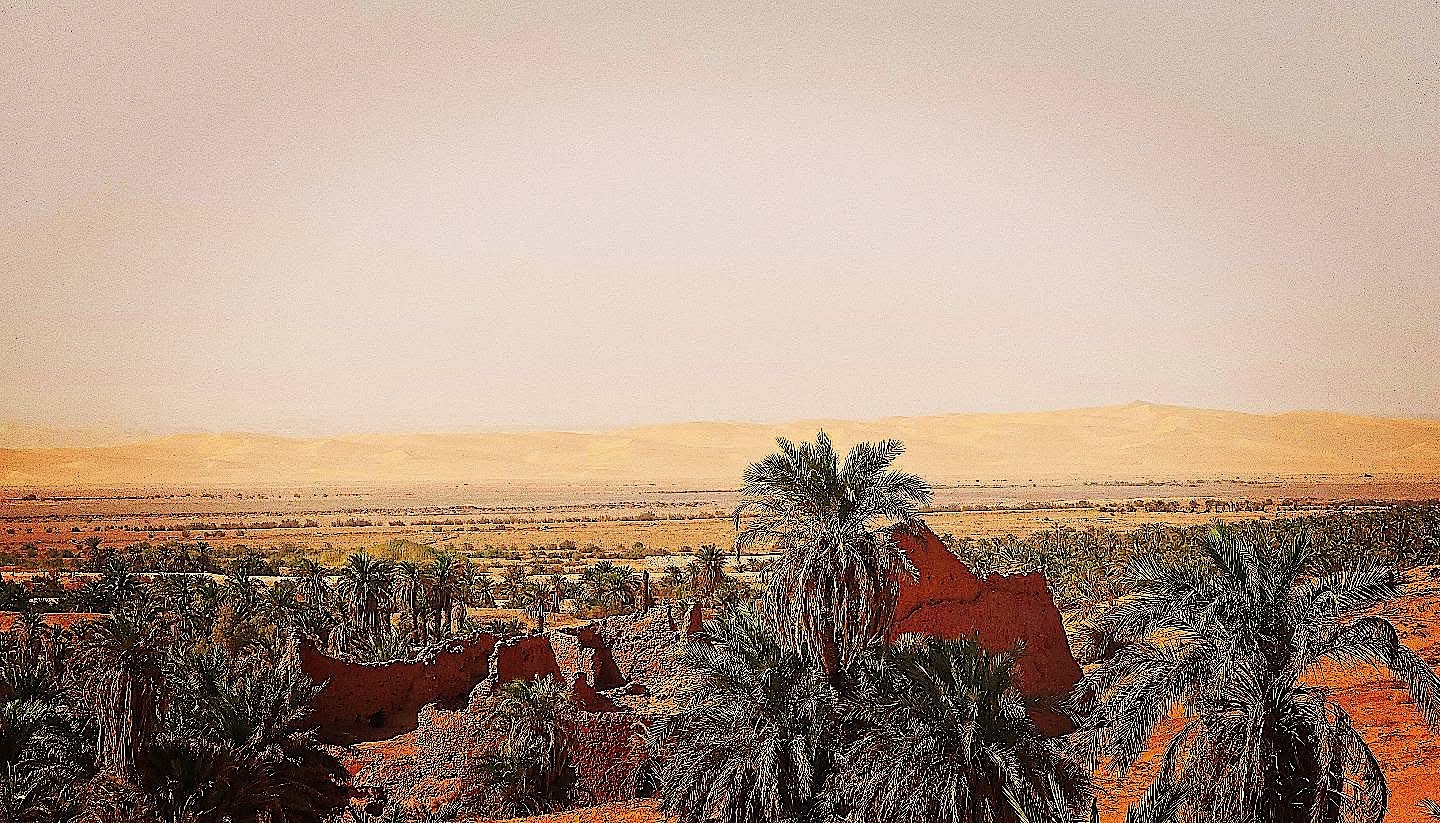
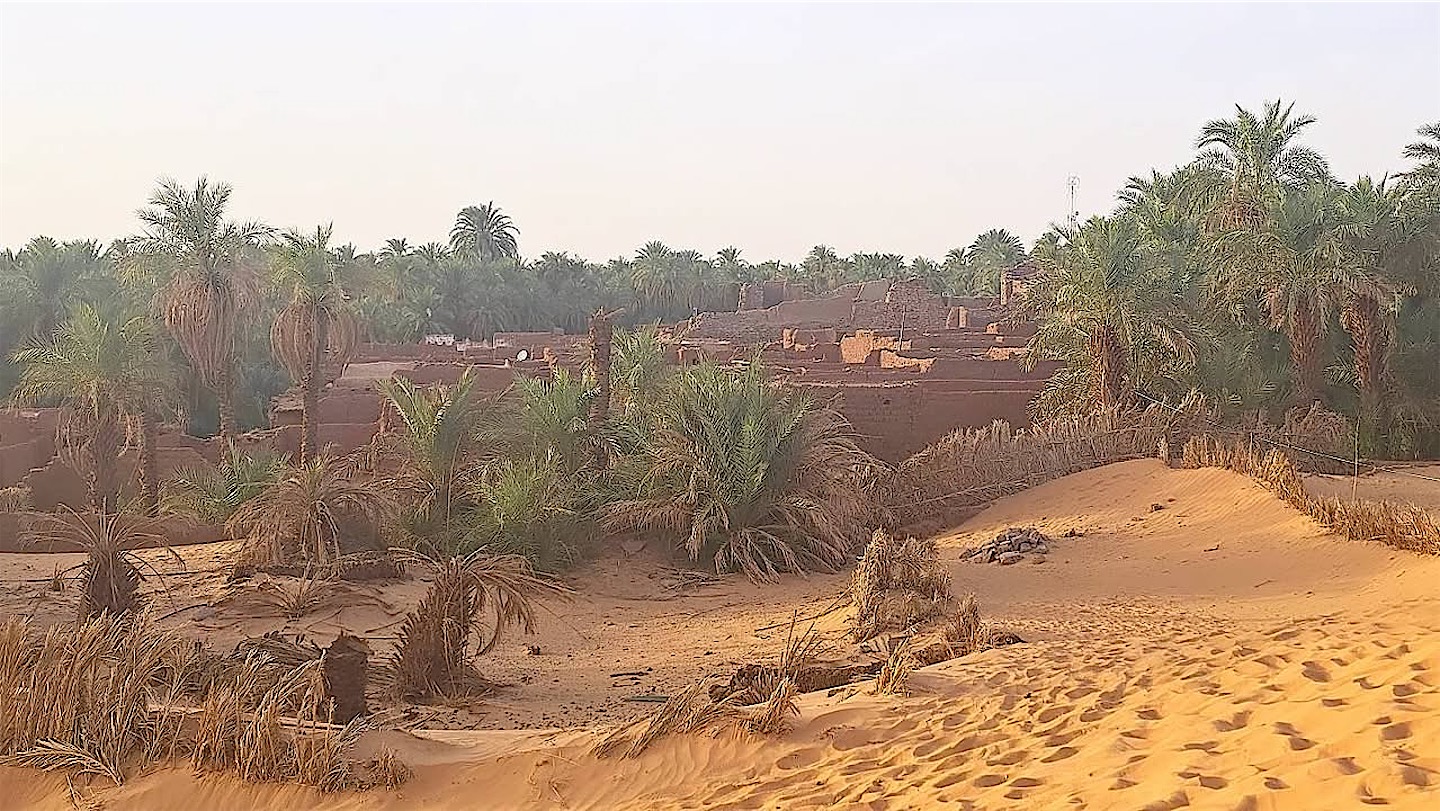
Our base in Timimoun was the Hotel Gourara, one of several Saharan hotels designed by the French architect Fernand Pouillon. Accommodation in Algeria has clearly improved since my last visit. From the terrace the view stretches over the palm groves to a band of golden dunes, the Sahara exactly as most people imagine it.
Timimoun, the red oasis
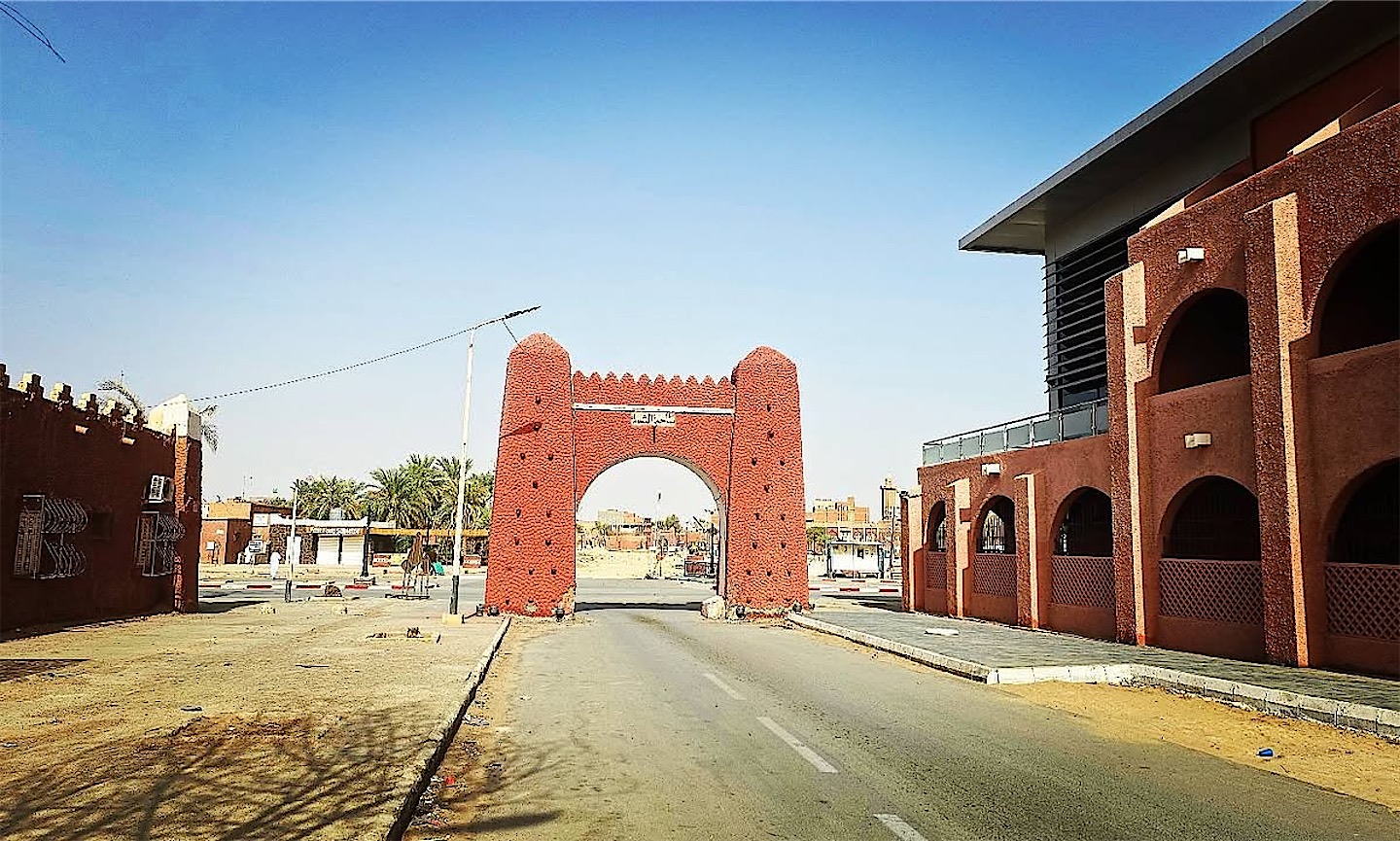
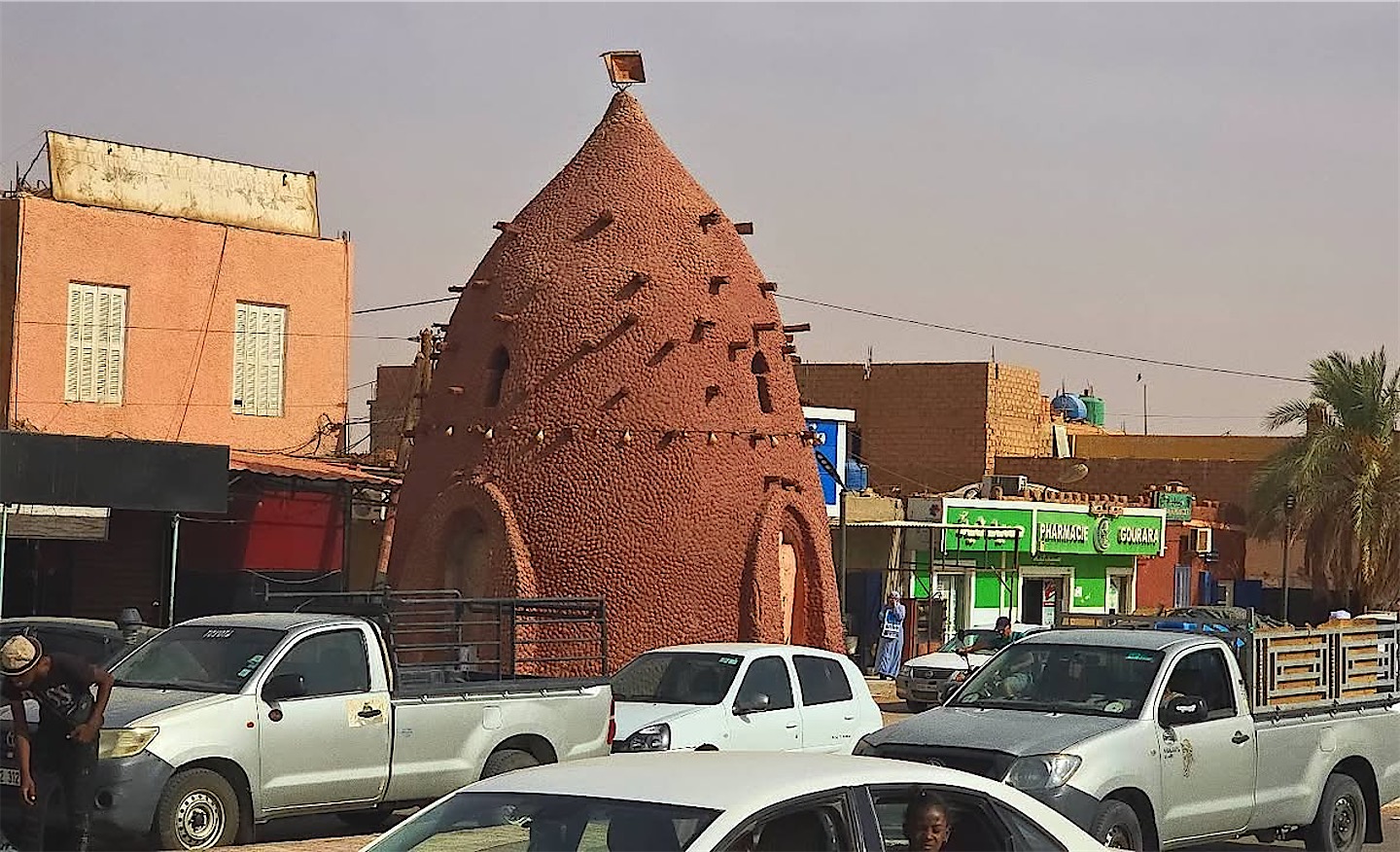
Timimoun is known as the red oasis, and the name fits. Almost everything, from the old ksar to the newer buildings along the main road, is built of or plastered with the same deep red clay. A monumental red gateway spans one of the roads, and elsewhere a beehive-shaped tower of mud looks as if it had been brought over from Mali.
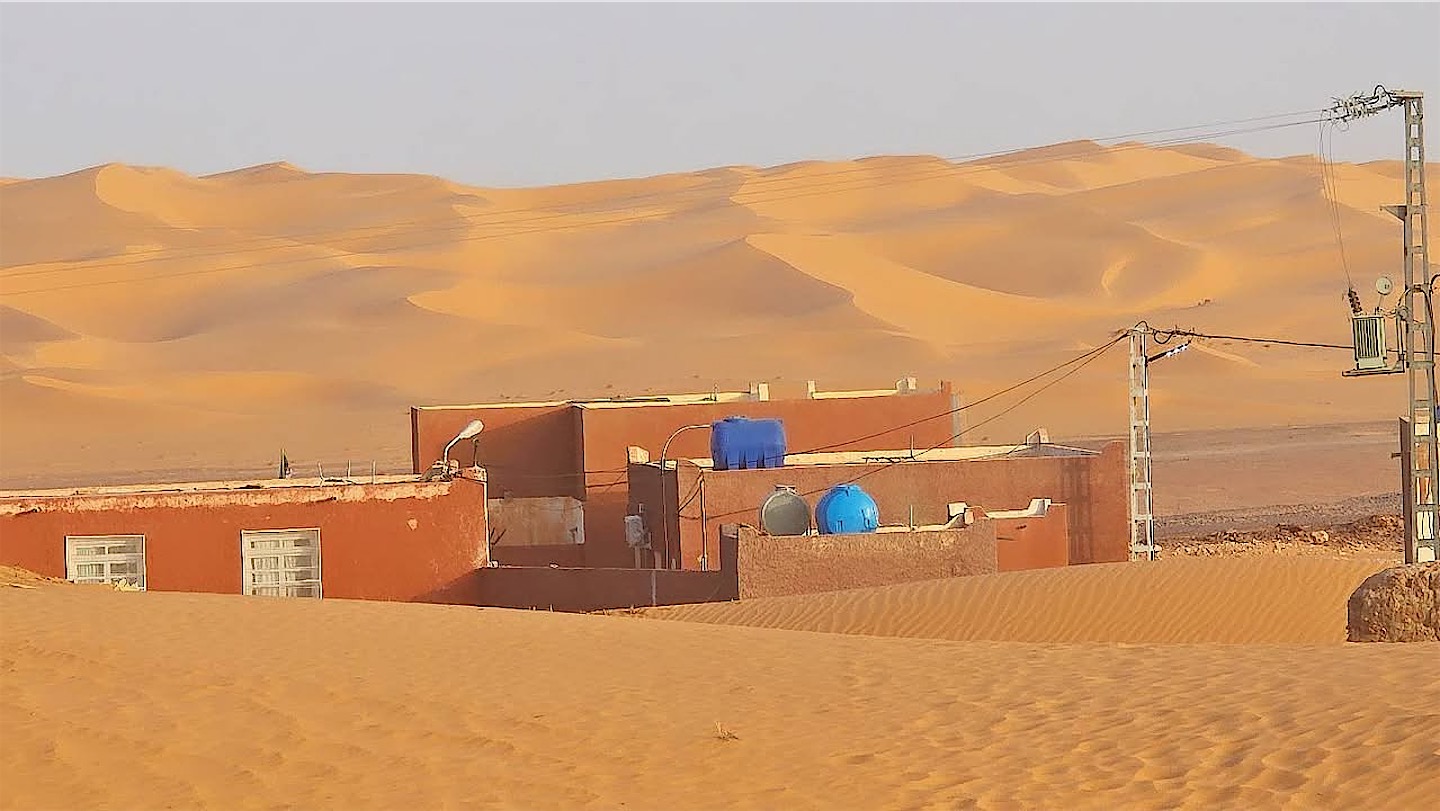
The contrast is what makes the Gourara special: a strip of green palms, a few red houses with blue water tanks on the roofs, and directly behind them the sand piling up into dunes. We wrapped ourselves in turbans, posed for a group photo as the Sahara cartel, sat on the dunes and simply enjoyed the desert.
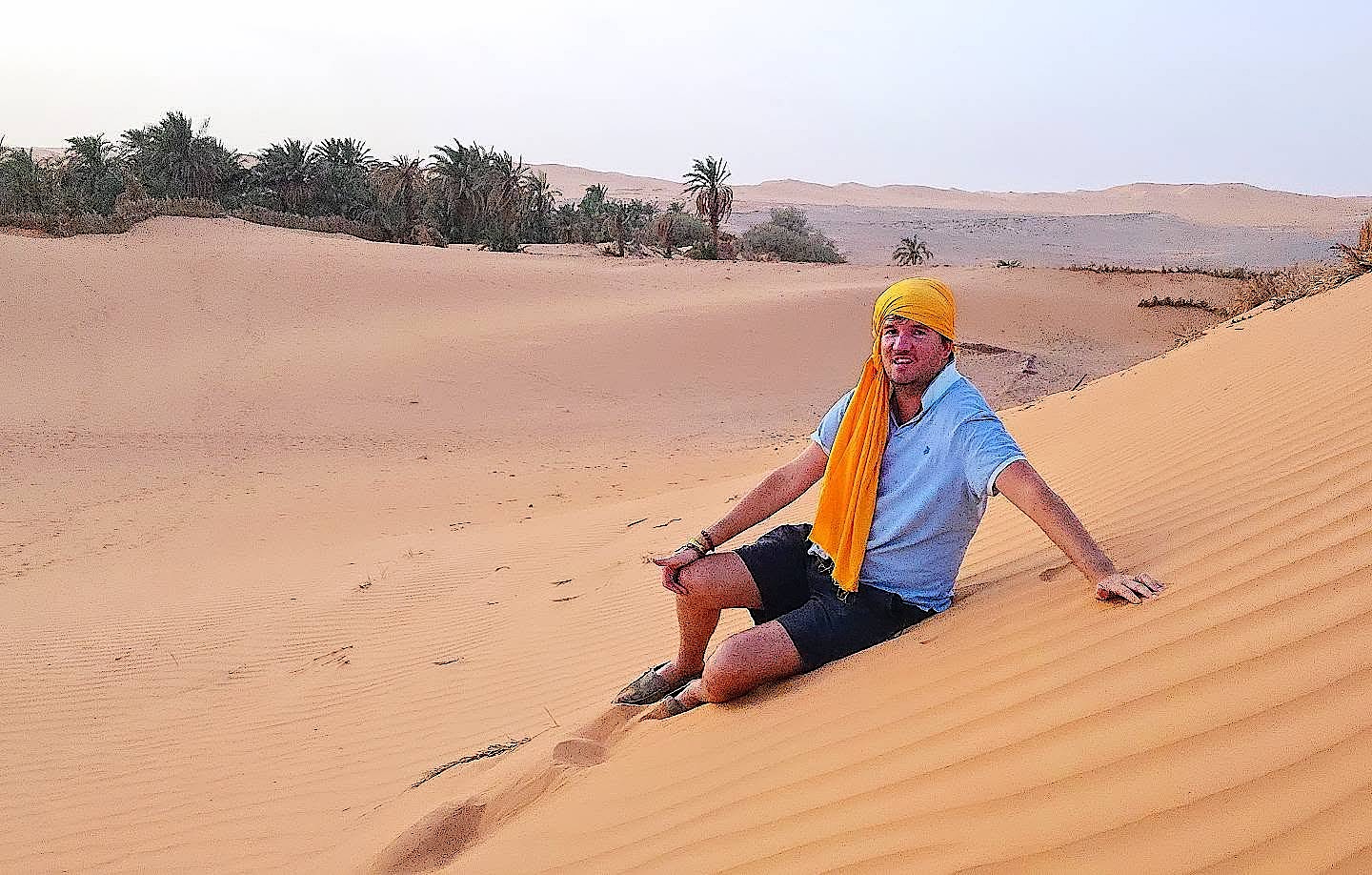
El Menia: bats, palms and flamingos
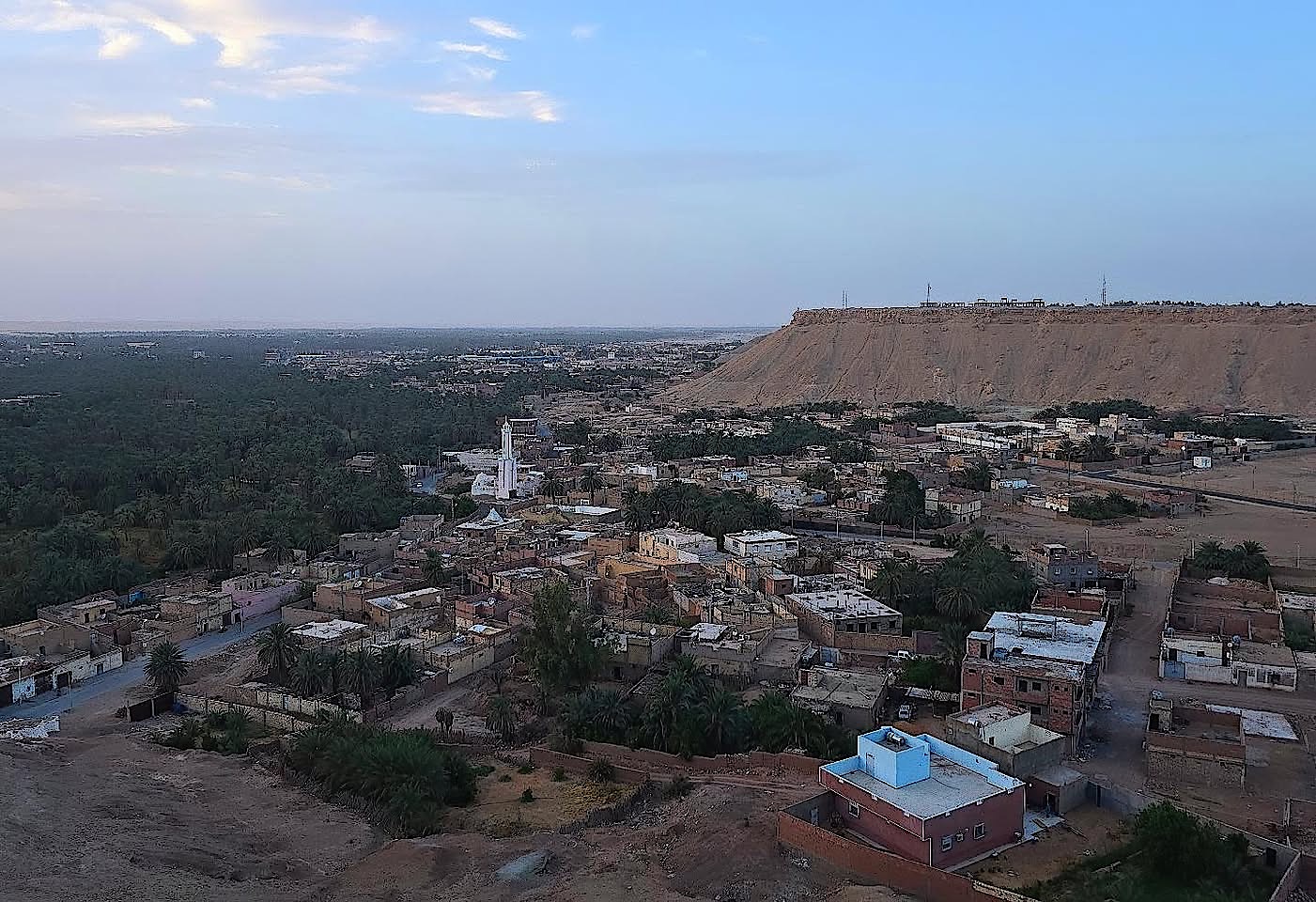
From Timimoun the road leads east to El Menia, still better known by its old name El Golea, which turned out to be a surprisingly attractive oasis. Its old fortified ksar on a rocky hill is now a ruin full of bats, and one came so close to my camera that I could only call it a vampire attack. From the top we looked down on an enormous expanse of palms.
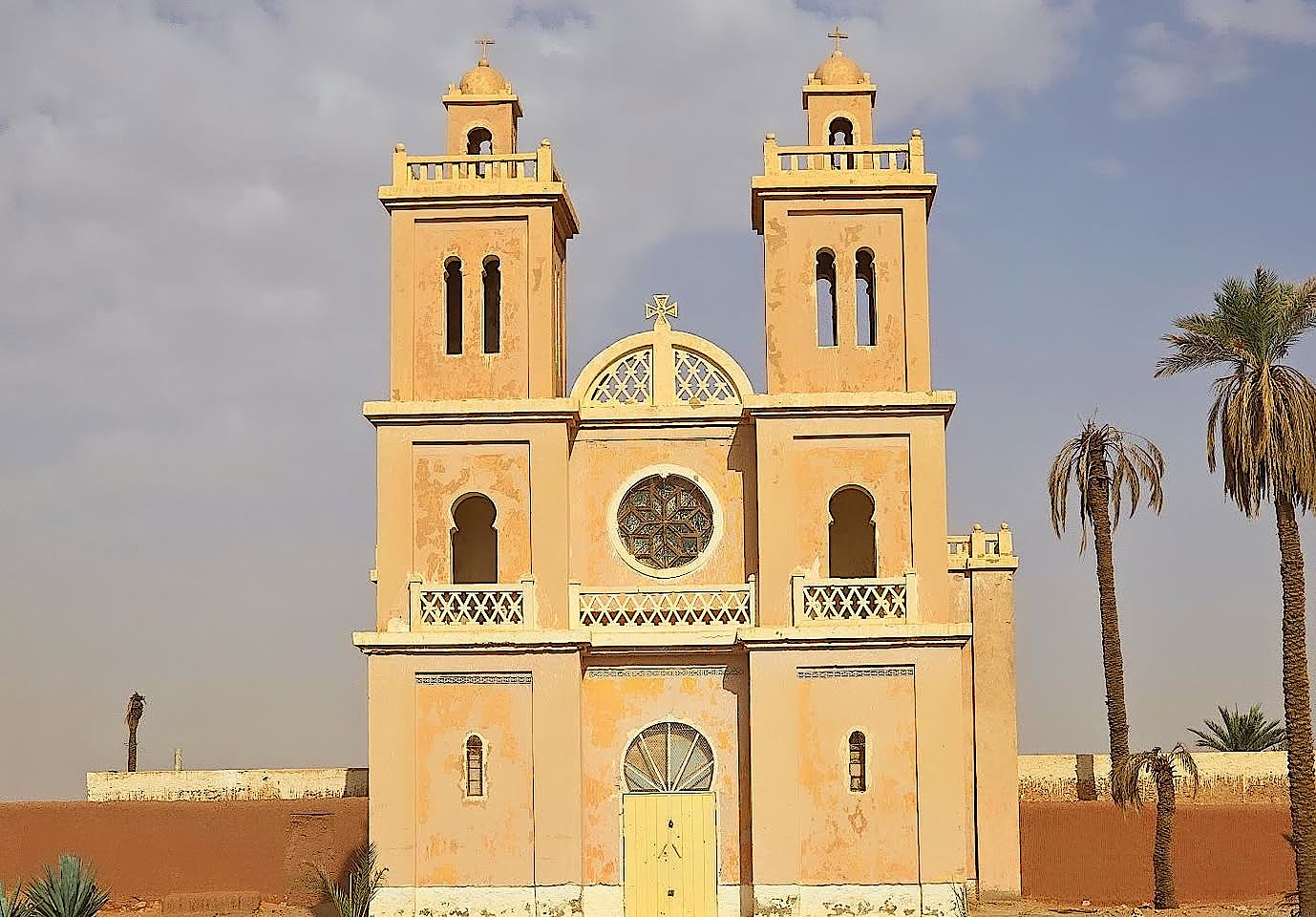
Next to the town's Catholic church of Saint Joseph lies the tomb of Charles de Foucauld, the French hermit whose footsteps I would follow a few days later at Assekrem. Not far away, a salt lake attracts large numbers of flamingos, a strange sight in the middle of the desert.
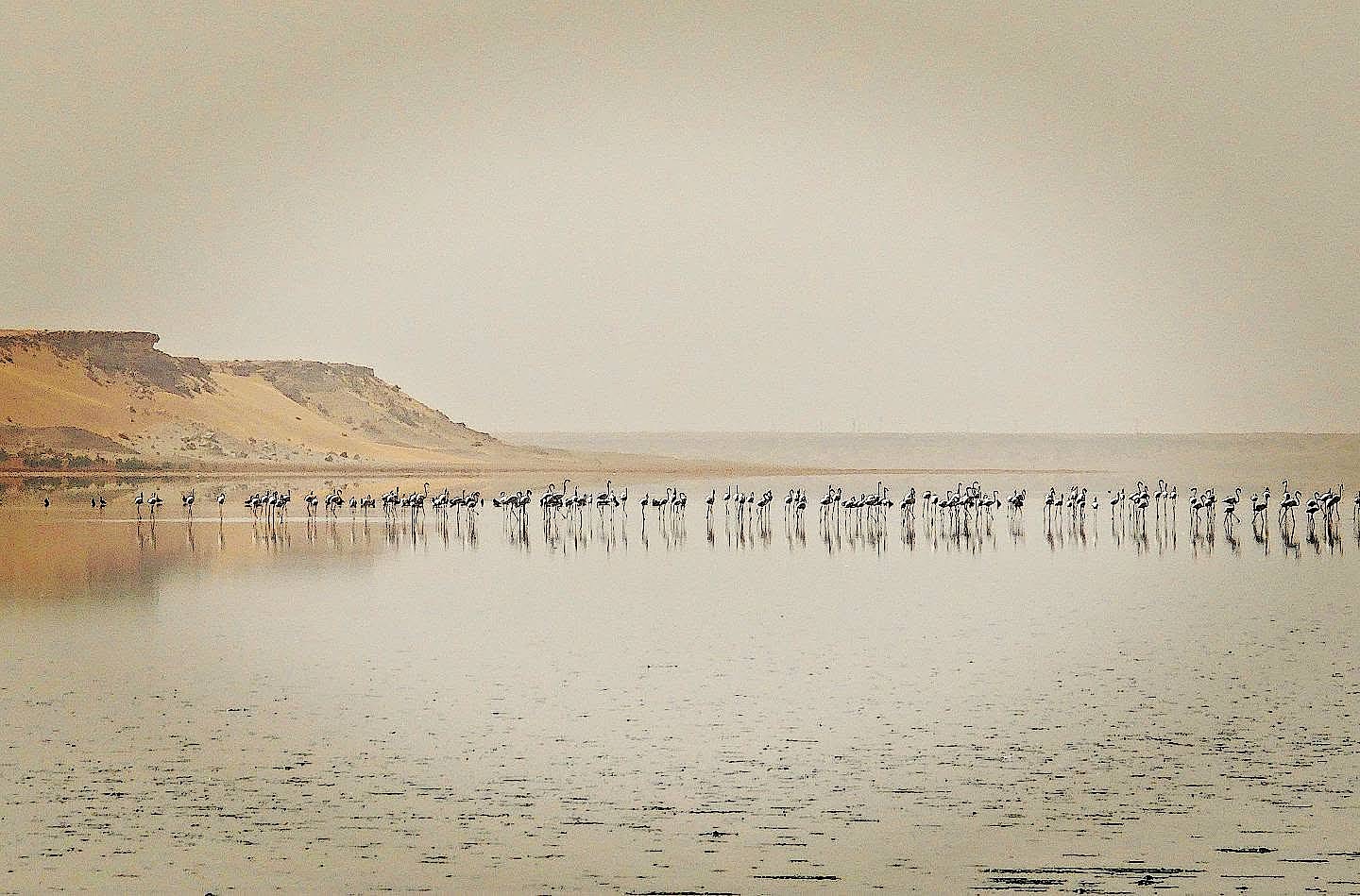
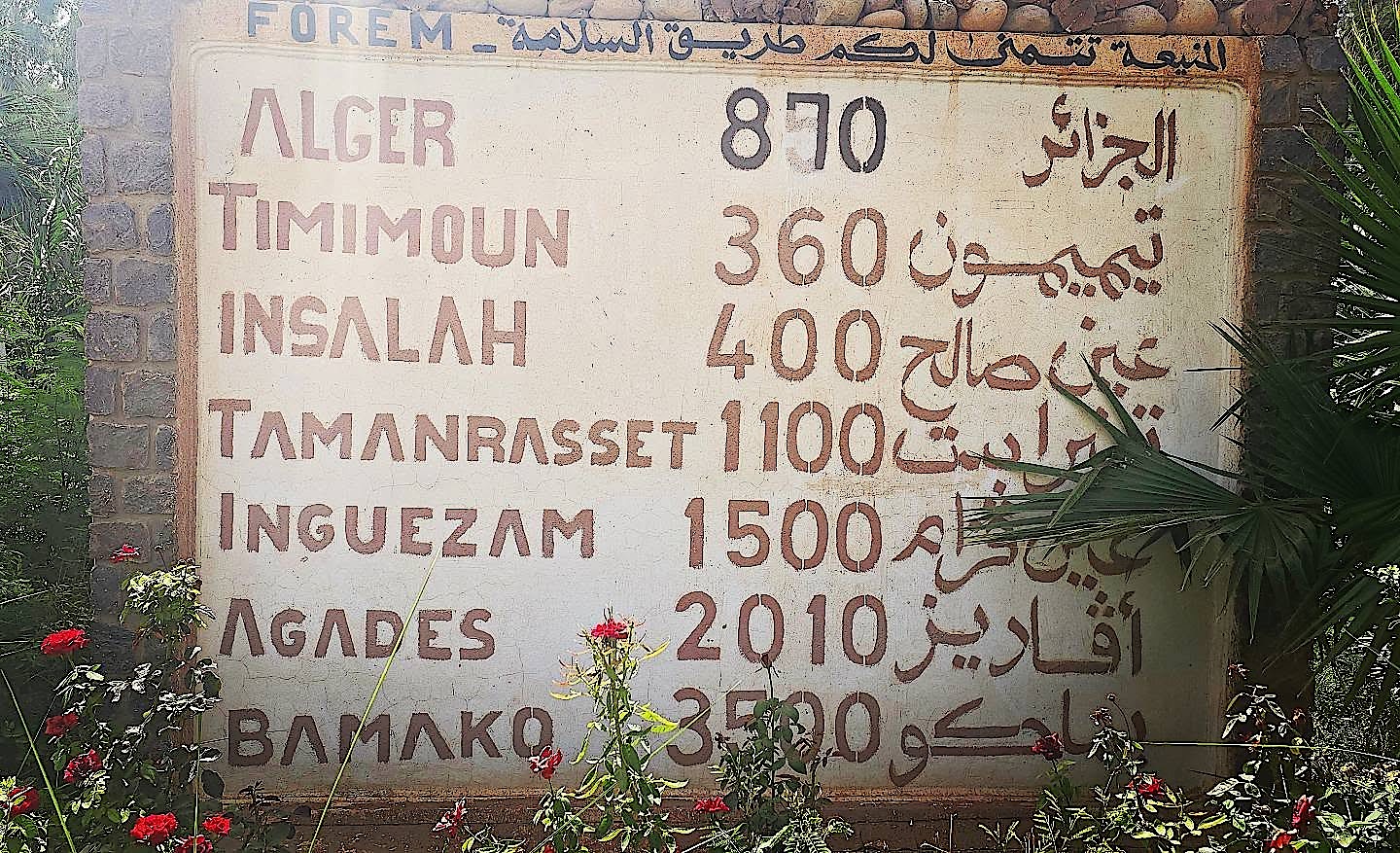
Here our group split up after an excellent few days, already talking about repeating the experience one day in Agadez in Niger. I continued alone for four more days on the long road south. A road sign spelled it out: 1,100 kilometres to Tamanrasset, and Agadez a little over 2,000.
Alone on the Trans-Saharan Highway
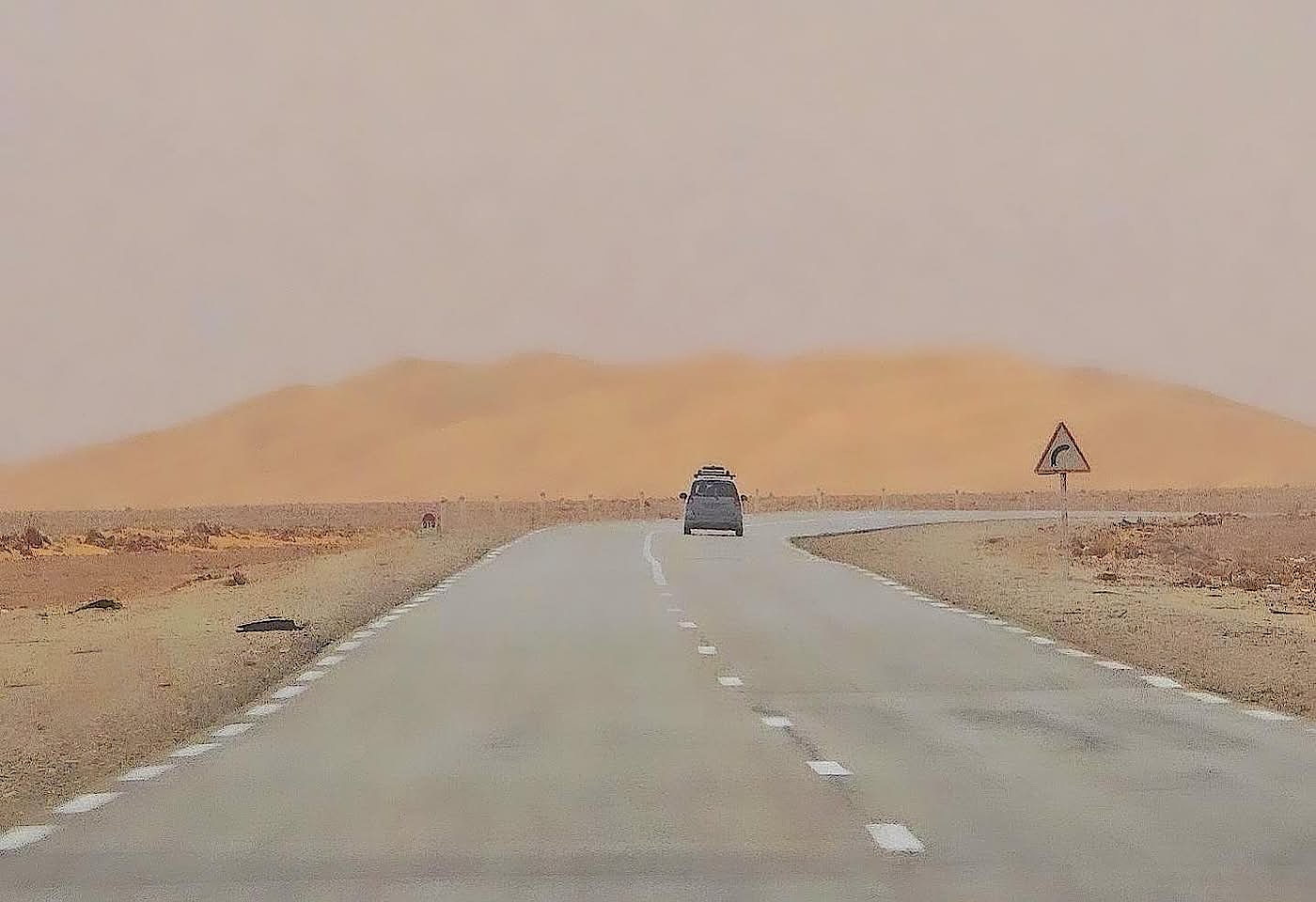
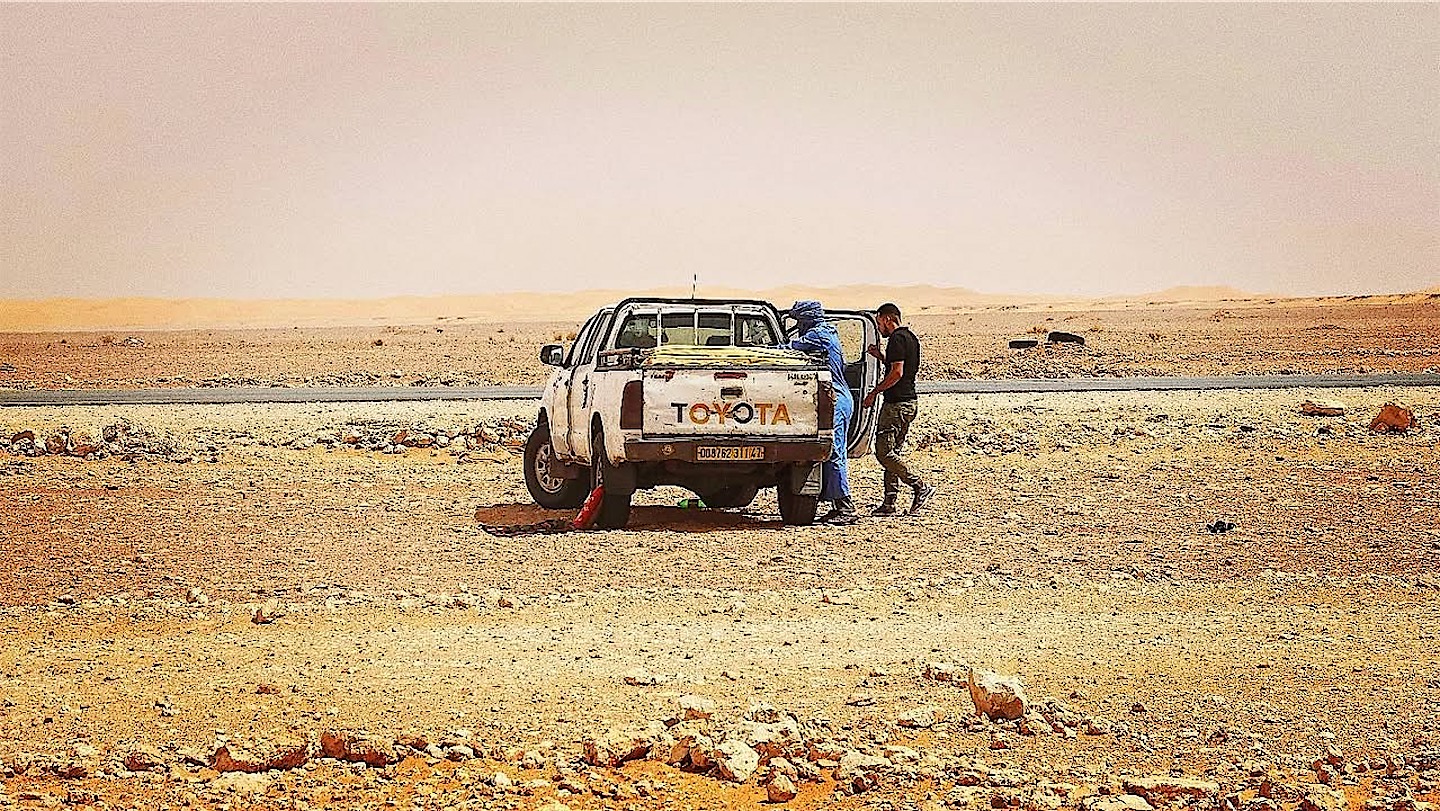
The Trans-Saharan Highway runs from Algiers through the desert to the border with Niger. I travelled south on it in a Toyota Hilux, escorted by the national police for more than 1,000 kilometres. The region is relatively secure these days, but you never know, and the escort turned dozens of checkpoints into a formality.
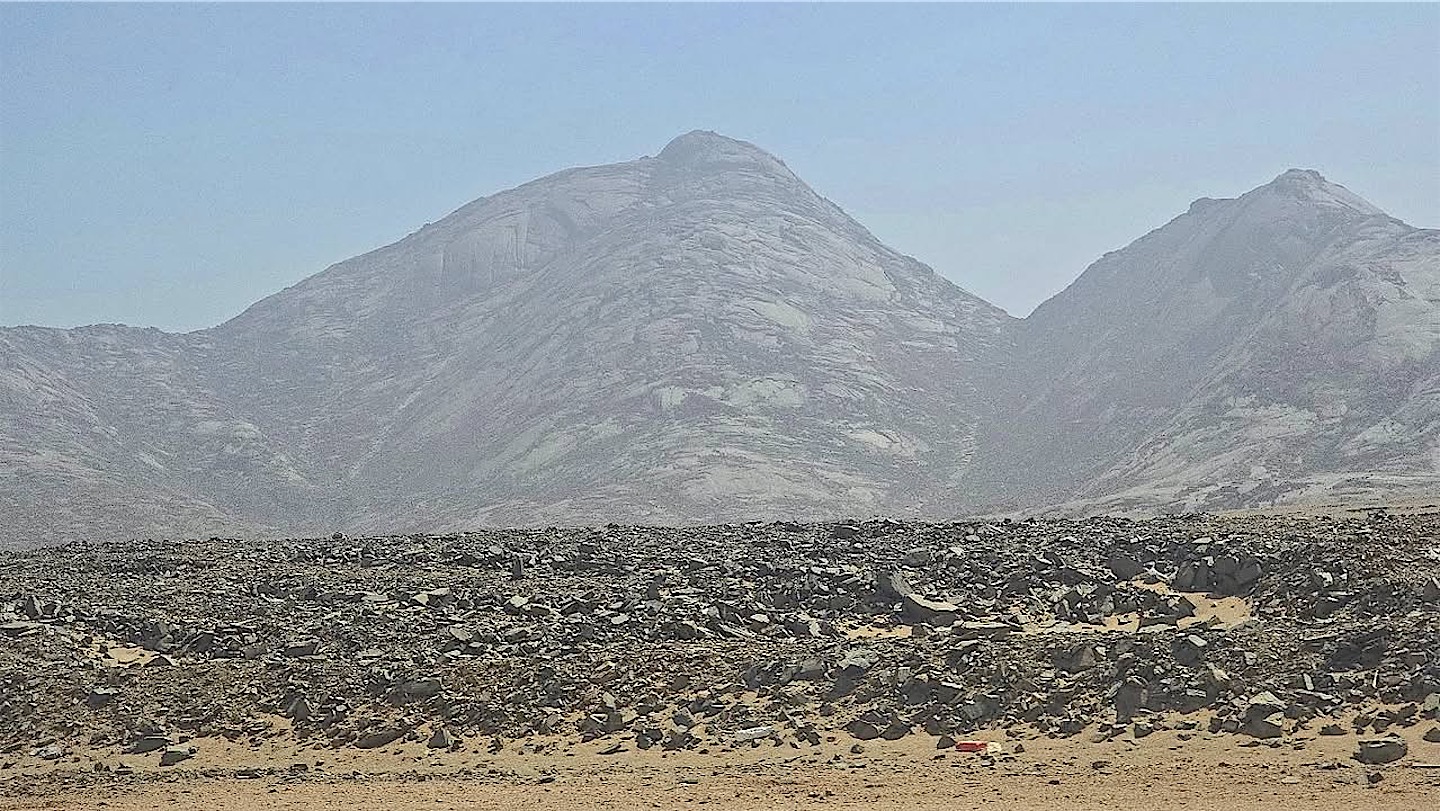
The road itself alternated between excellent asphalt and long stretches of what is fondly known as African massage. The Sahara has many faces, but here it mostly showed its dullest one: flat, hazy gravel plains for hundreds of kilometres. At least I finally had time to read books again. About 500 kilometres before Tamanrasset the wasteland at last gave way to scattered trees, some vegetation and the first dark mountain formations.
In Tamanrasset, the main town of the Hoggar, my local guide invited me to a traditional dinner at his home, and on another evening I spent time with his family. Another surprise: there are vineyards in the Sahara, apparently only for table grapes.
The rough road to Assekrem
The goal of the whole journey was Assekrem, the plateau where Charles de Foucauld built his hermitage. It is not far from Tamanrasset, but the road is another matter. After a stretch of asphalt past dark volcanic peaks it turns into a serious off-road track, washed out in places, with holes up to two metres deep. Even our escort in Mercedes off-roaders gave up after a while and turned back. Our Hilux proved worthy of the challenge.
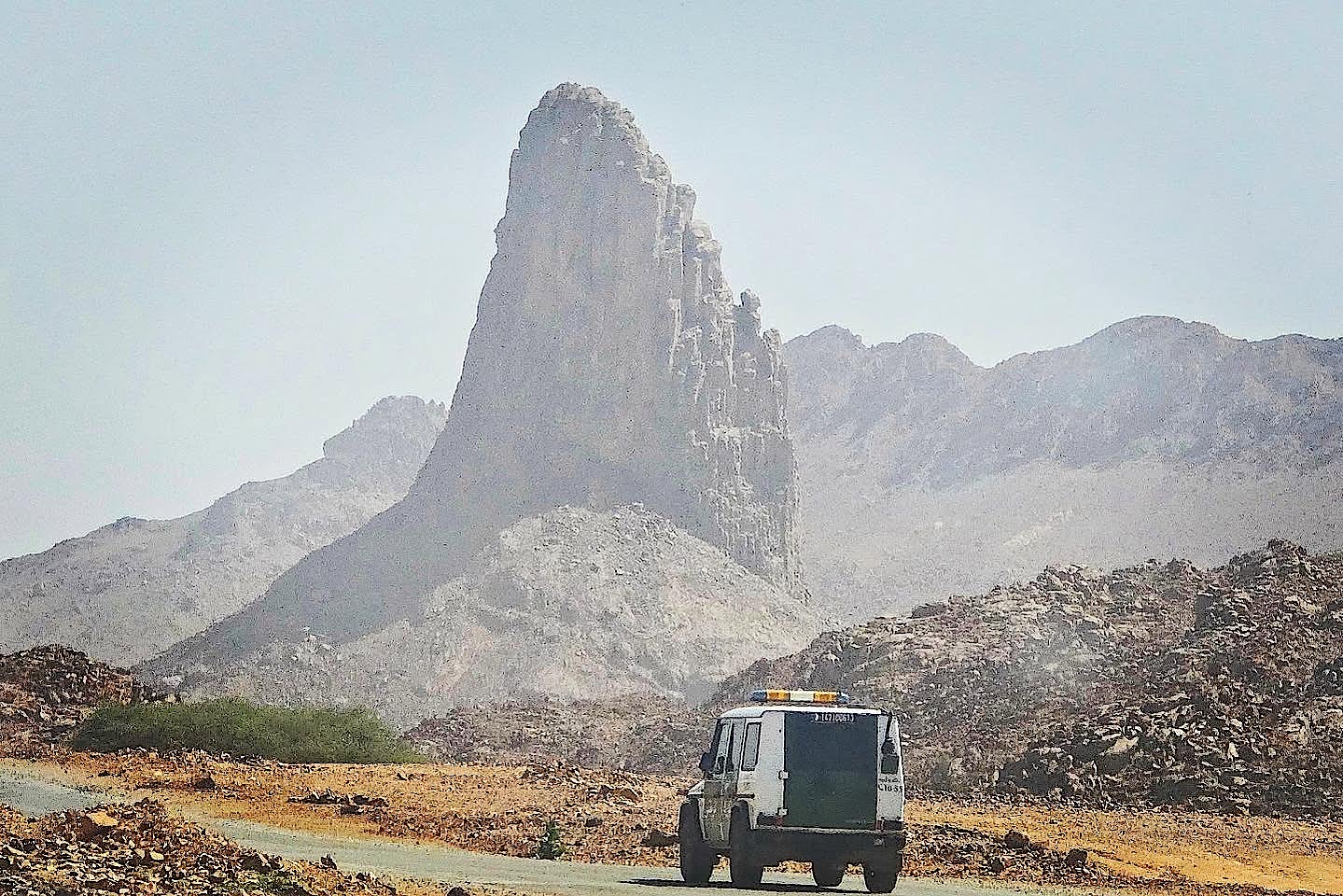
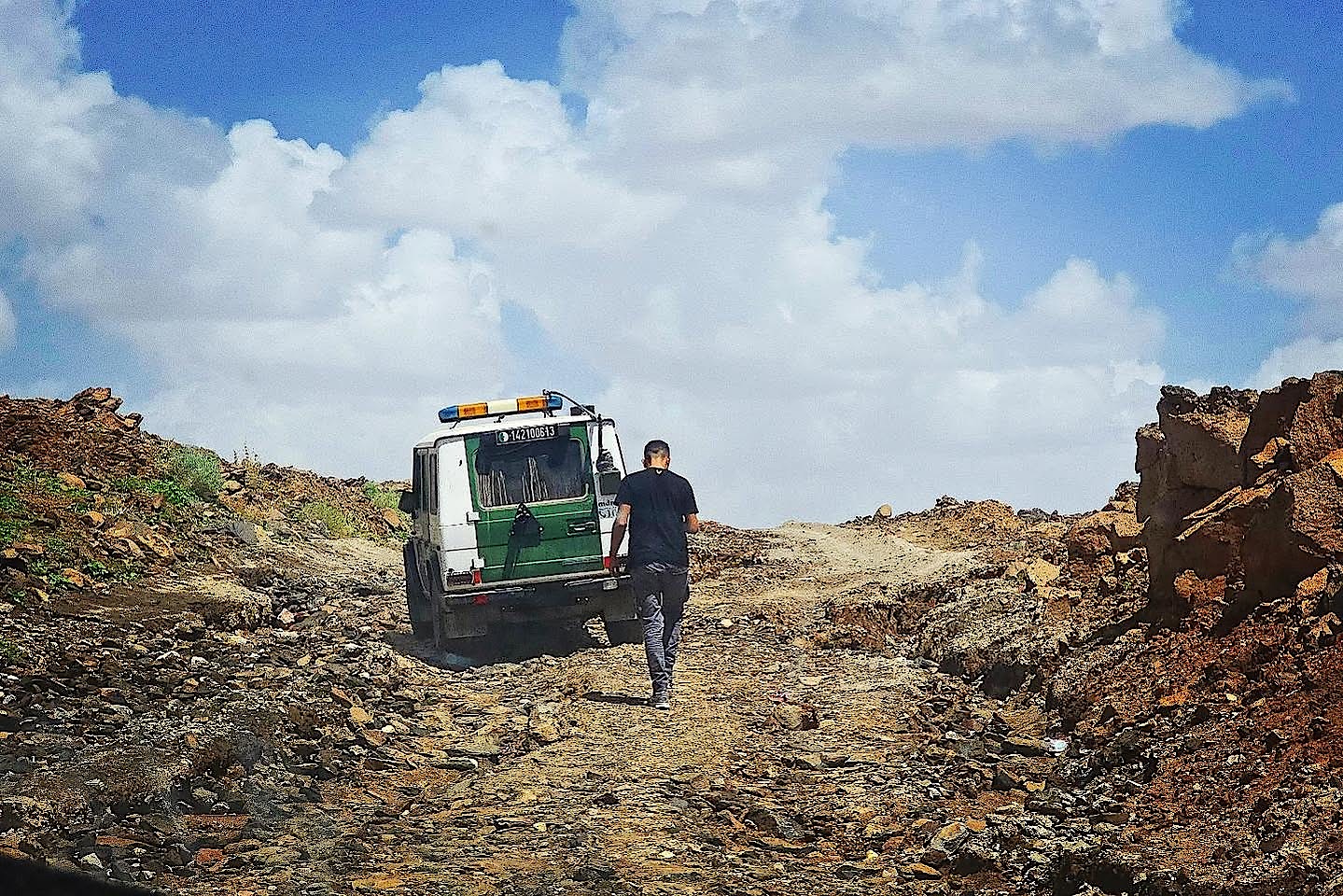
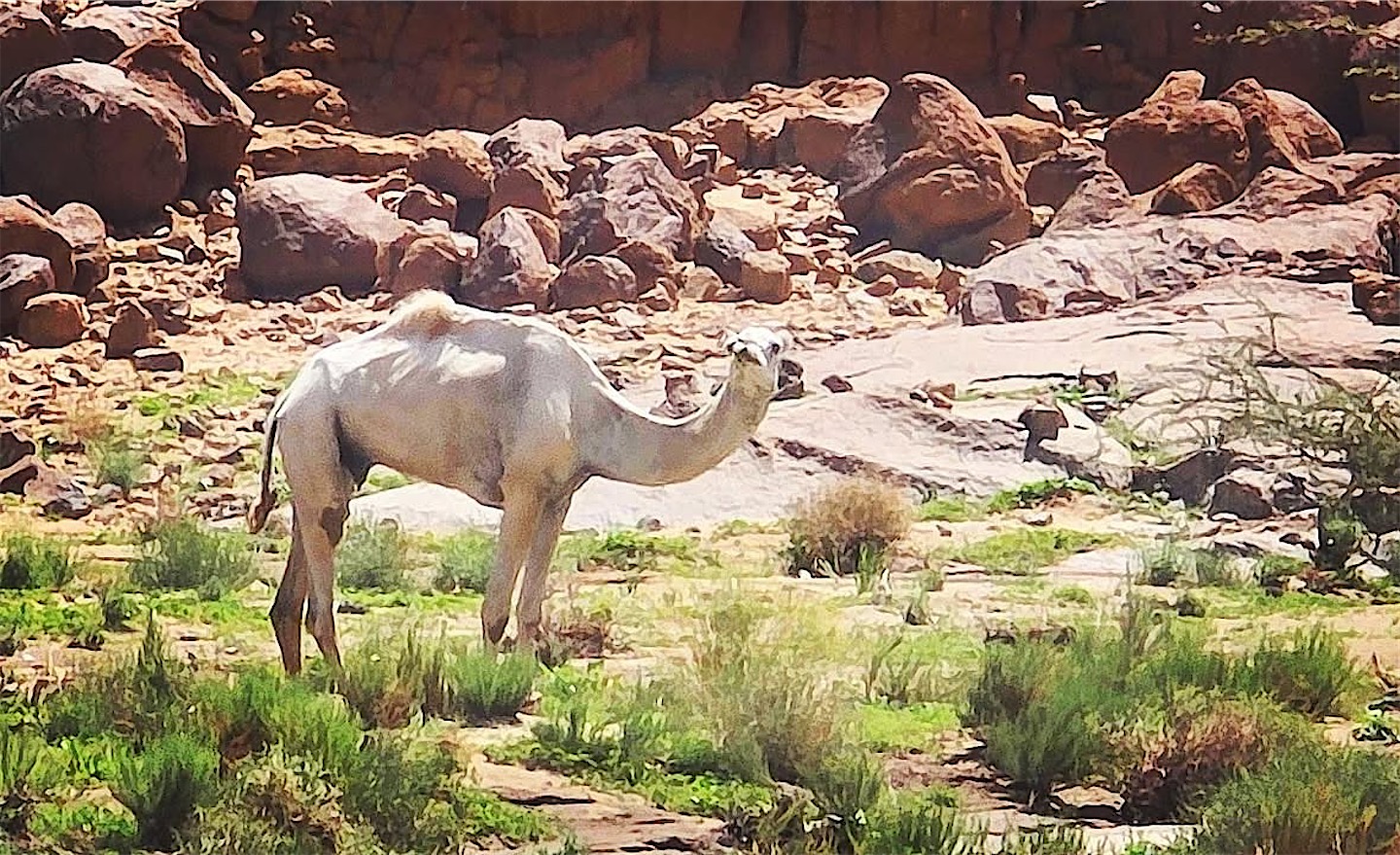
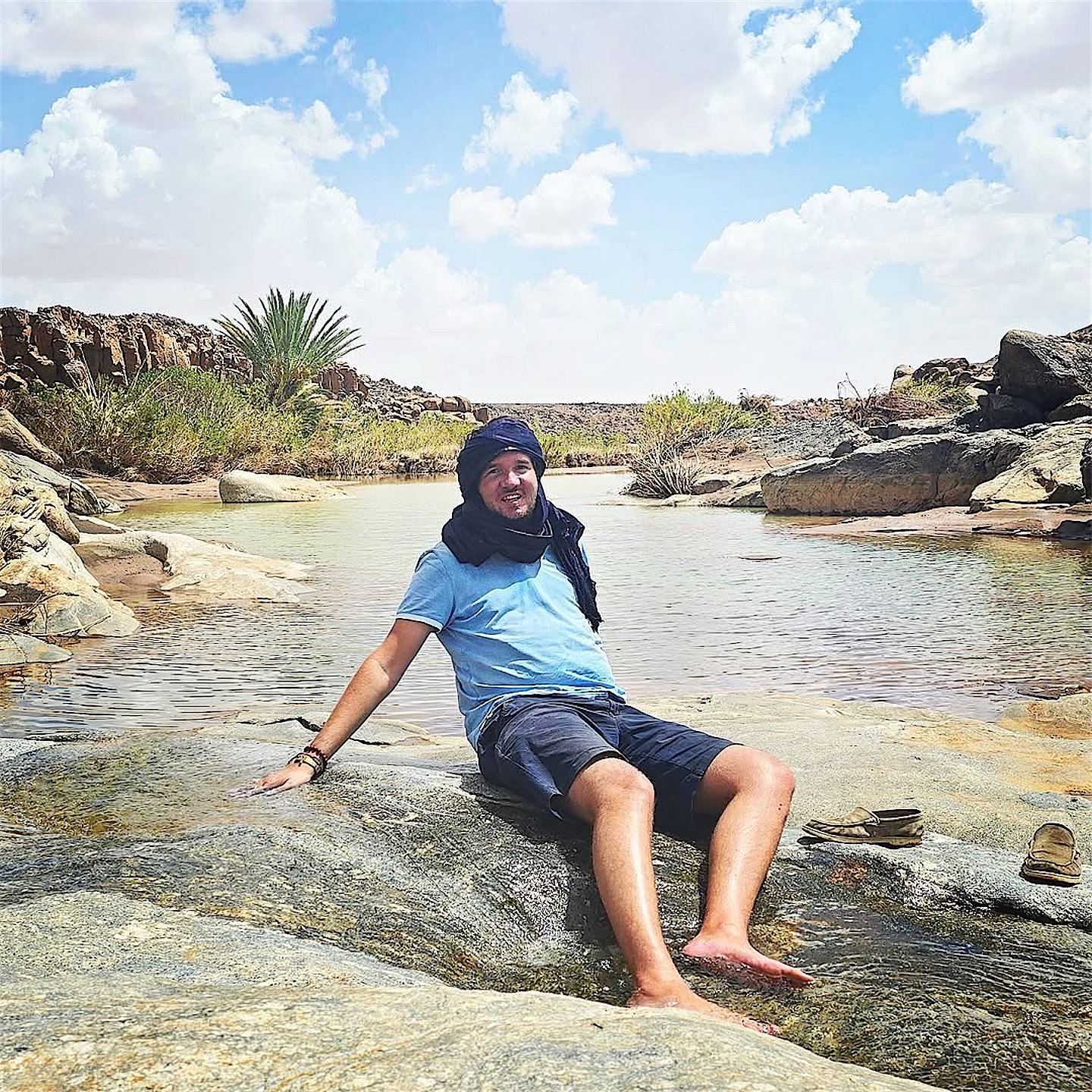
On the way up we met donkeys and camels grazing on surprisingly green ground, and found a lovely lake between the rocks, where I sat down in the water for a while. Unfortunately there were no crocodiles, which lived in the gueltas of this region until not so long ago.
Sunrise at the hermitage
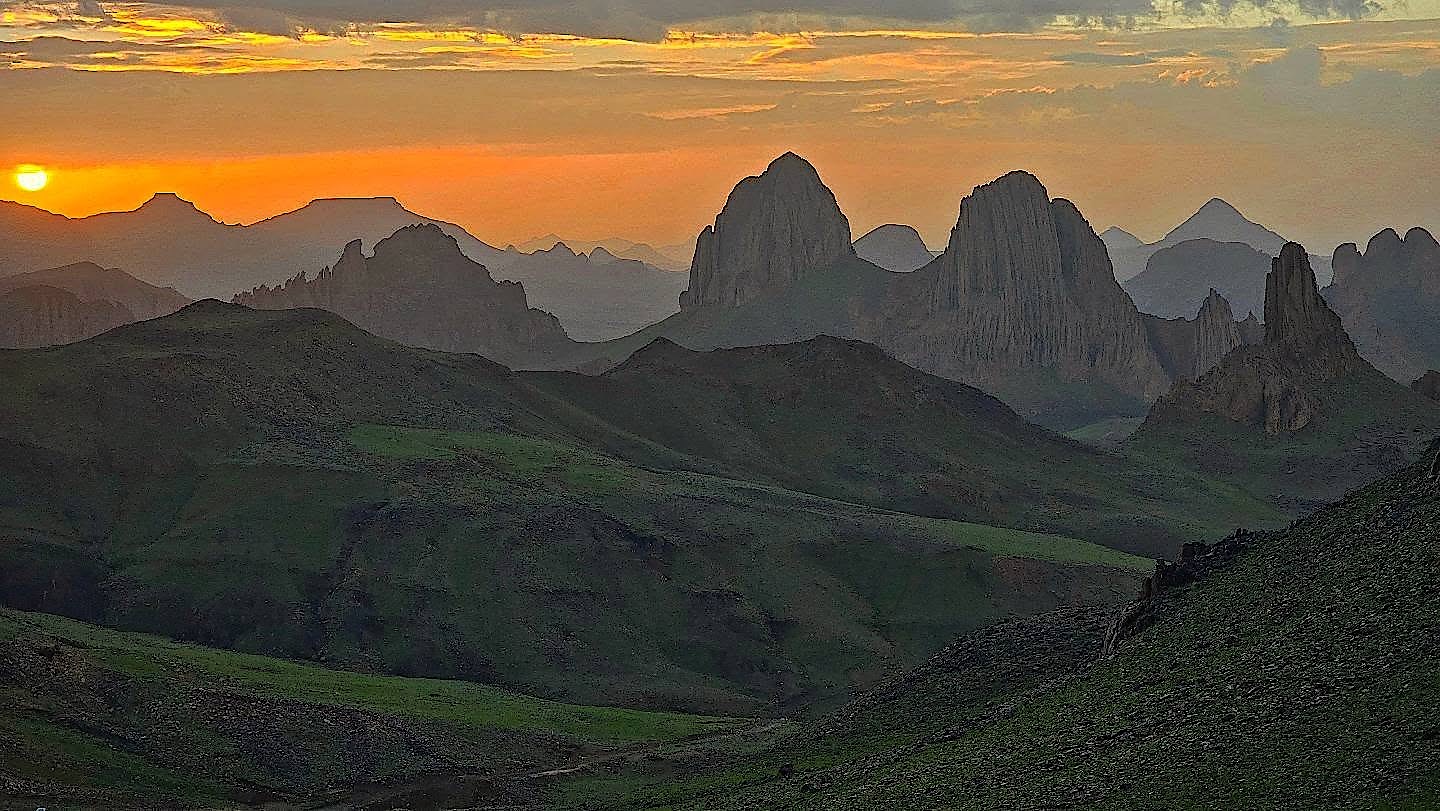
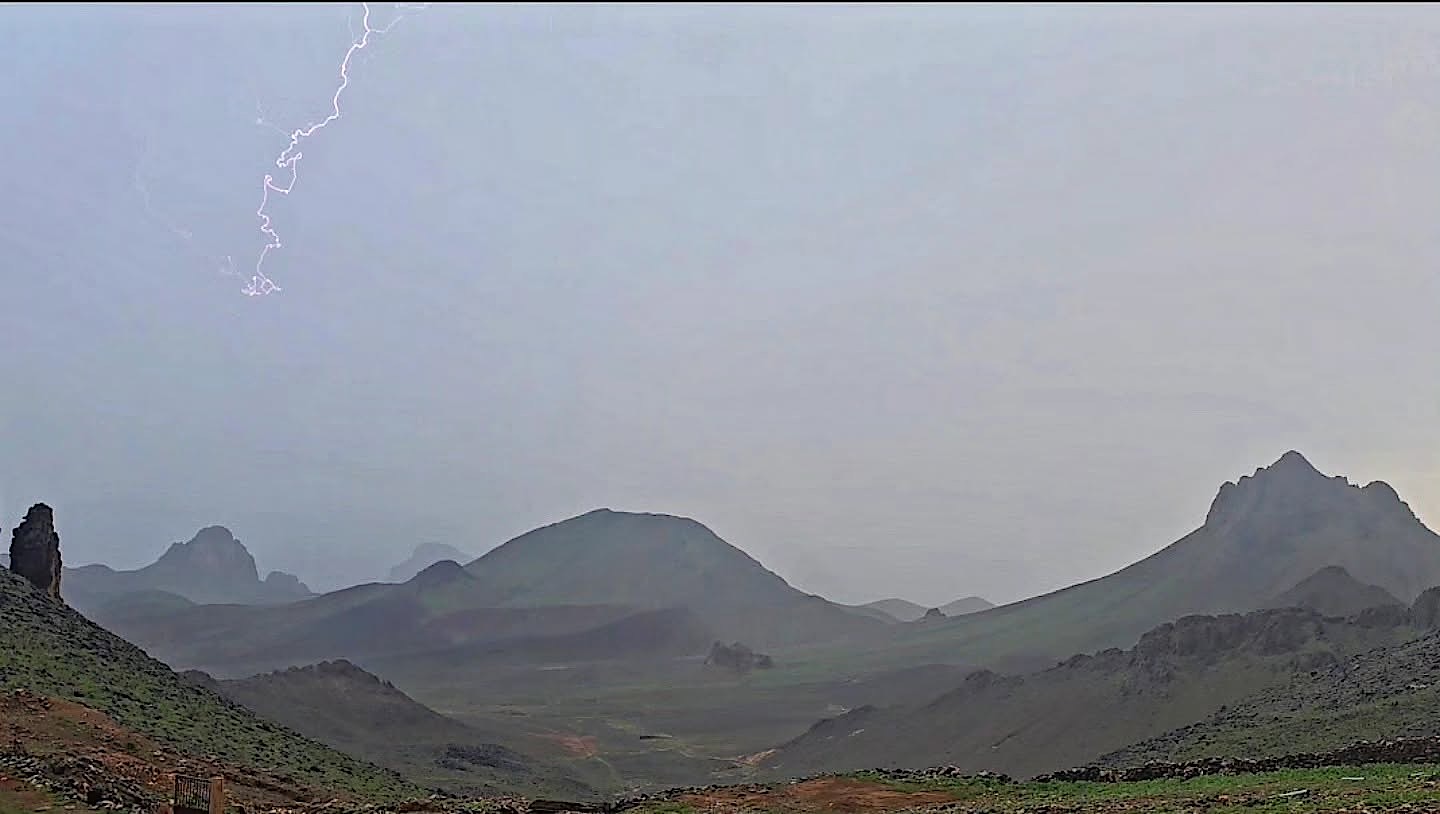
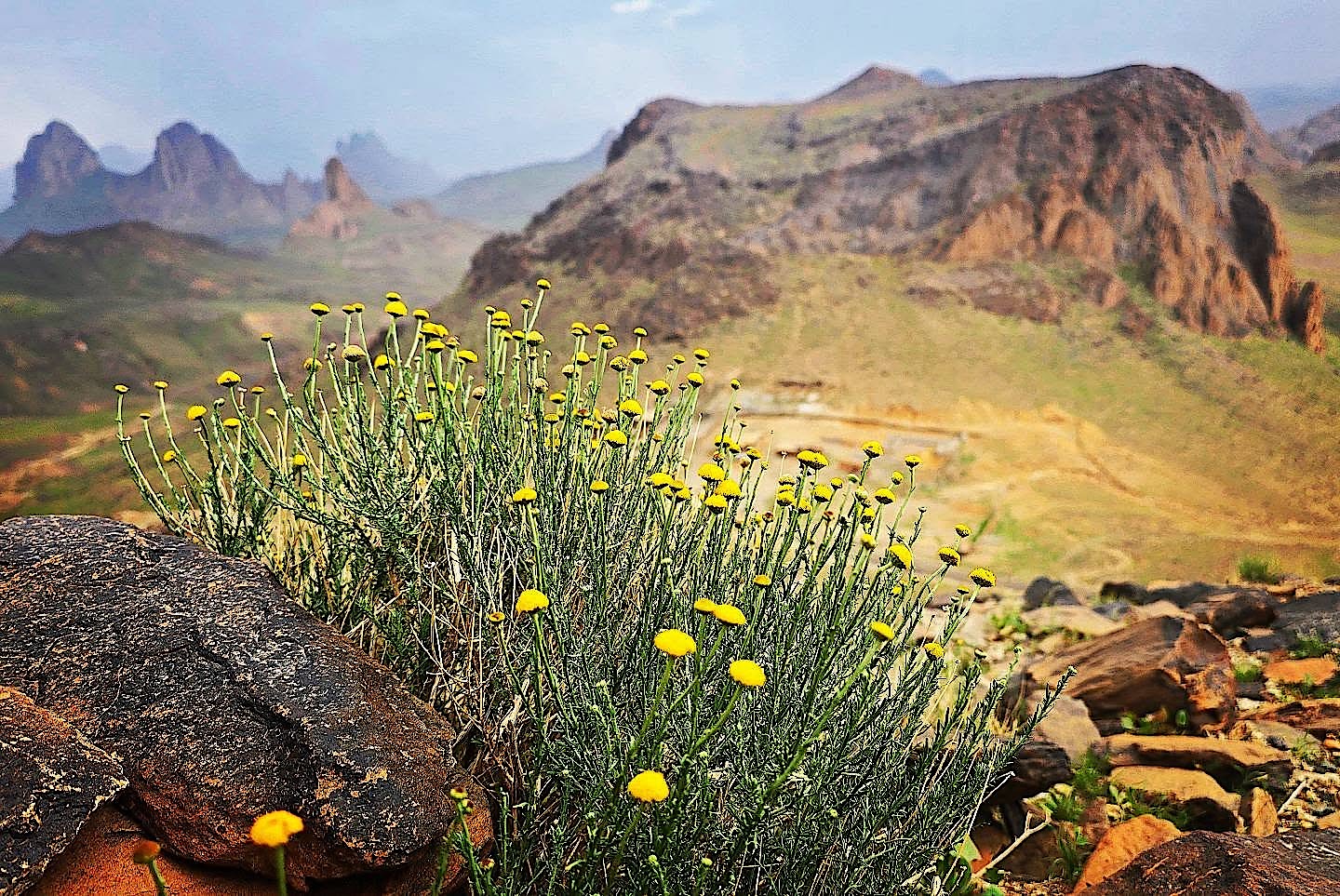
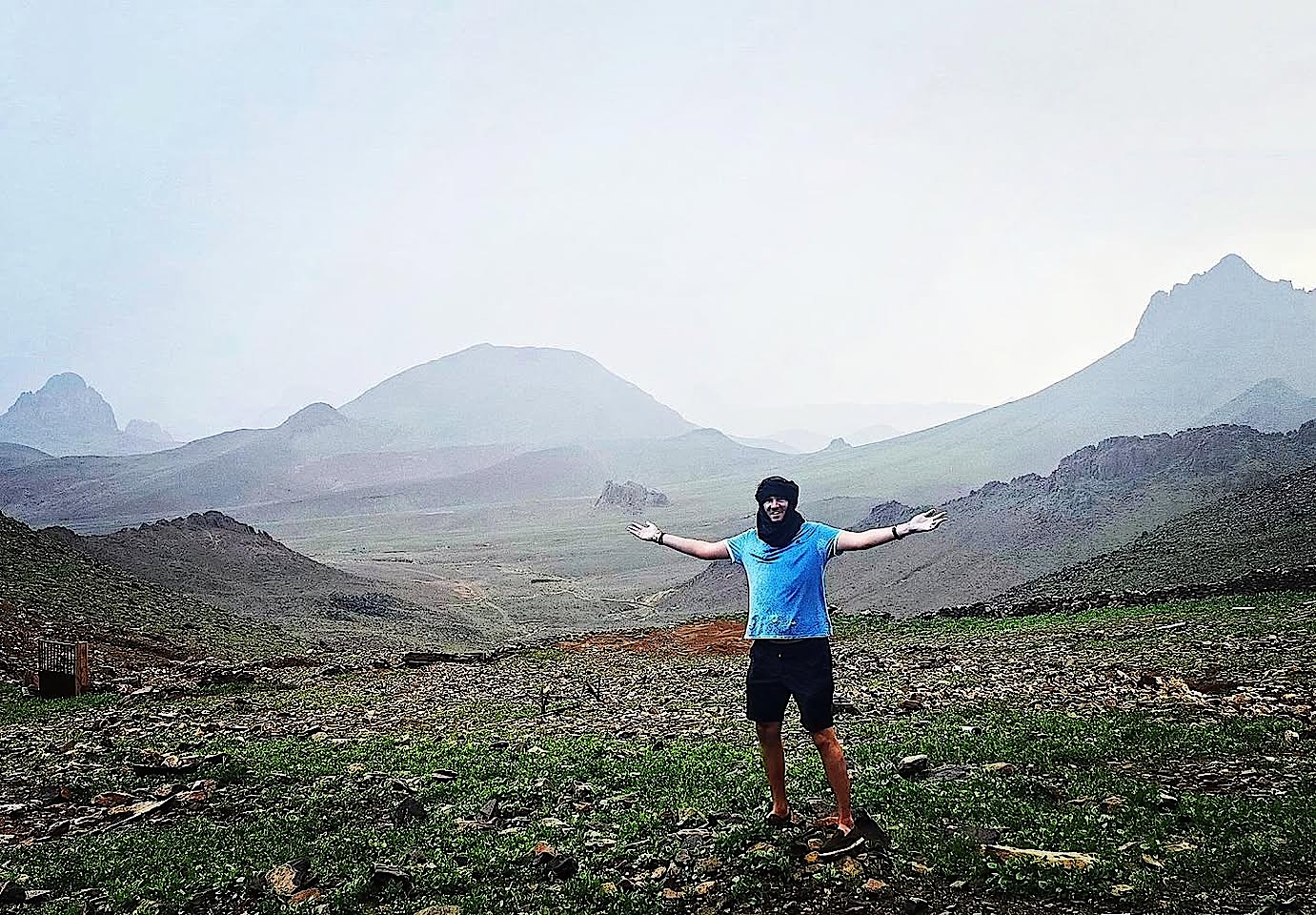
The reason to come up here is the view from the plateau at around 2,700 metres. The next morning the sun rose over a scene I would never have associated with the Sahara: green slopes and, behind them, row after row of dark volcanic towers. The explanation was simple: it rained, a lot. A thunderstorm rolled over the mountains, I got properly wet in the world's largest hot desert, and yellow flowers bloomed between the rocks.
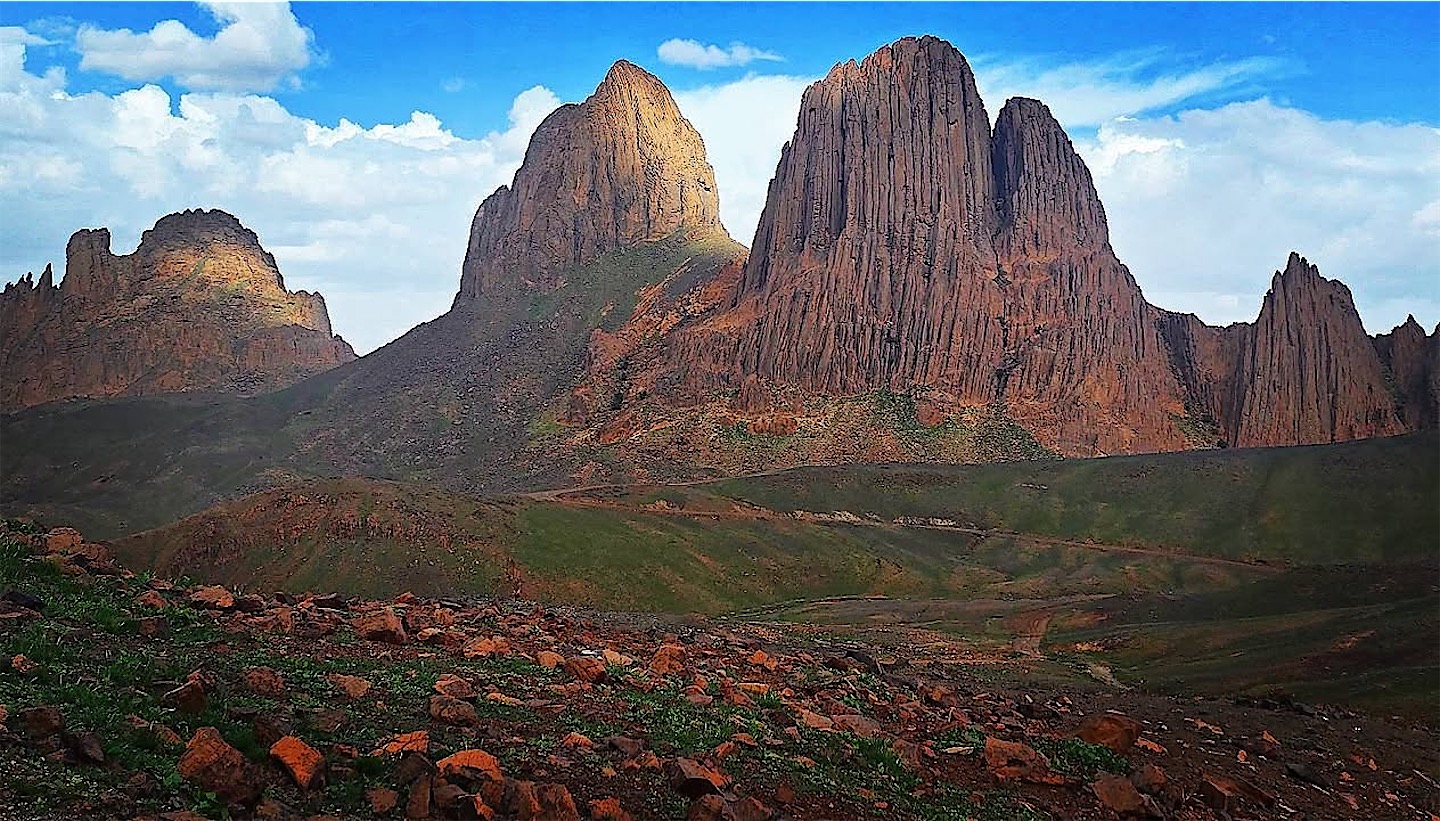
The rock formations around Assekrem are the real stars up here. Some peaks are sharp needles, others look like giant organ pipes, their fluted columns of rock glowing red in the sun.
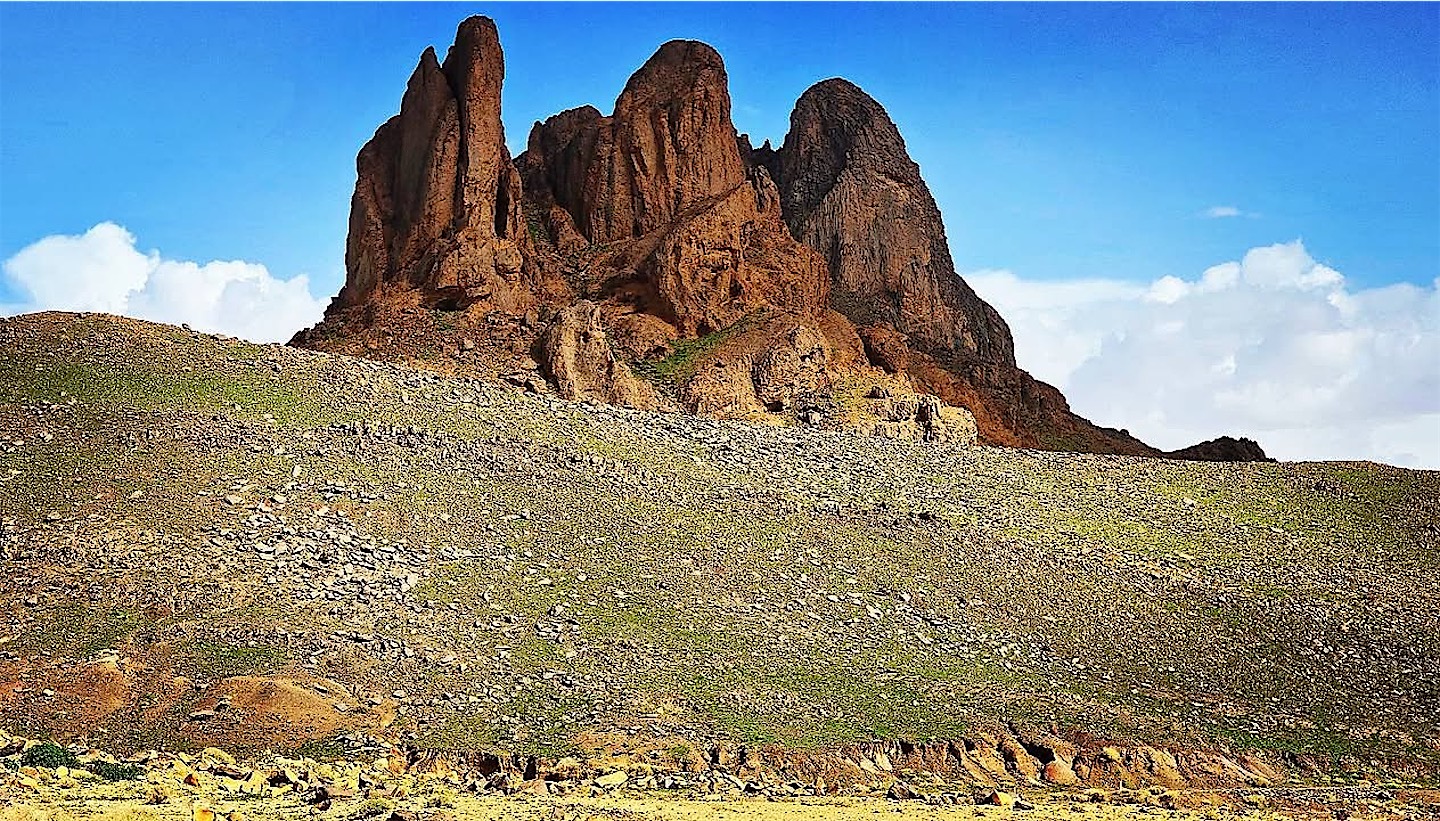
It is easy to understand why a man looking for solitude chose this place. Would you want to be a hermit here?
From the Sahara to the Himalayas
From Tamanrasset it was a long way from the Sahara to the Himalayas, but only three flights. After a hop to Algiers came one of those special routes I love: Air Algérie's once-weekly direct flight to Beijing, twelve hours in an A330-200. The seats were decent, but that was it, with no pillow, no blanket and nothing else except a small bottle of water.
A short flight from Beijing took me on to Chengdu, the start of a two-week trip with two friends through Tibet and Yunnan, beginning with the pandas of Sichuan. In one week the Sahara had shown me red oases, endless gravel, flamingos, rain and green mountains. The journey continues in Chengdu, Tibet and Yunnan.