
Salt, Cacti and Rusting Trains: Across the Salar de Uyuni to La Paz
late March – early April 2014 · Tupiza, Salar de Uyuni, Isla Incahuasi, Uyuni, La Paz · Regions: Bolivia
Bolivia was the most adventurous part of my first South American trip in 2014. It began badly, with a missed flight in La Paz and a bumpy night bus to Sucre, and got tougher in the silver mines of Potosí, which I described in Missed my Flight and Got Lost in a Pitch-Dark Silver Mine. Further south, in the red canyons of Tupiza near the Argentine border, I survived my first ever horse ride, told in First Time on Horseback and not Dying on the Road of Death.
Tupiza was also the starting point for the tour I had been looking forward to most: four days through the high desert to the Salar de Uyuni, the largest salt flat in the world. In that older story I promised to tell this part another time. Here it is, with the photos I shared back then. Before Bolivia I had travelled through southern Peru, which has its own story: Sea Lions, Sand Dunes and the Nazca Lines.
Four days across the altiplano
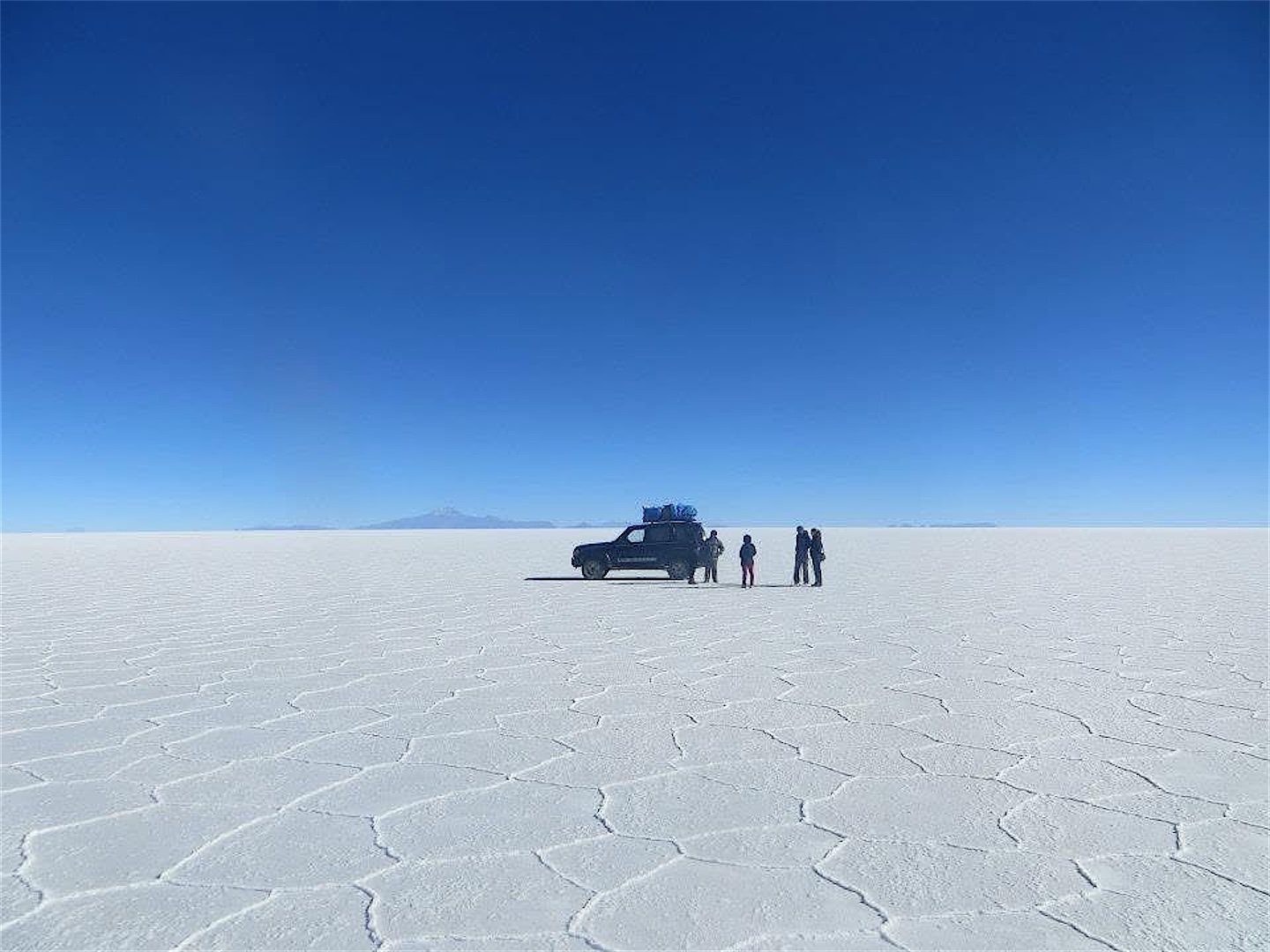
Tours like mine travel in four-wheel drives, with the luggage tied to the roof and a small group of travellers in each car. For days we drove along dirt tracks across the high plateau, a landscape of rock, sand and sparse grass with mountains on the horizon. Then, at last, the ground turned white.
Isla Incahuasi
In the middle of the salt flat rises Isla Incahuasi, a rocky hill covered in giant cacti. From the top, the salt stretches to the horizon in every direction, interrupted only by the blue silhouettes of distant volcanoes. The cacti, many of them much taller than me, looked like guards watching over a frozen sea.
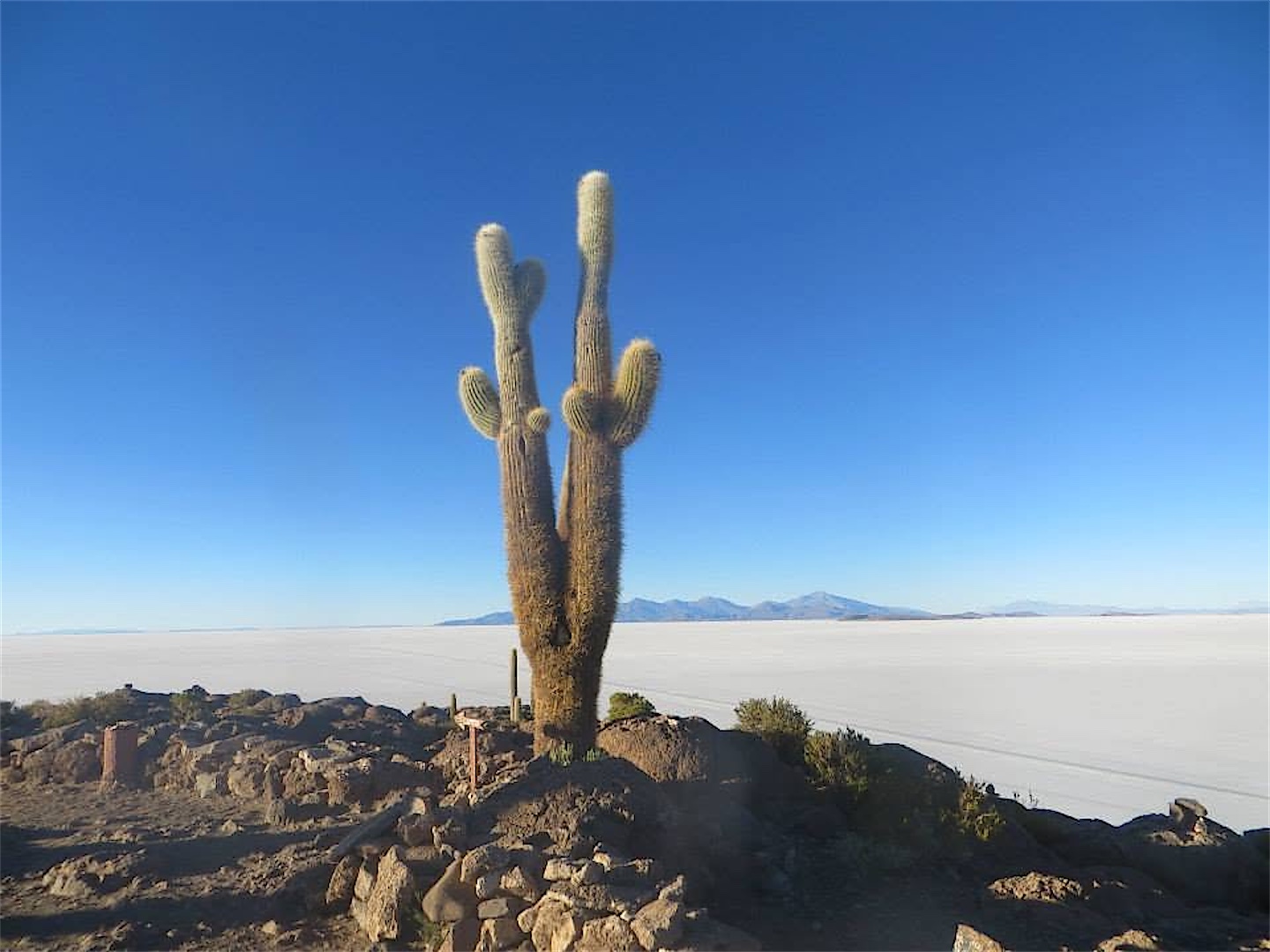
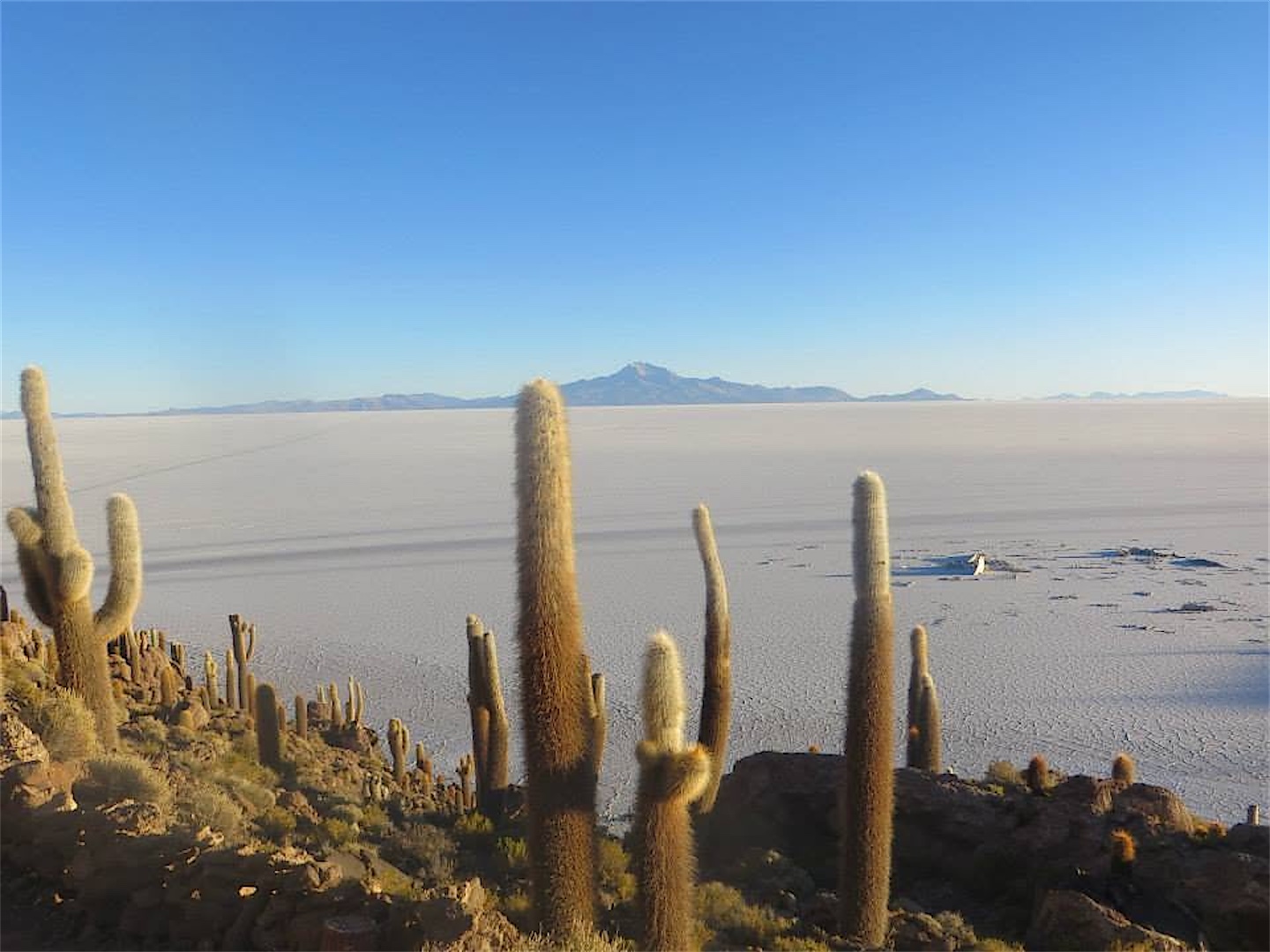
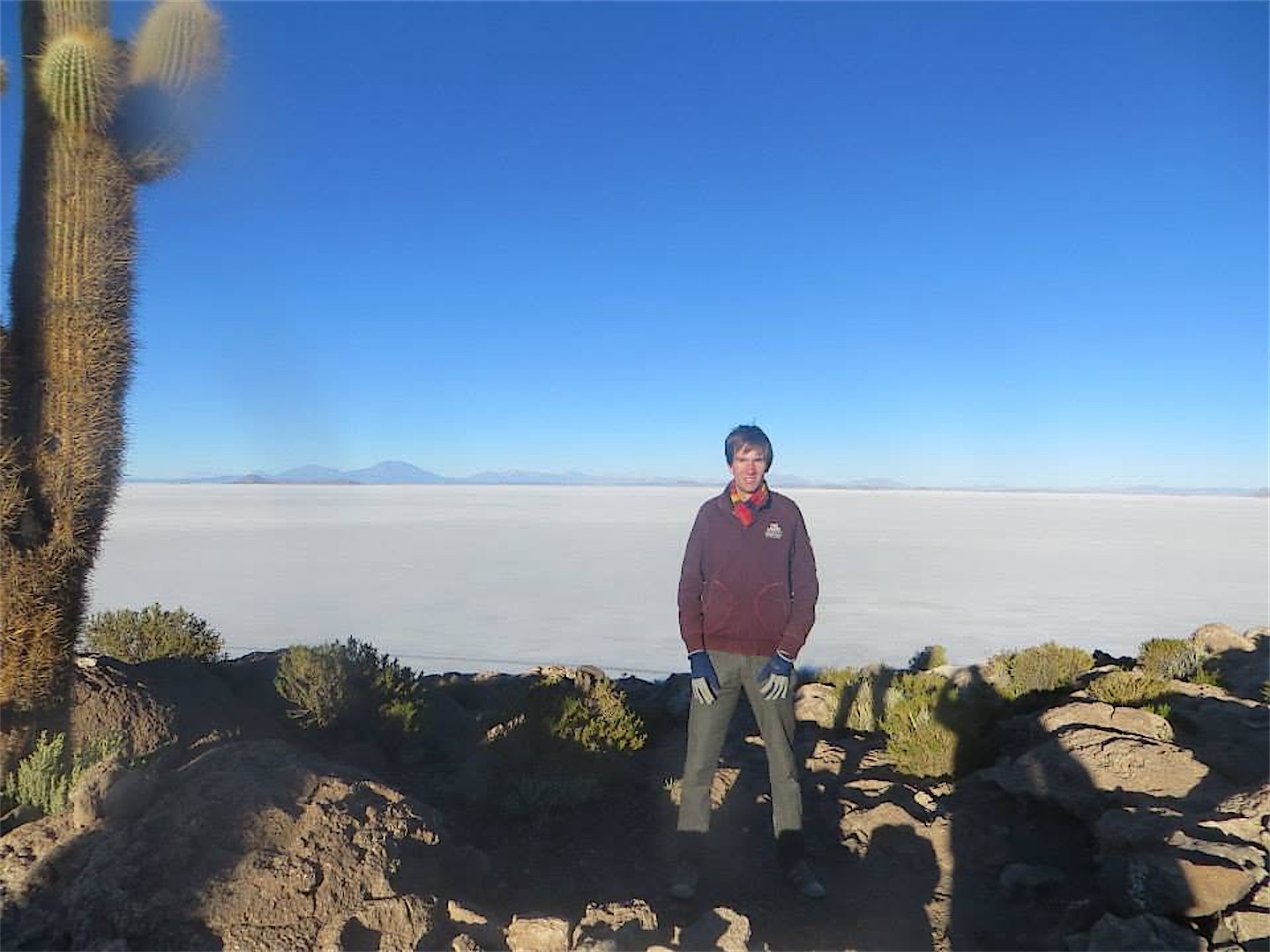
The largest salt flat on earth
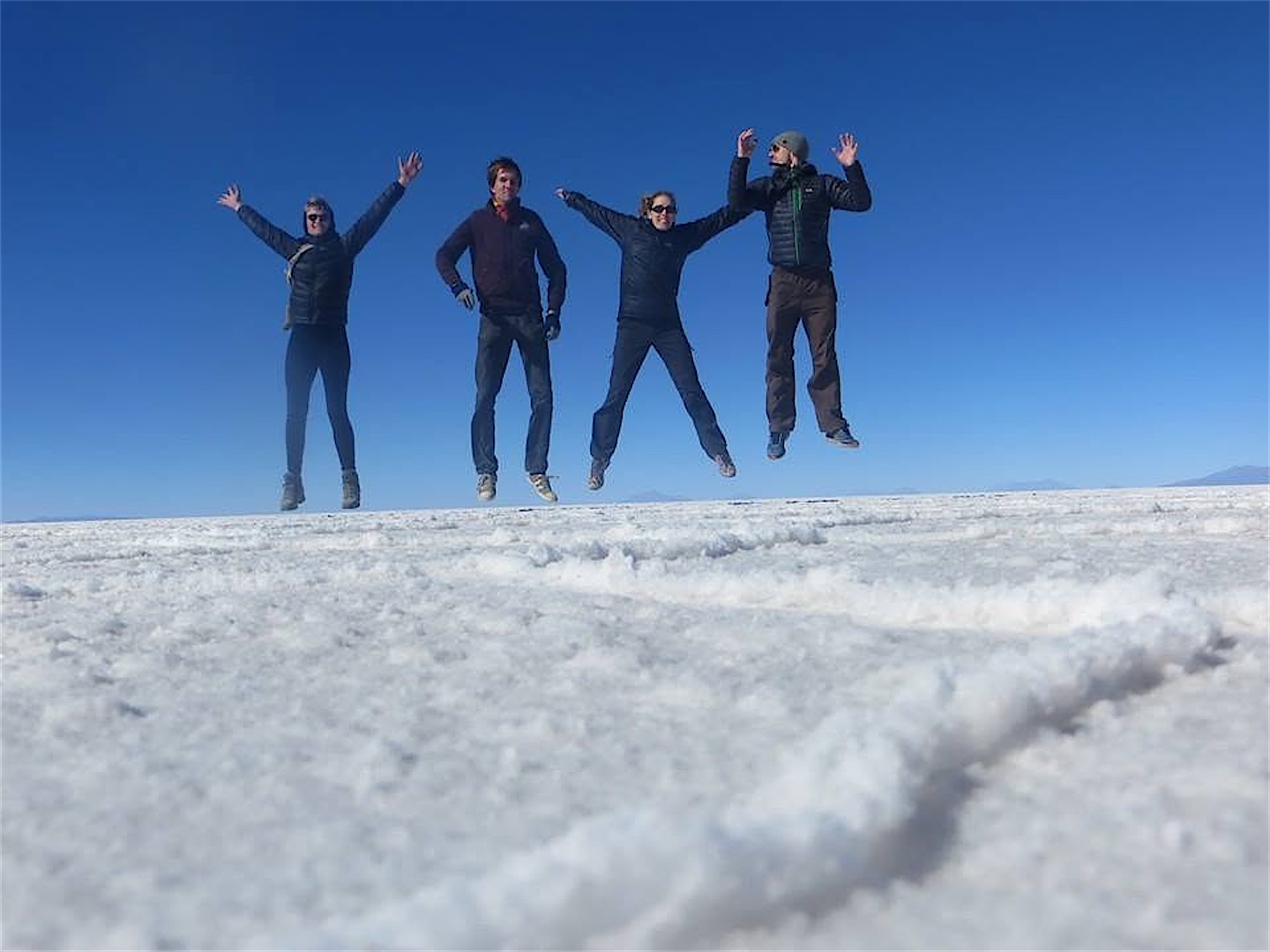
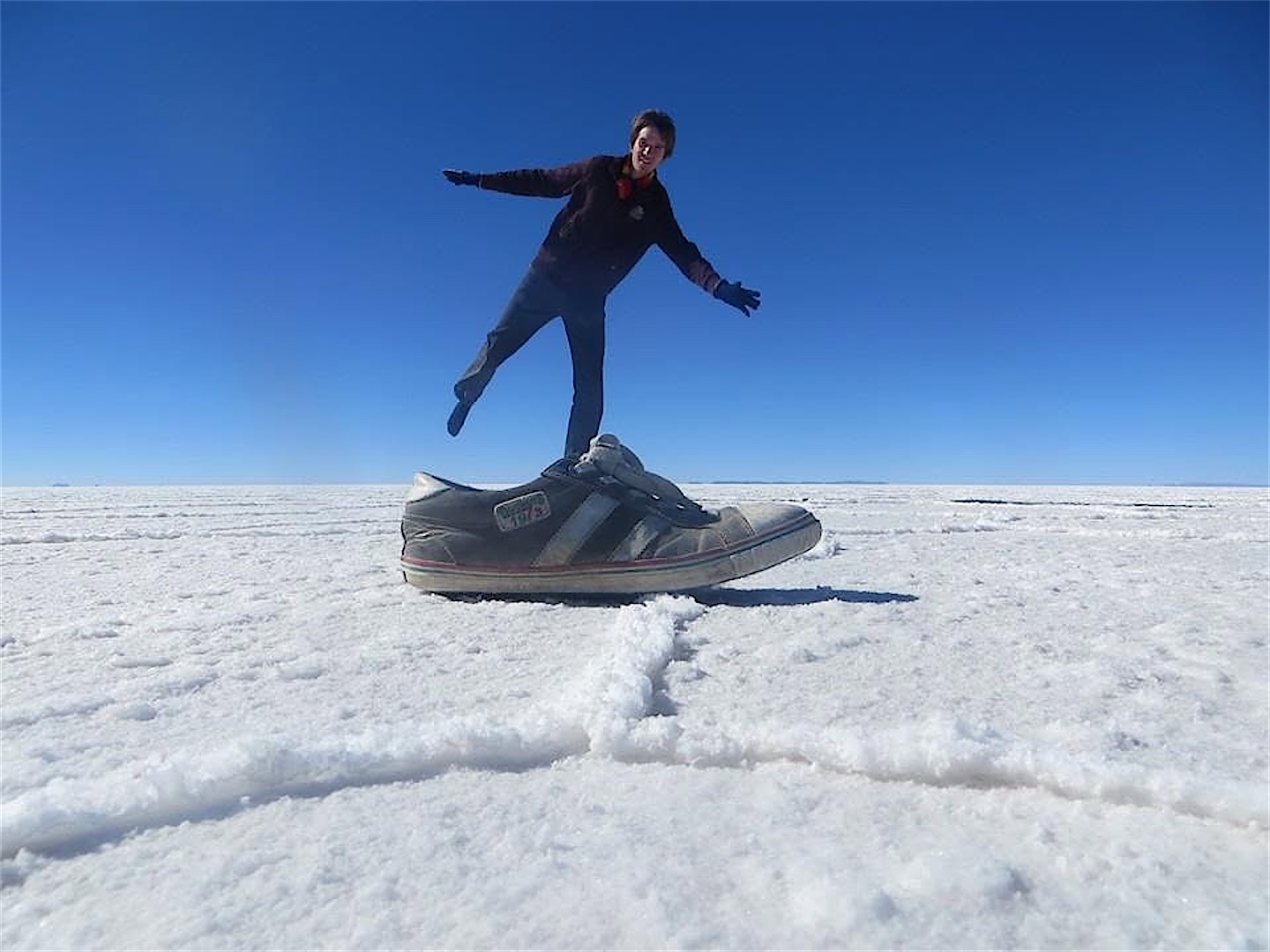
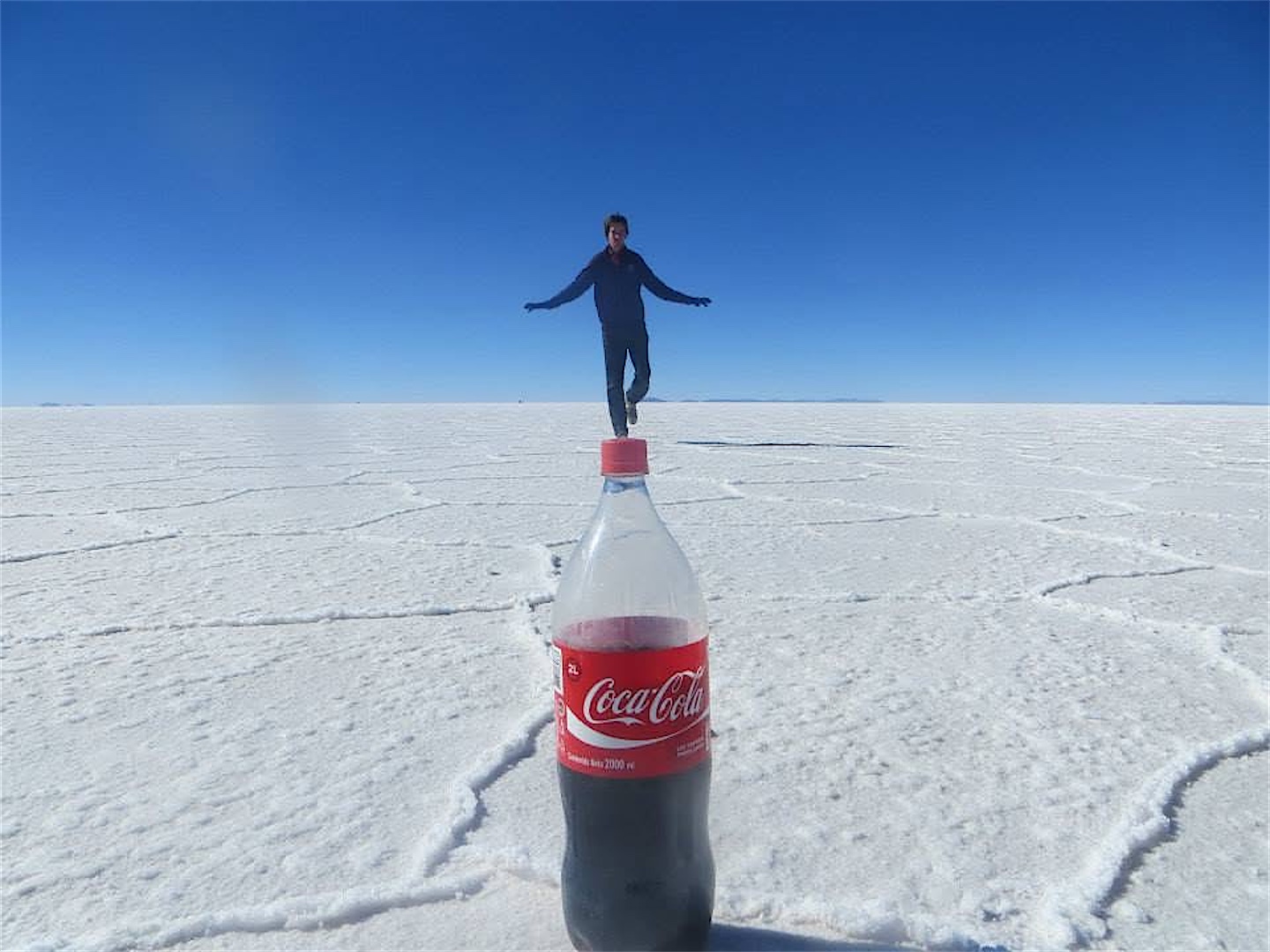
The Salar de Uyuni is so flat and so white that it plays tricks on your eyes. Without trees, buildings or any other point of reference, near and far merge, and every visitor ends up doing the same thing: perspective photos. We jumped into the air together, balanced on giant shoes and stood on top of bottles. Silly, of course, but hardly anyone leaves the salar without these pictures.
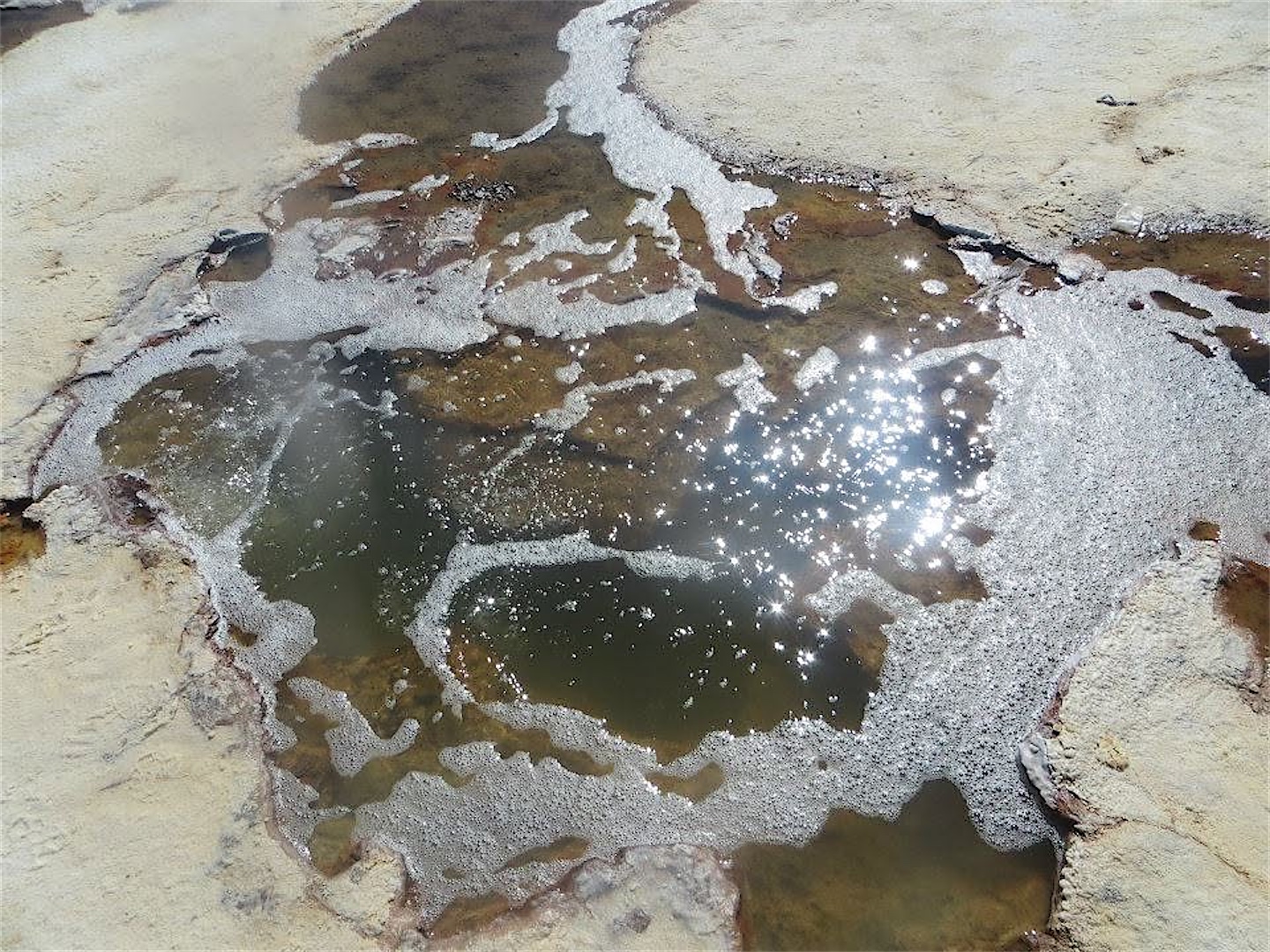
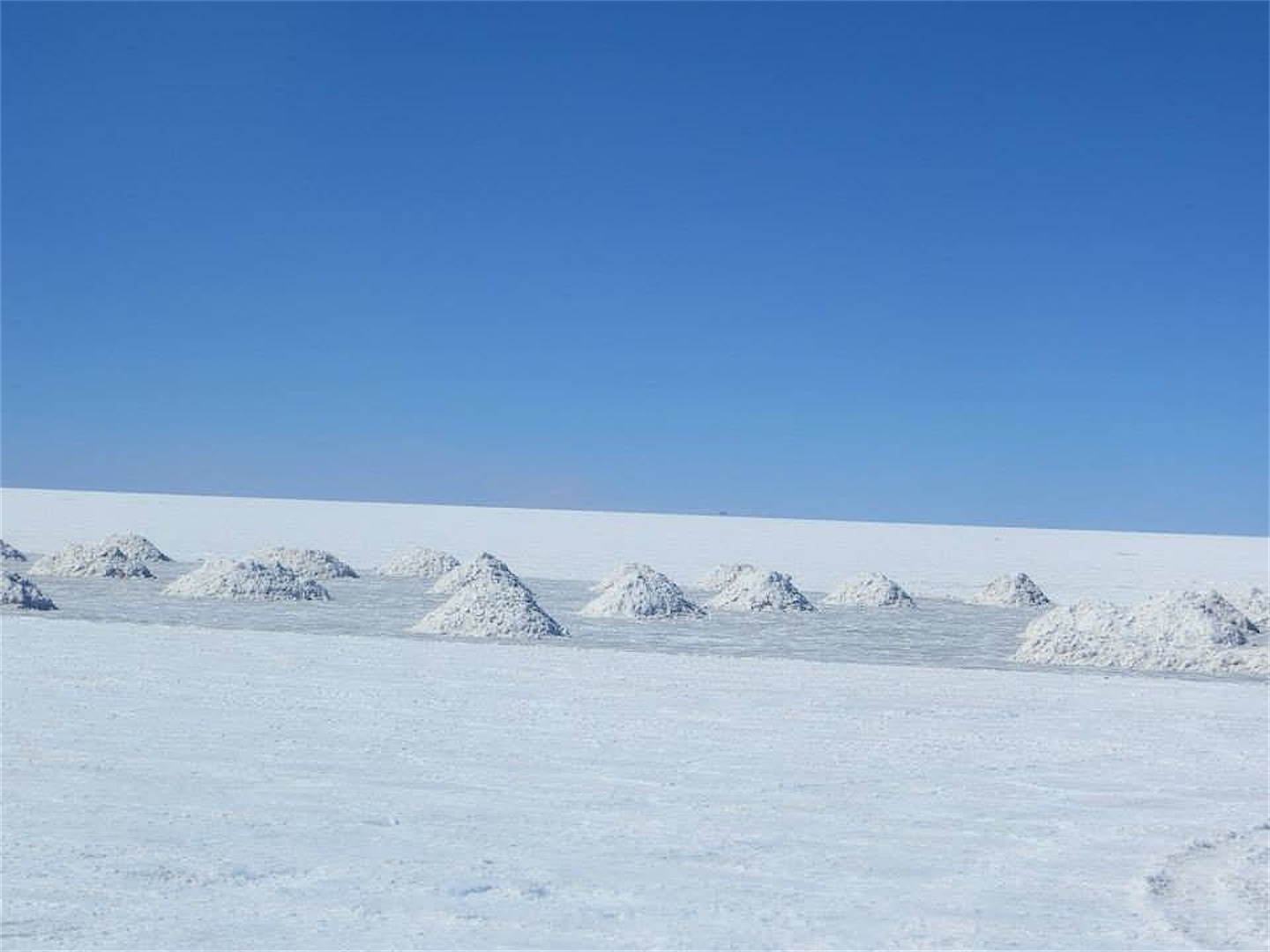
Up close the crust is far from uniform. In places it forms honeycomb patterns, and here and there water bubbles up through holes in the salt, the so-called eyes of the salar. Towards the edge of the flat, salt is still raked into small conical heaps to dry before it is carried away.
The train cemetery
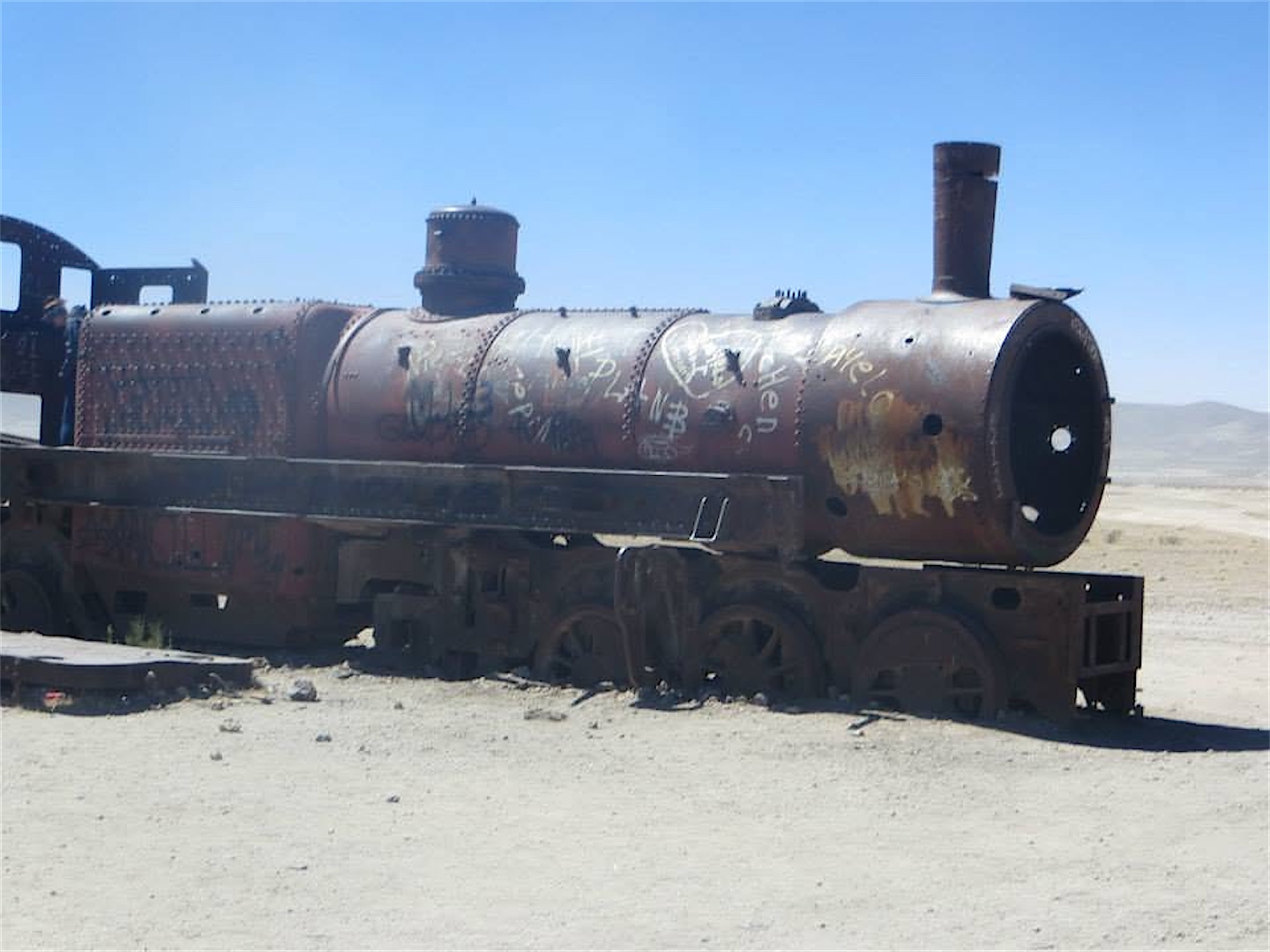
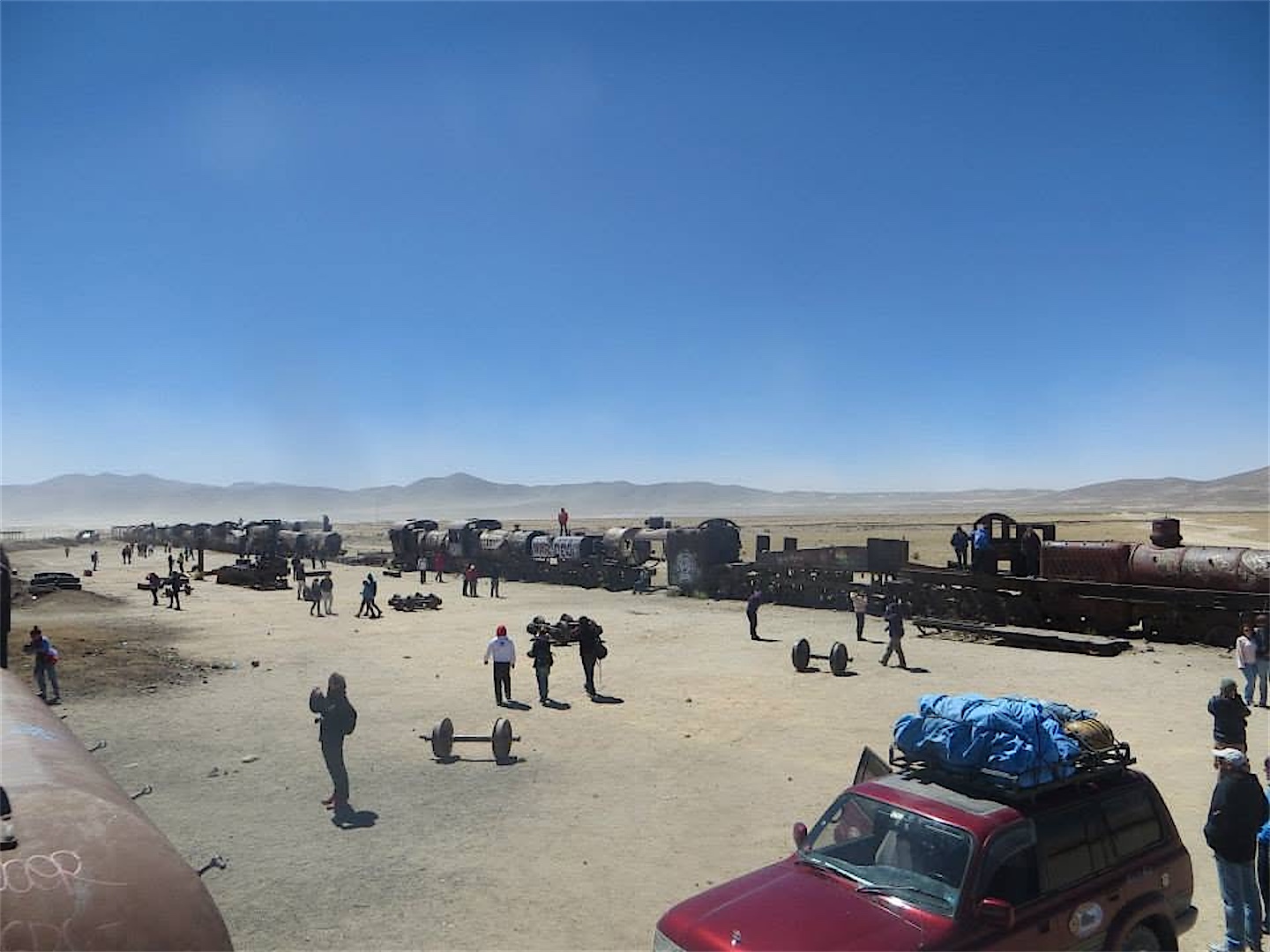
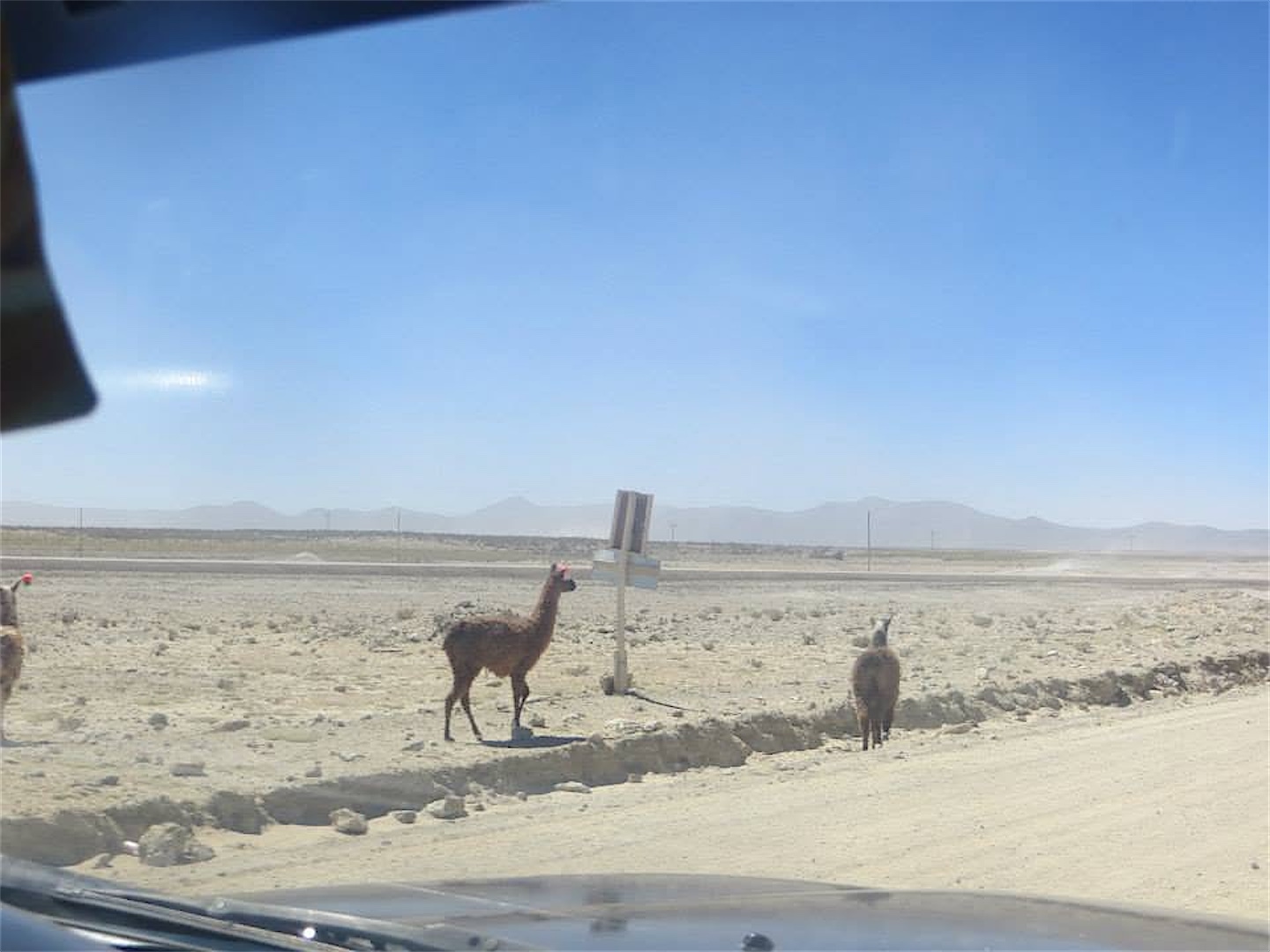
The tour ended in the town of Uyuni, and just outside it lies one of Bolivia's strangest sights: a cemetery of trains. Dozens of old steam locomotives and wagons rust away in the desert, covered in graffiti and climbed on by tourists. Somewhere along the way, llamas grazed beside the track.
La Paz from above
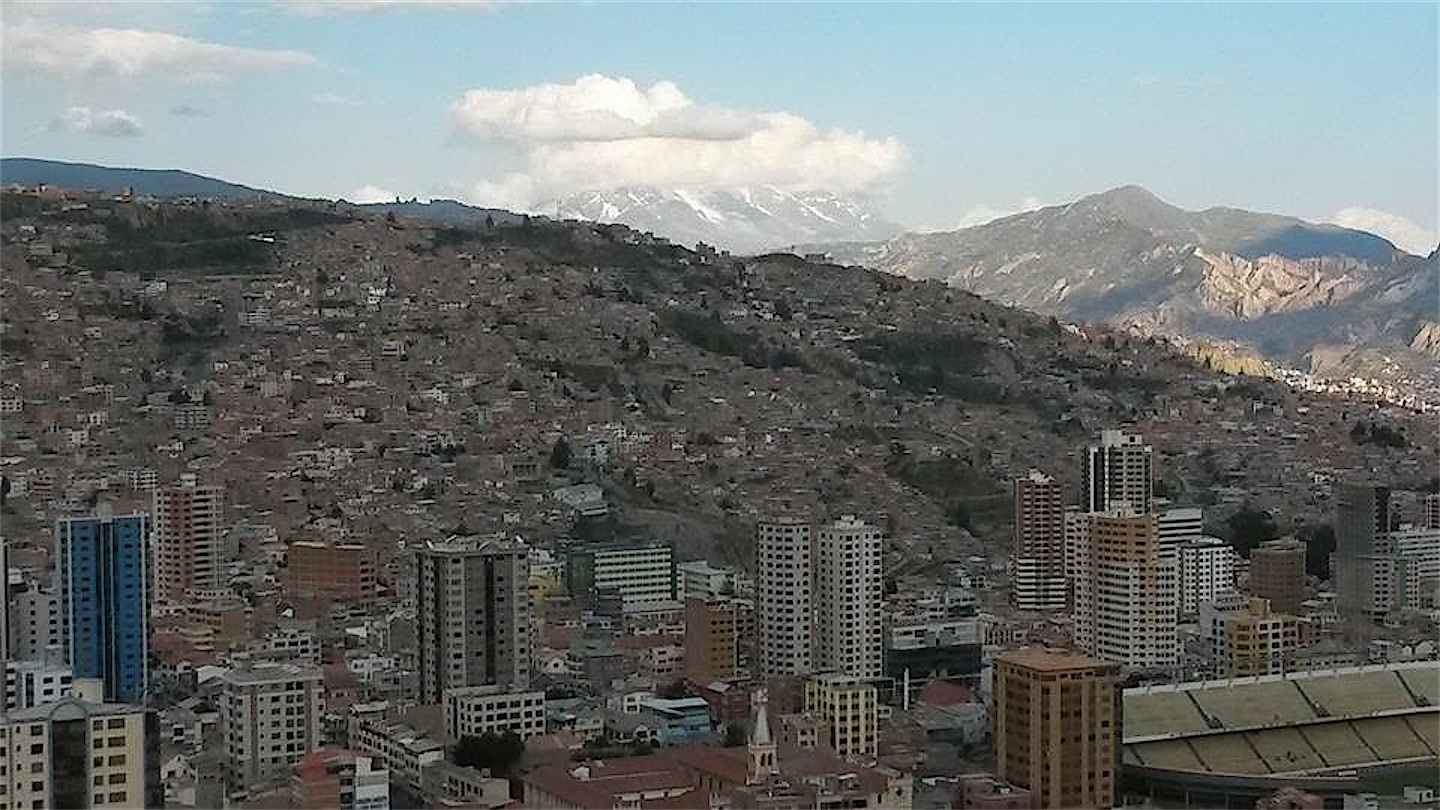
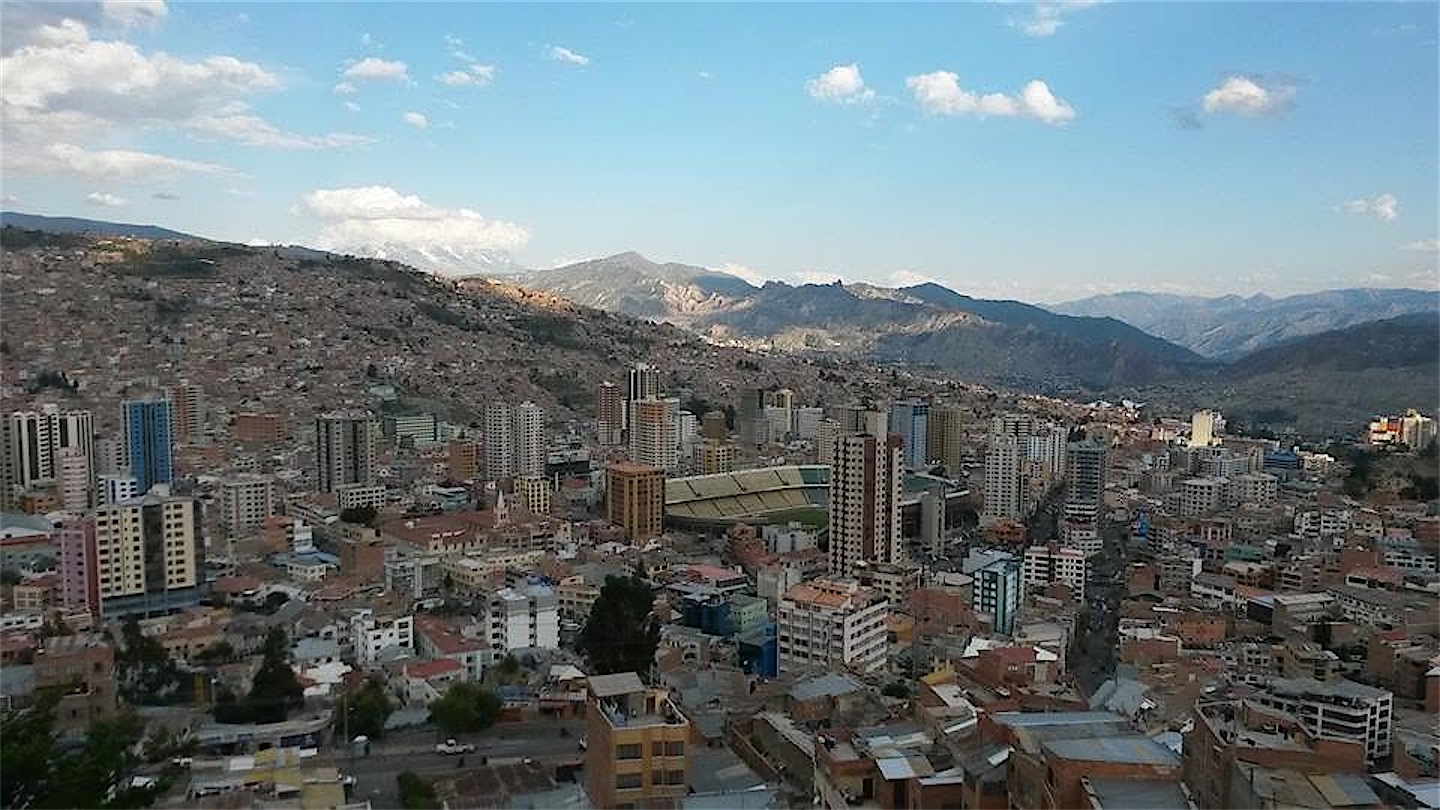
From the salt flats I made my way north to La Paz, the city where my Bolivian adventure had started so chaotically. This time I had time to look around. From a viewpoint above the centre, the city fills the whole canyon, with high-rises in the valley, red-brick houses climbing up every slope, and the snow-covered Illimani towering behind it all. La Paz was also my base for two more adventures of that trip: a visit to the city's notorious prison, which tourists could still enter back then, and the mountain-bike ride down the Road of Death.
Months later, back in Germany, I posted one more photo from the salt flat and called it the most beautiful desert on earth.