
Boarded by the Navy, Then up the Río Dulce: Sailing the SY Staatenlos from the Bay Islands to Guatemala
28 April – 18 May 2023 · Houston, Guanaja, Barbareta, Roatán, French Harbour, Lívingston, Río Dulce, Lake Izabal, Guatemala City · Regions: Honduras (Bay Islands), Guatemala
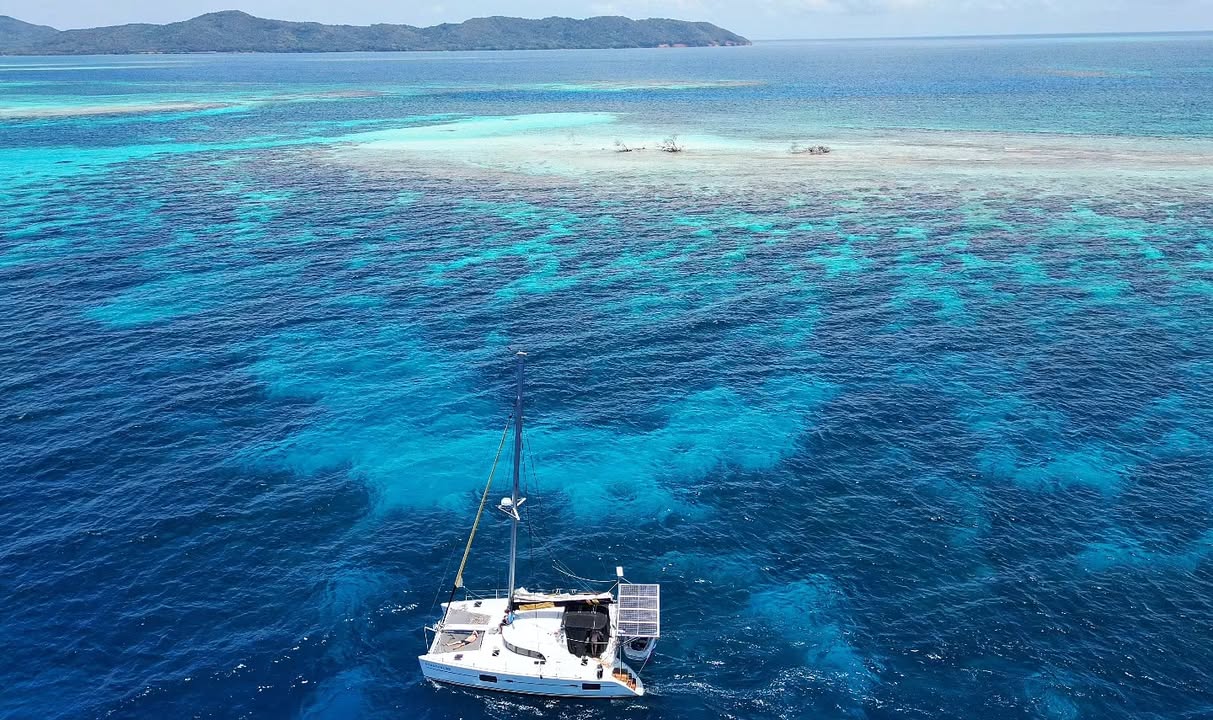
Two months after my five days on Guanaja I was on my way back to the Bay Islands of Honduras, this time to meet my own boat. The SY Staatenlos, our catamaran, was about to sail over from Cartagena in Colombia. The plan was two weeks of island hopping in the Bay Islands and then the crossing to Guatemala, where she would spend the summer up the Río Dulce. Since March she had a new flag, too. After a ten-week wait for the papers that took her off the Delaware register, she was now registered in Poland. Not the sexiest flag, as I put it, but valid for life, with no renewals. I had promised myself a strong vodka on it when I returned to the boat in May.
The long way to Guanaja
From Germany I took the long way round, with two nights in transit in Texas. The Texans impressed me: the fastest immigration and hotel check-in I had ever experienced. On 30 April I flew on to Guanaja, and together with two friends I entered Honduras the weekend before the boat was due. On 1 May we arrived at the cays of Guanaja to wait for the SY Staatenlos.
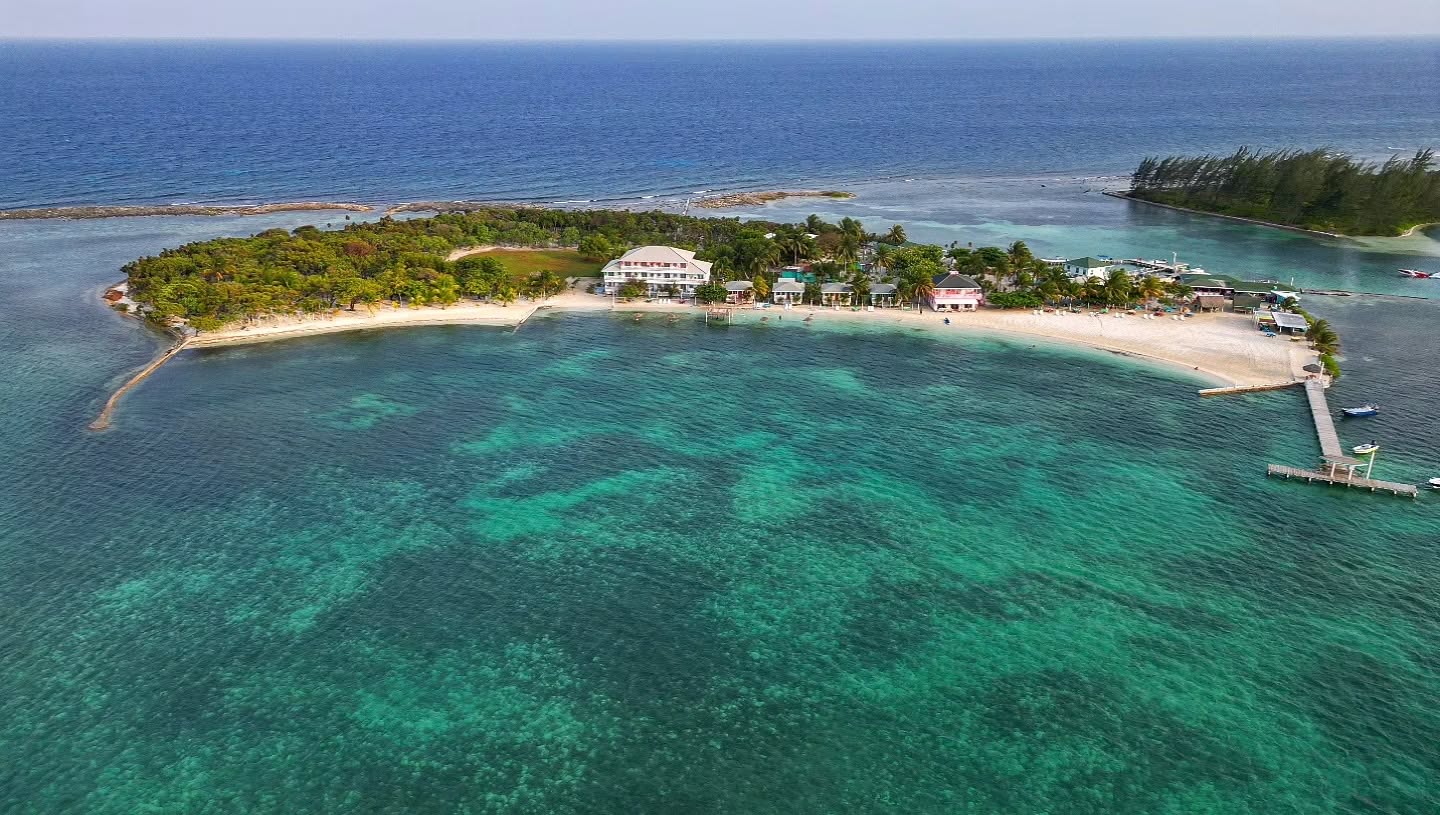
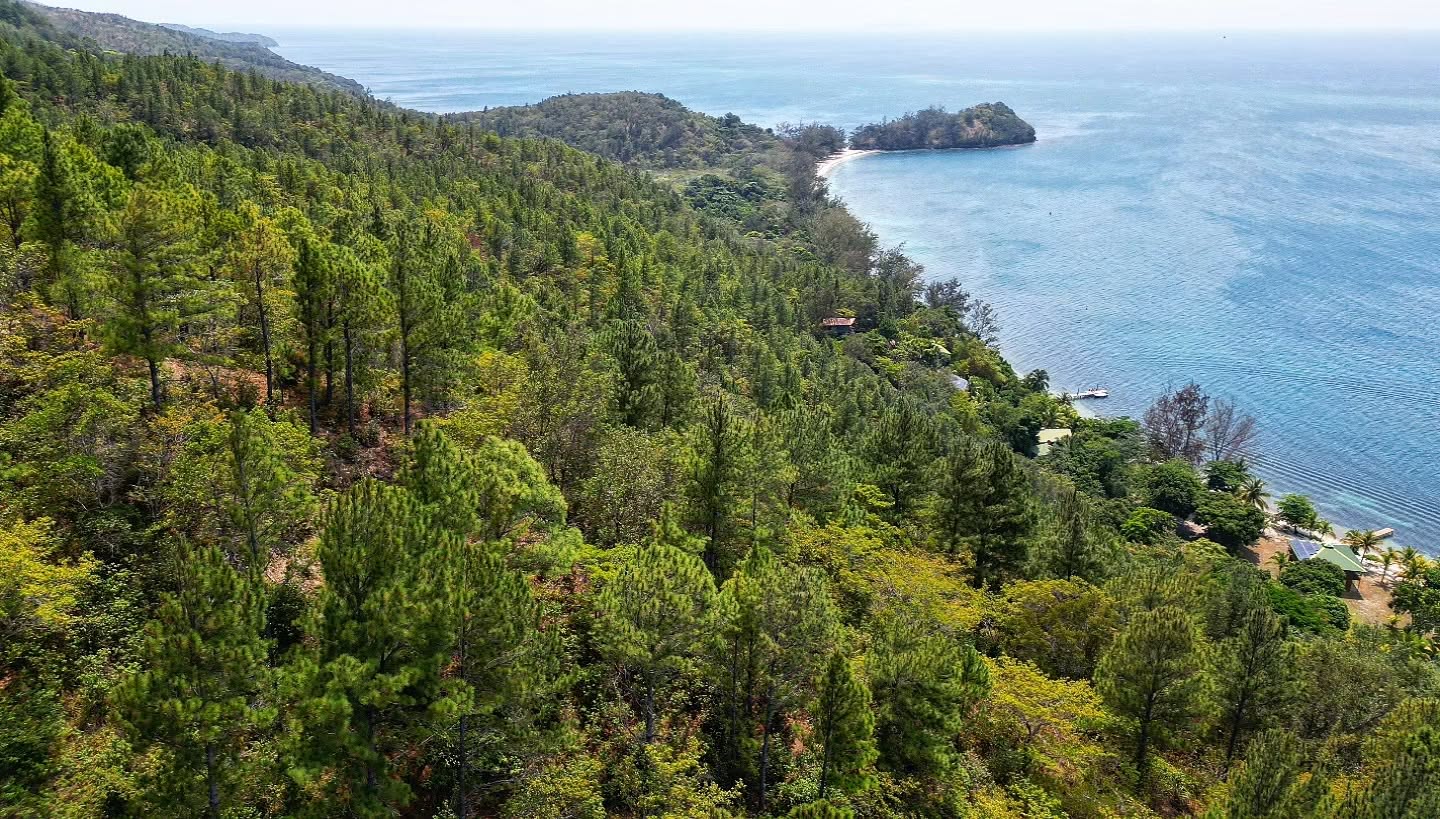
The cays are small islands scattered over the reef around Guanaja, some with a single house among the trees, some just a strip of sand and palms. From above the water around them shows every shade from deep blue to pale turquoise. We spent the waiting days among them, with a stop at Graham's Place and its view of Bonacca.
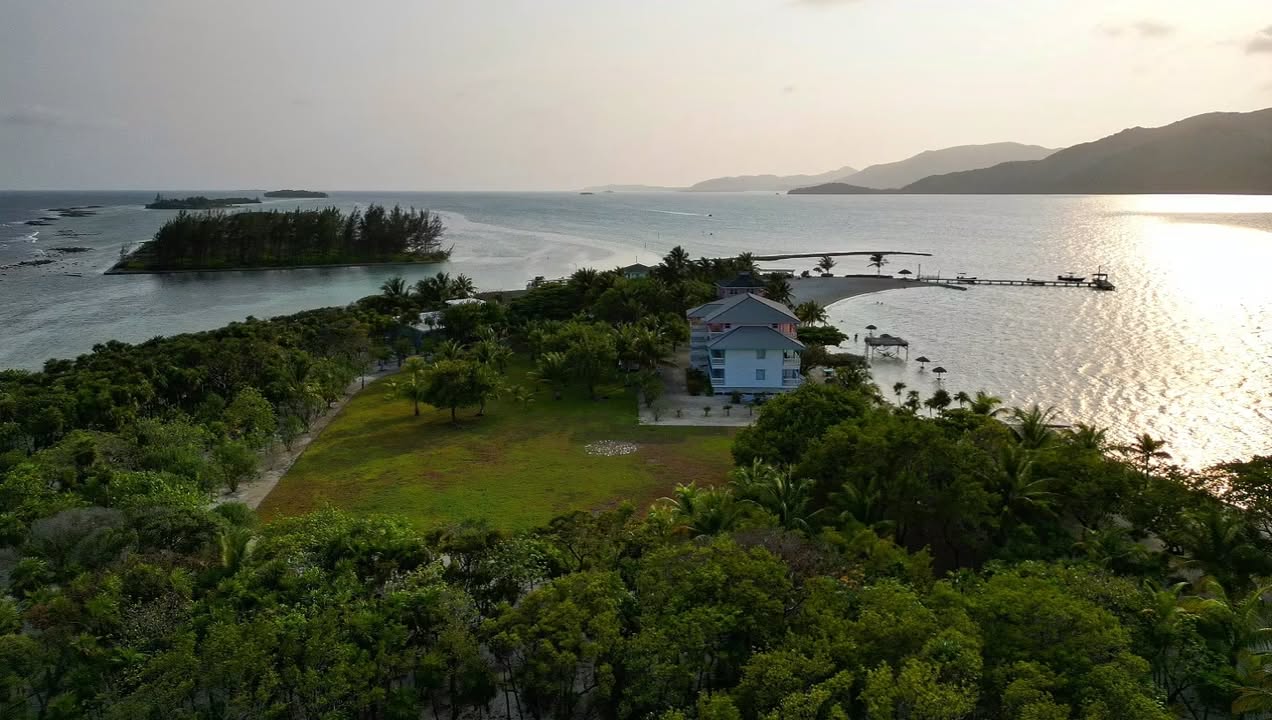
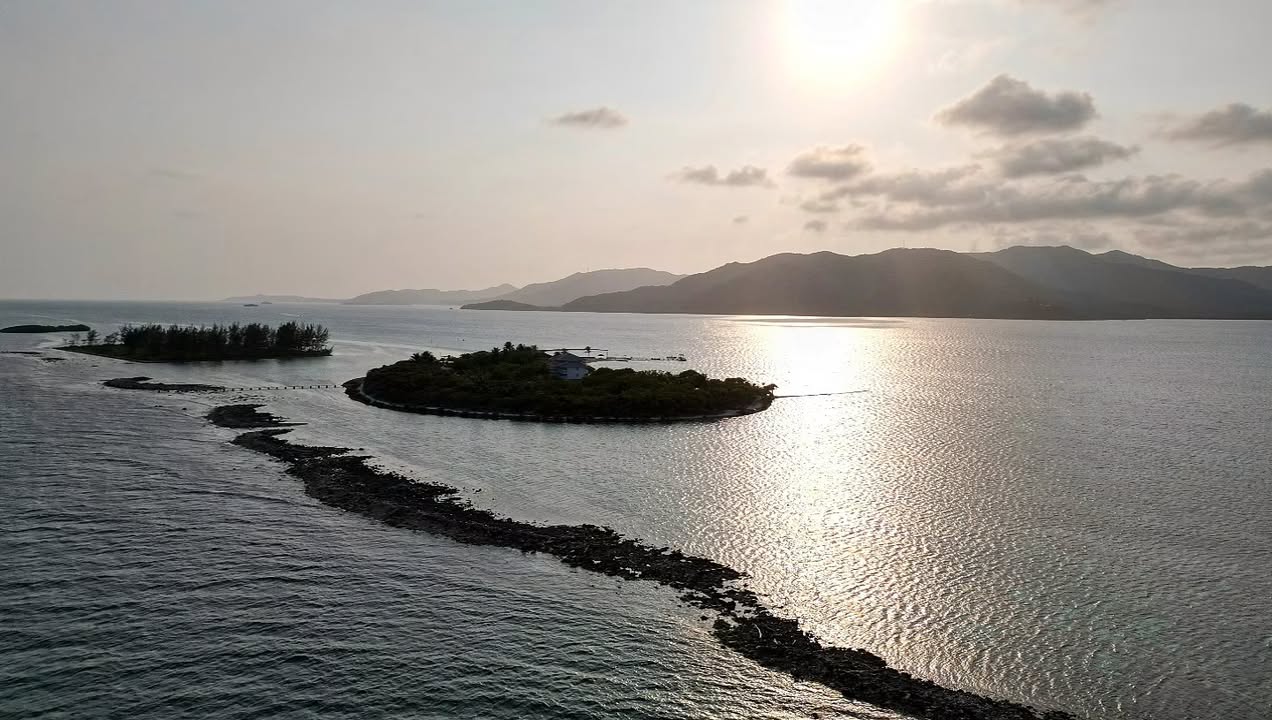
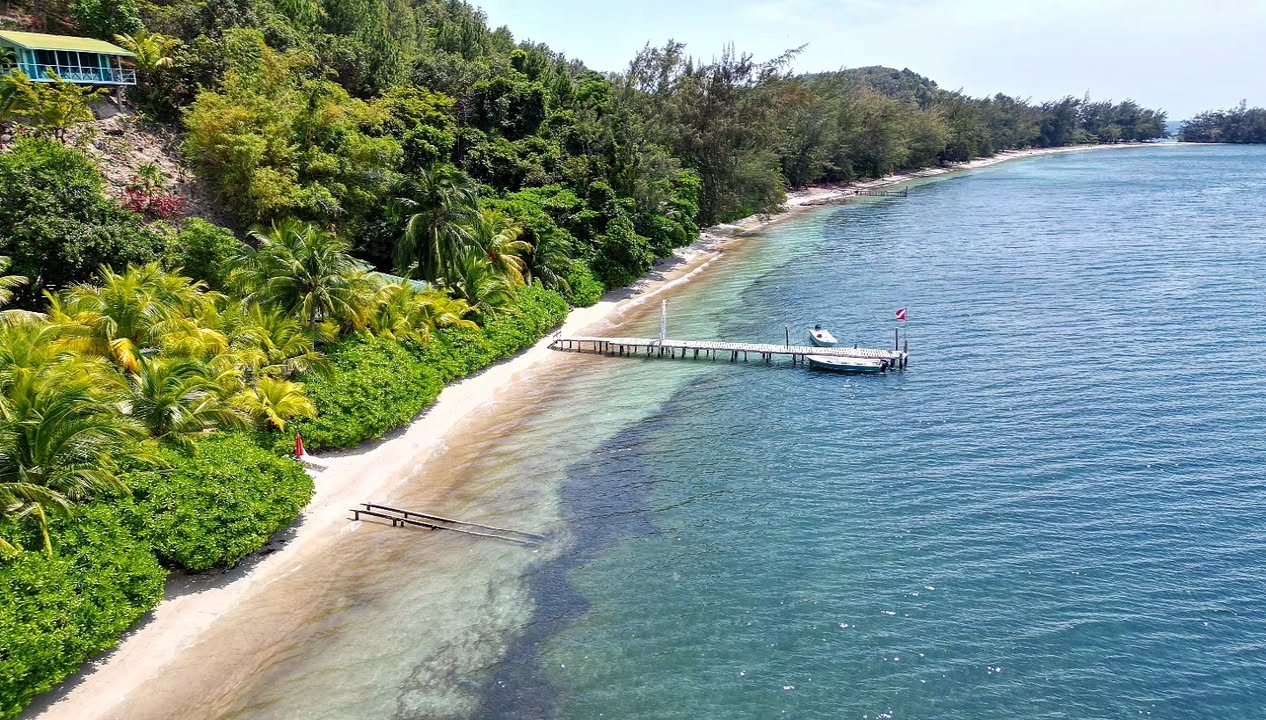
On 2 May we explored the main island. A forty-minute hike from the beach brought us to a wonderful waterfall, very refreshing. The trail starts at the coast, where pine-covered hills drop steeply to a narrow beach and the reef begins only a few metres out.
Boarded at night
Meanwhile the SY Staatenlos was on her way. She had left Cartagena on 28 April with proper clearance and was searched by the Colombian coast guard a few hours after departure, without result. The rest of the passage was uneventful, apart from a fishing boat off Nicaragua that came quite close before turning away. She had a crew of three Germans on board, and little wind on the final days delayed her arrival to the night of 3 to 4 May.
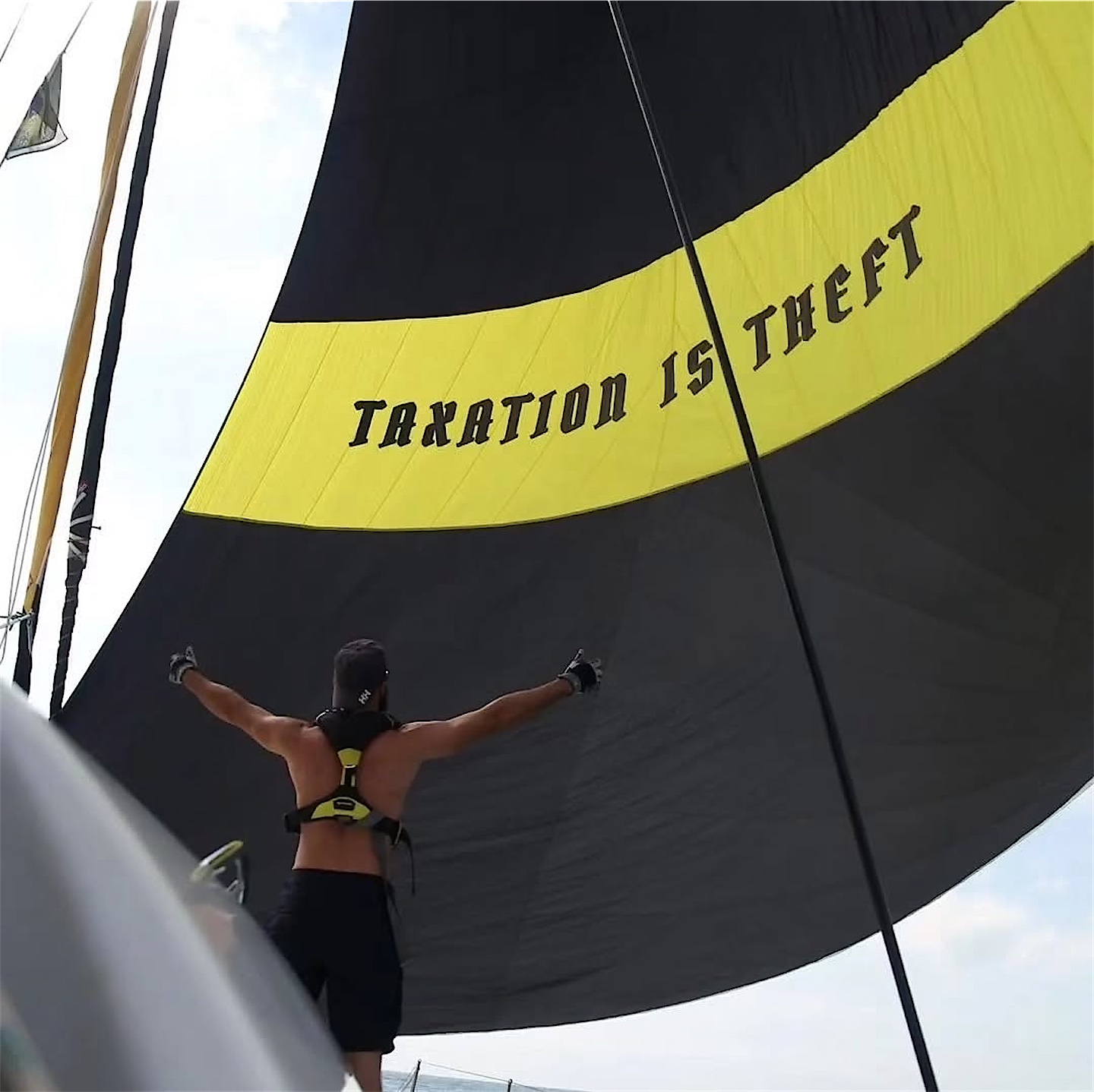
About 25 miles off Guanaja that night, the boat was boarded by the heavily armed Honduran navy. There had been no warning and no radio contact, so the crew's first thought was pirates. Our catamaran was sailing in stealth mode, with AIS and lights switched off, because the waters off Nicaragua are notorious for piracy and there had been attacks not long before. The navy wanted to force the boat to its base at Trujillo on the mainland, despite heavy seas and engine problems, and the crew was tired after six days at sea. My skipper luckily stayed stubborn and headed for the anchorage of El Bight on Guanaja instead.
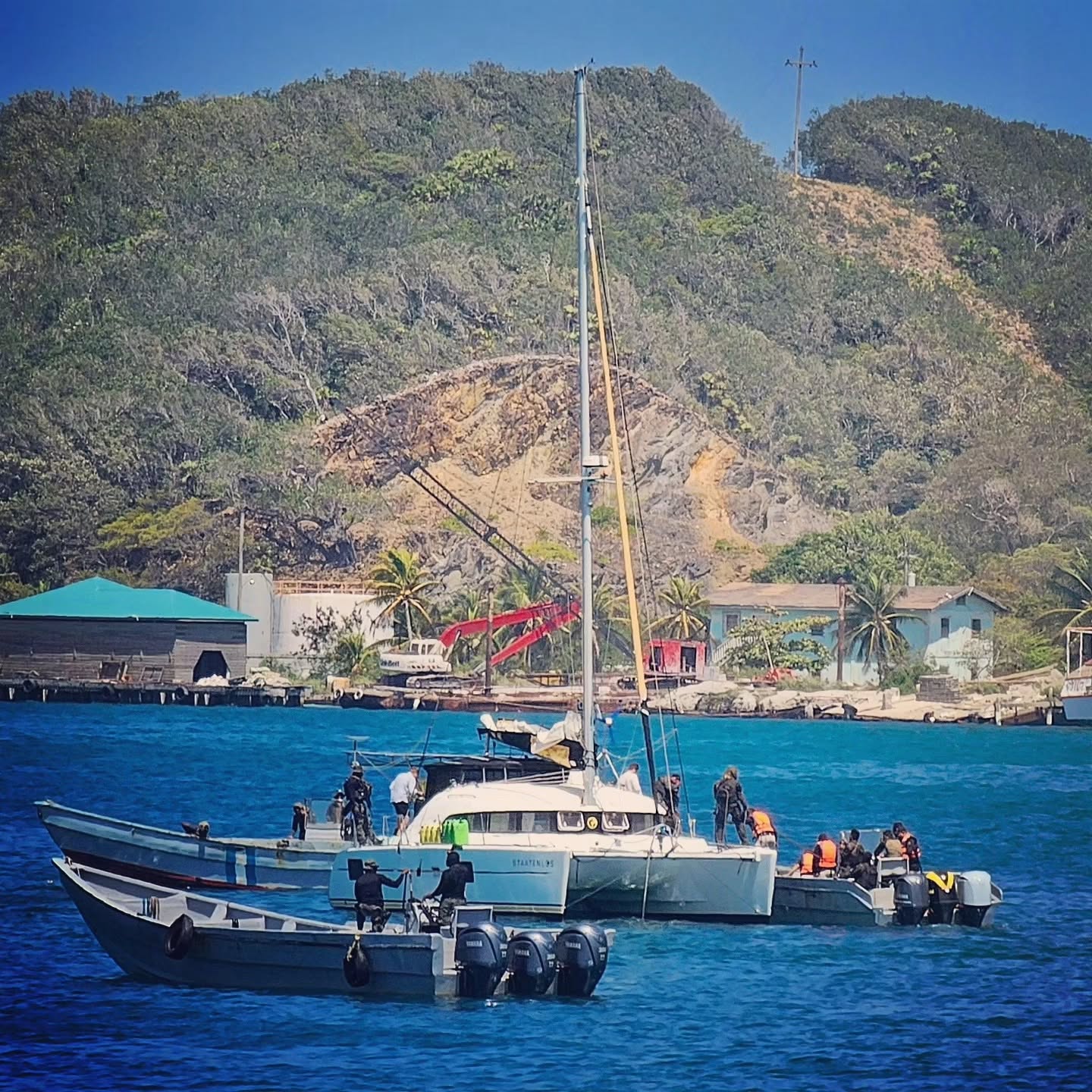
Welcome to Honduras. The next morning the boat was seized by some 20 navy gunmen looking for drugs. As I wrote at the time, I had always wanted to feel like a criminal. To be fair, there had been some neglect of formalities on our side. I had told the port authority that the boat was coming, and the port captain told us not to worry and to deal with everything once she arrived, so I never looked into the online arrival registration that was apparently required. Still, I did not think that justified the experience, and we decided not to bring the boat back into Honduran waters after this trip.
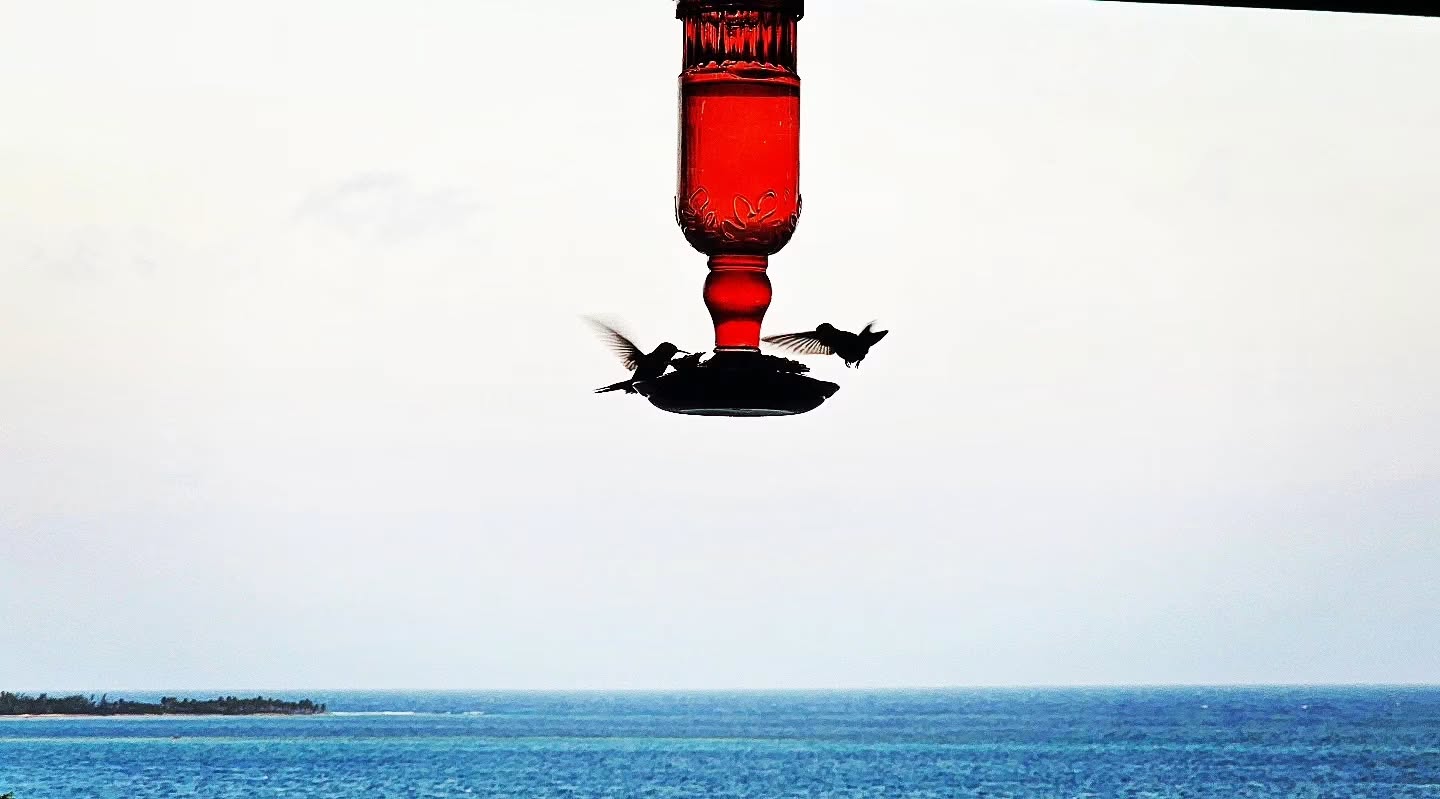
That same afternoon Guanaja showed its gentler side again. There were hummingbirds everywhere, one of them hovering at a feeder.
Past the reefs of Barbareta
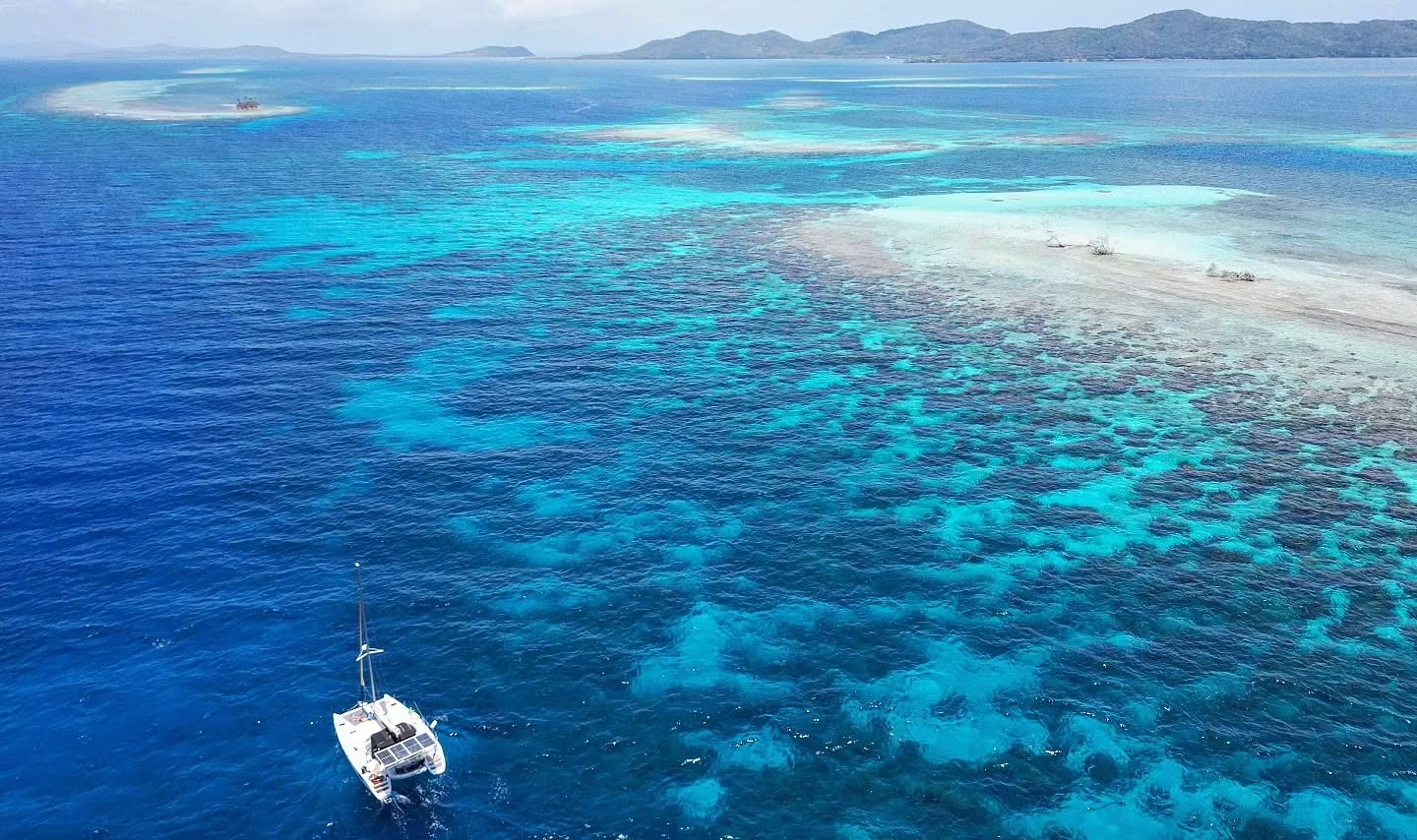
On 6 May the SY Staatenlos sailed again, from Guanaja west to Roatán. On the way our skipper took us close to the reefs of Isla Barbareta, a small island off the eastern end of Roatán. From the drone the catamaran looked tiny above the coral heads, which showed up as dark patches in the turquoise water.
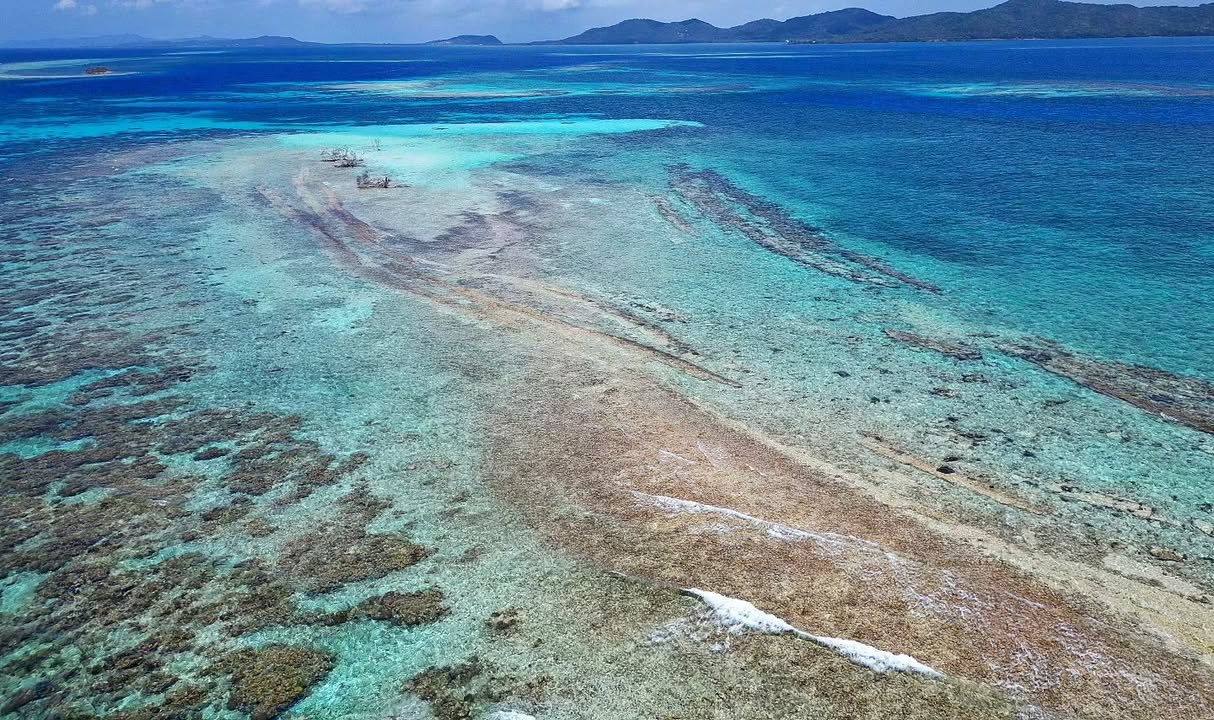
Closer to the island the reef rises almost to the surface, with sandbars, breaking waves and channels of deeper water in between. It is beautiful to look at and a good reason to navigate carefully.
French Harbour, Próspera and Bitcoin Beach
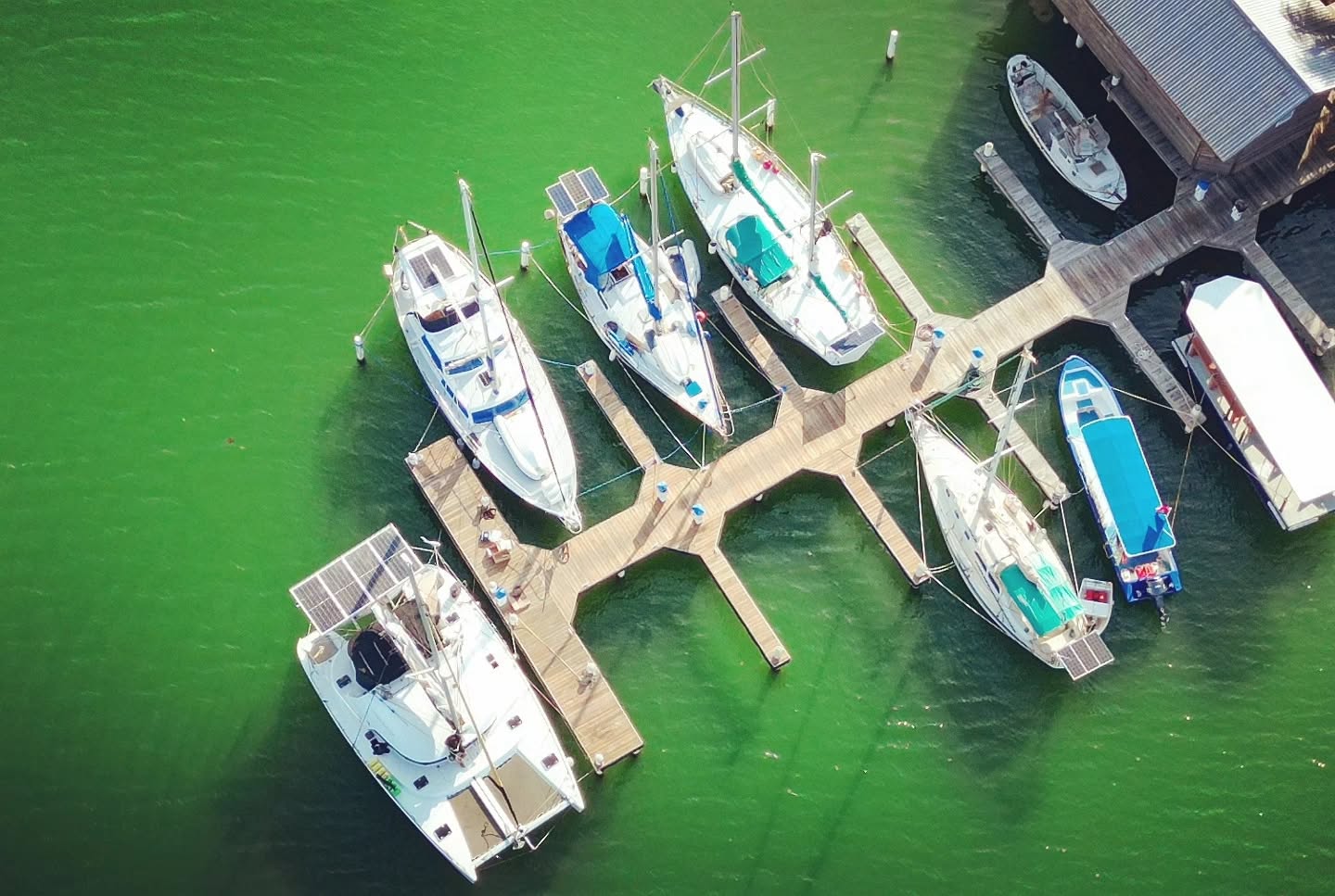
On 7 May we arrived at French Harbour and tied up at the Roatán Yacht Club. Here we are, I wrote, with the boat safely in the marina.
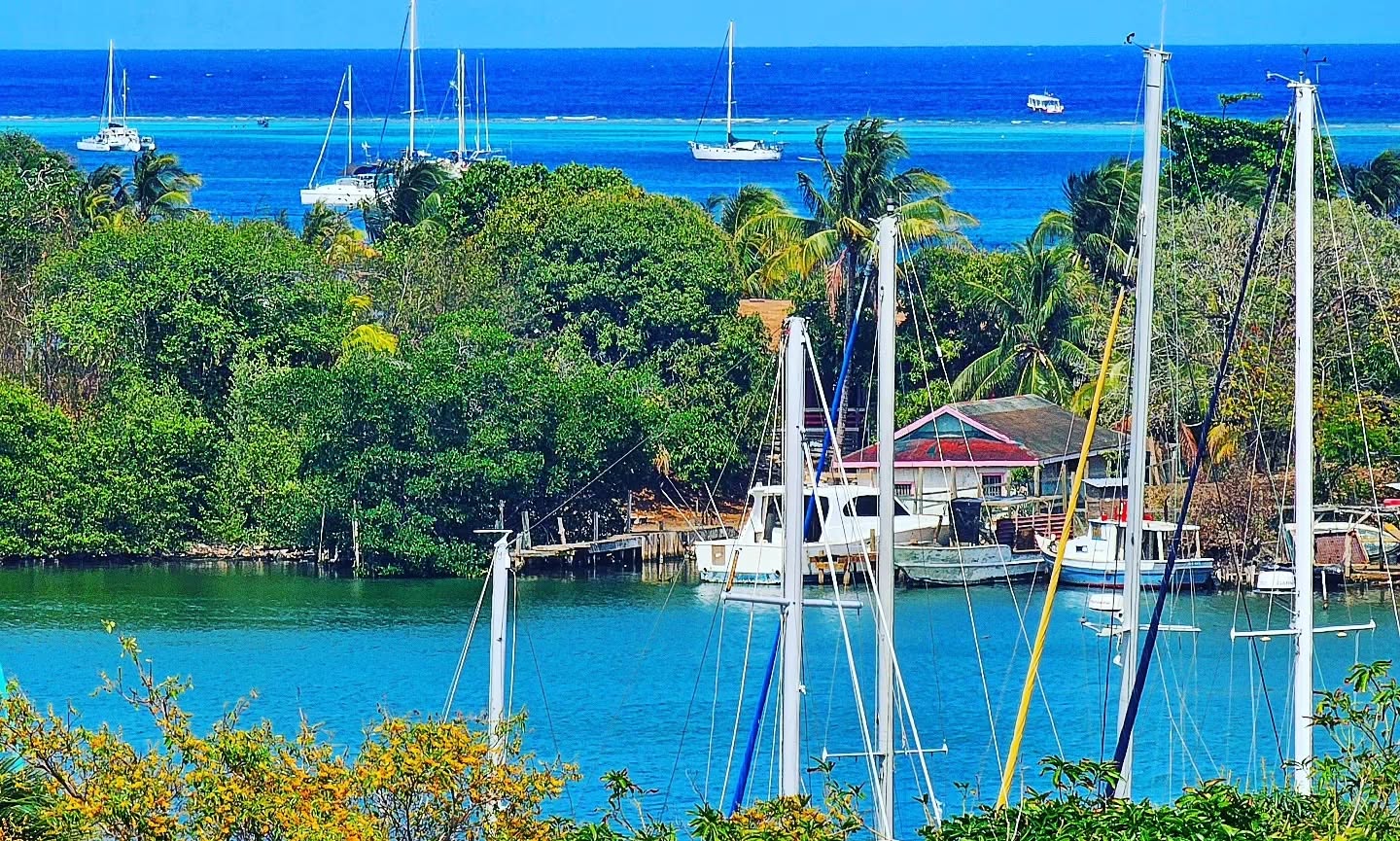
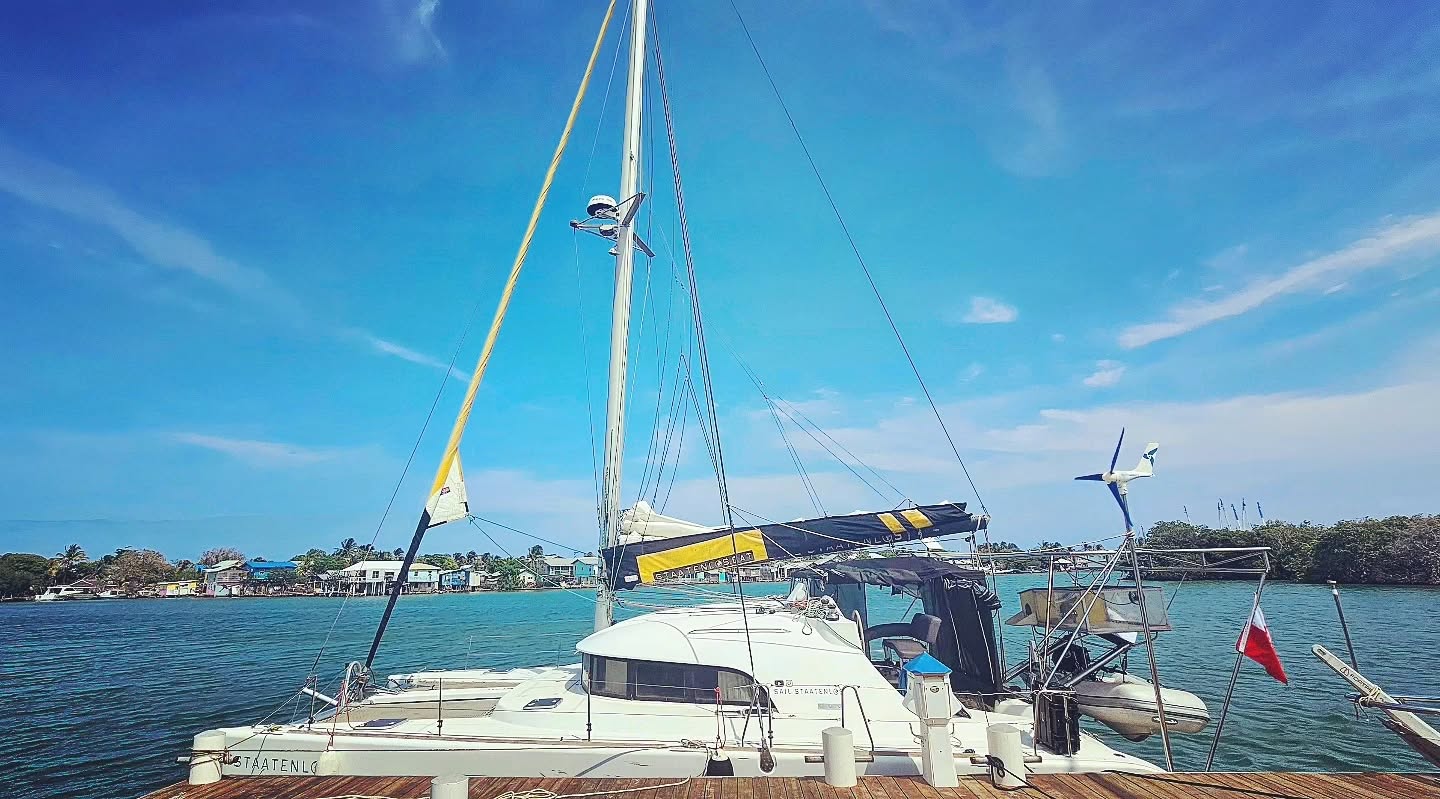
French Harbour lies on the south coast of Roatán. It is the island's working harbour rather than a beach resort, with a few small cays just offshore and a marina that is small but nice. From there we explored. We stopped at Bitcoin Beach, and on 8 May I paid another visit to Próspera, the private special economic zone I had looked at in February on my way to Guanaja.
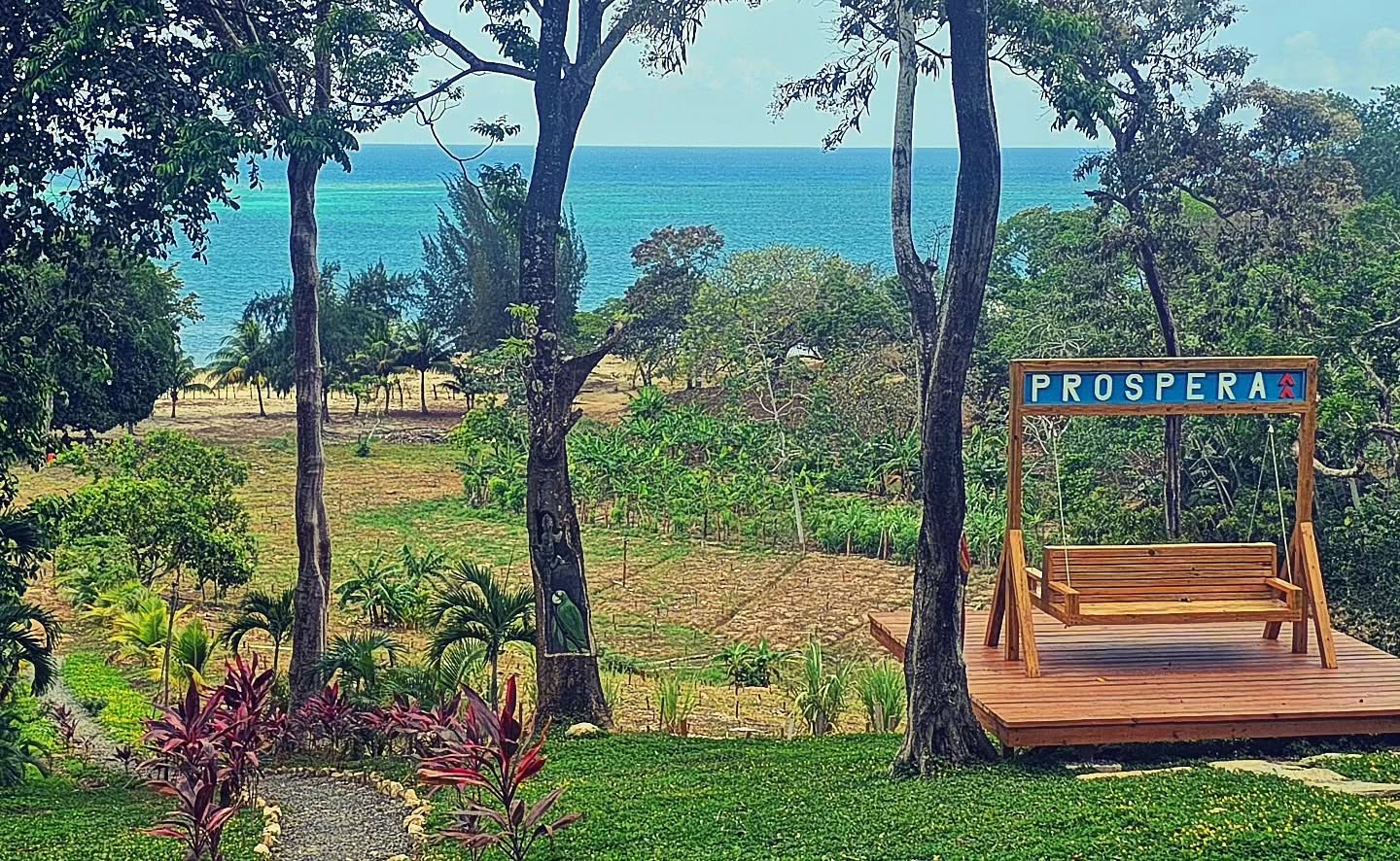
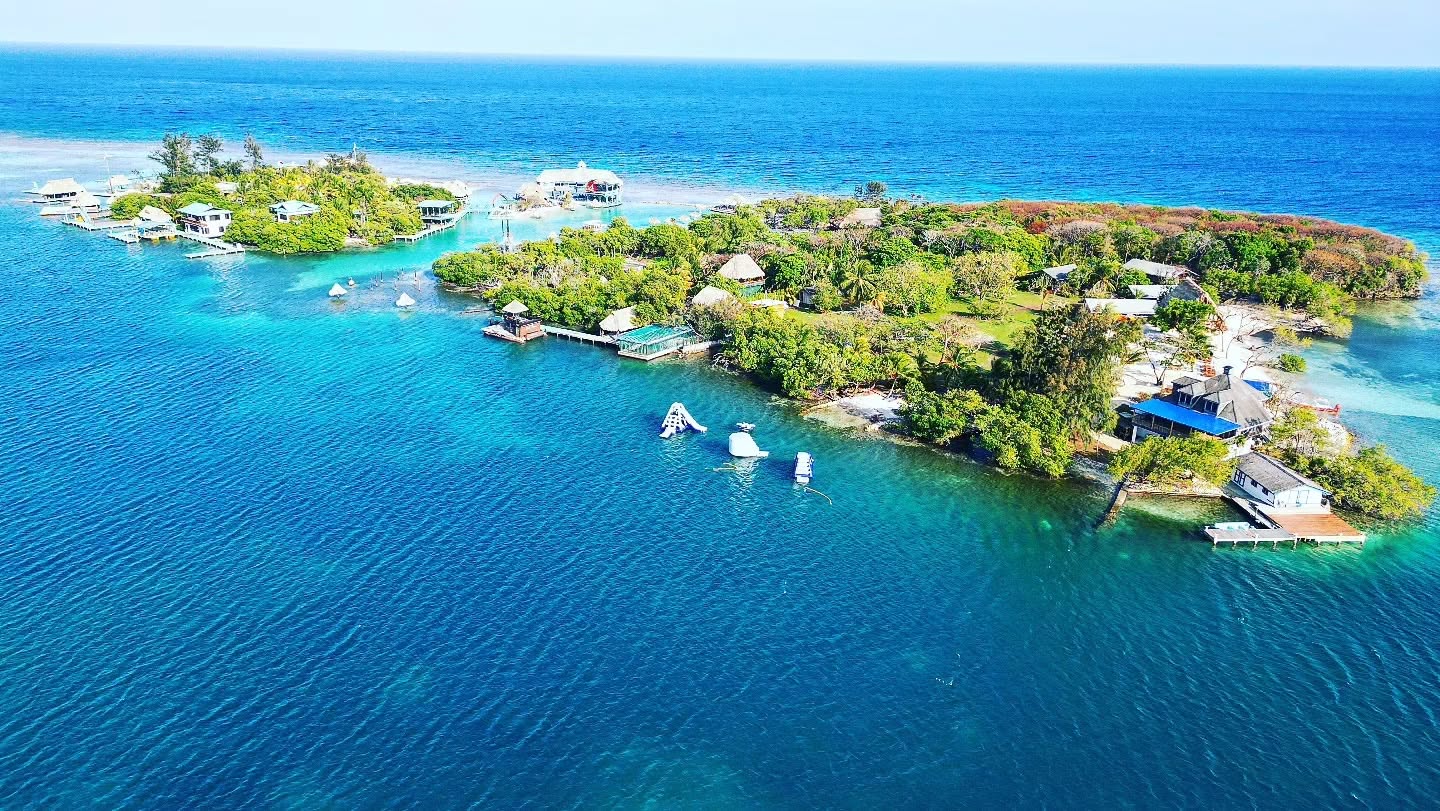
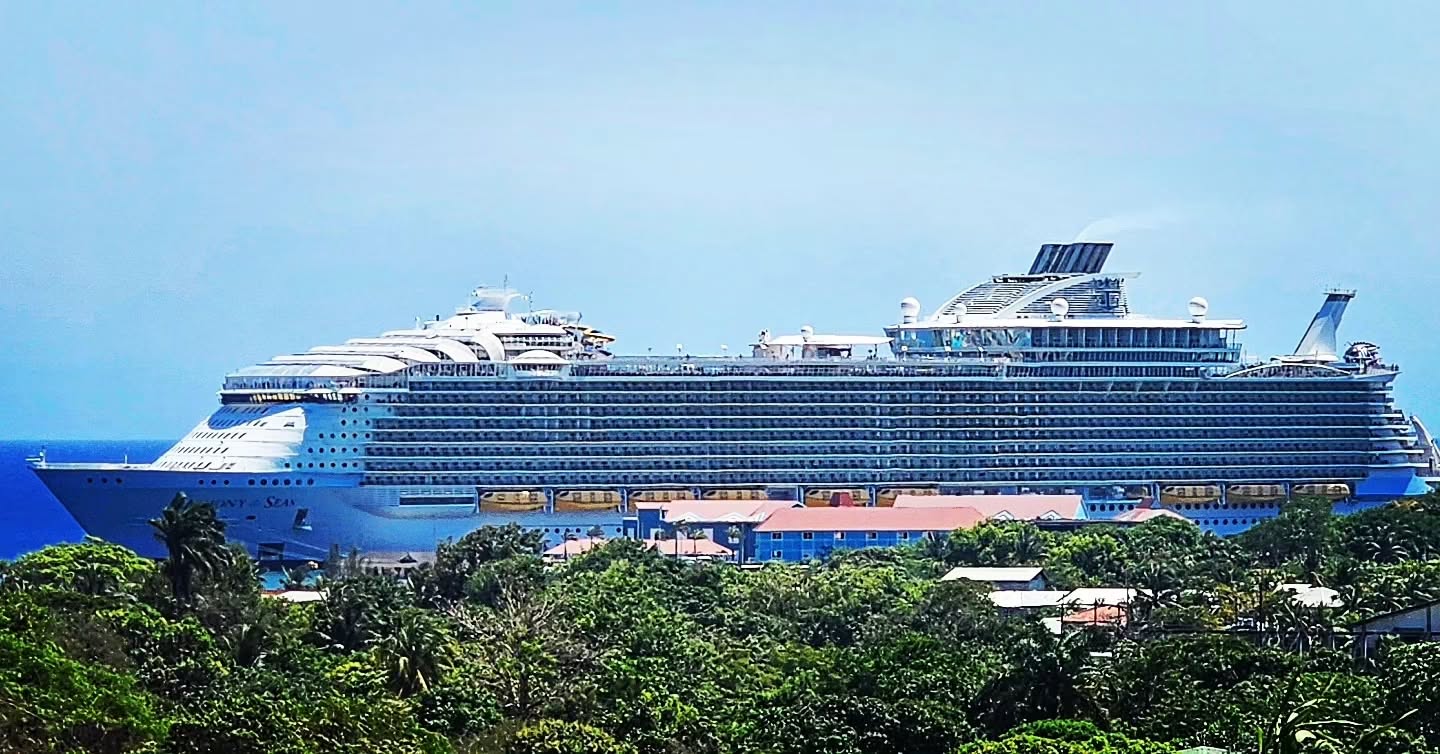
Not everything worked out. The submarine trip I had planned on Roatán was cancelled. On 9 May it was cruise ship day, with two big ships at Roatán at once. We were already preparing to leave for Guatemala, earlier than expected.
Caribbean Guatemala
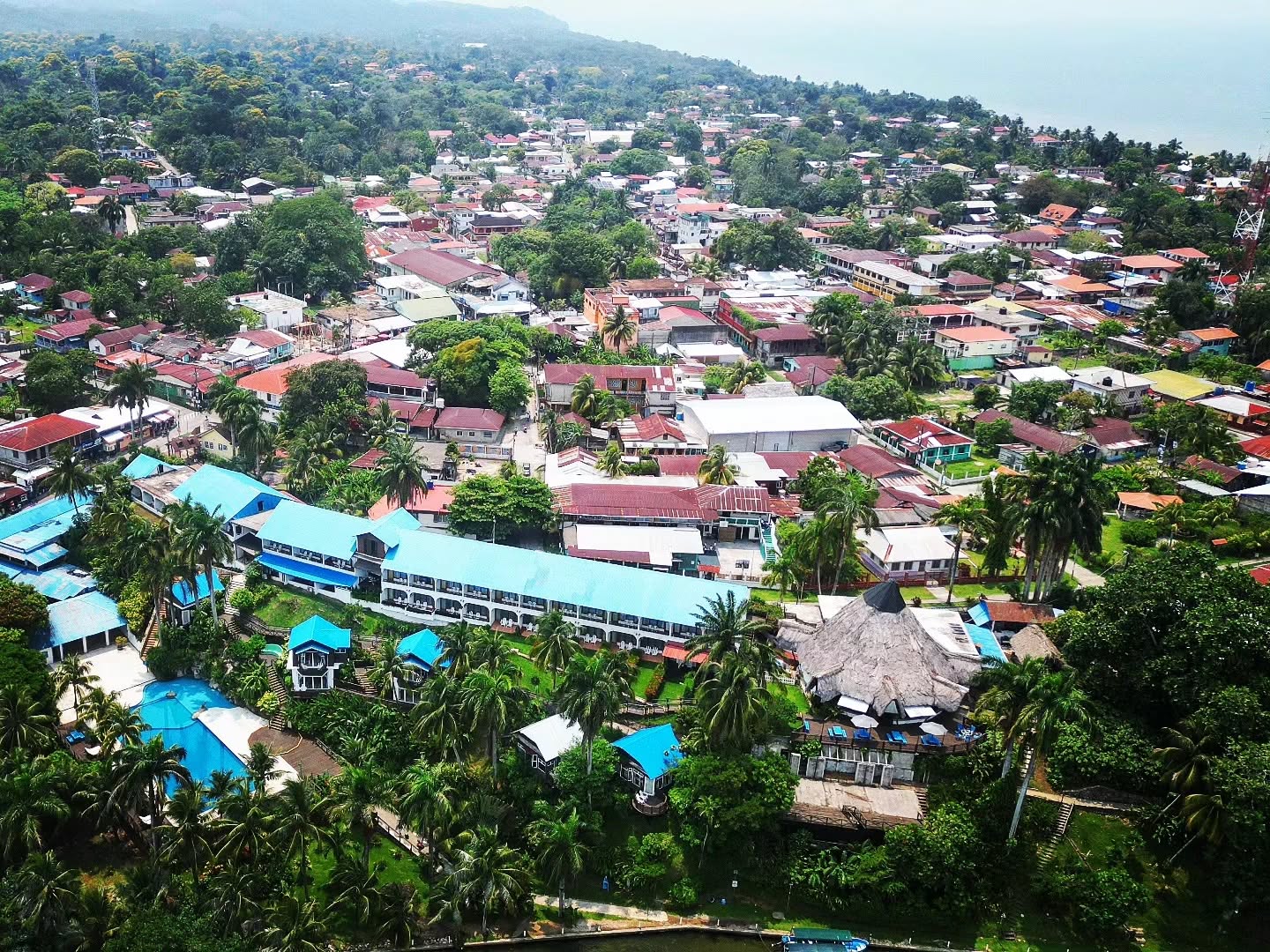
On 10 May we sailed west towards the mainland. Two other catamarans were following us, but we were faster. The next afternoon we reached Lívingston, the little town at the mouth of the Río Dulce on Guatemala's short Caribbean coast.
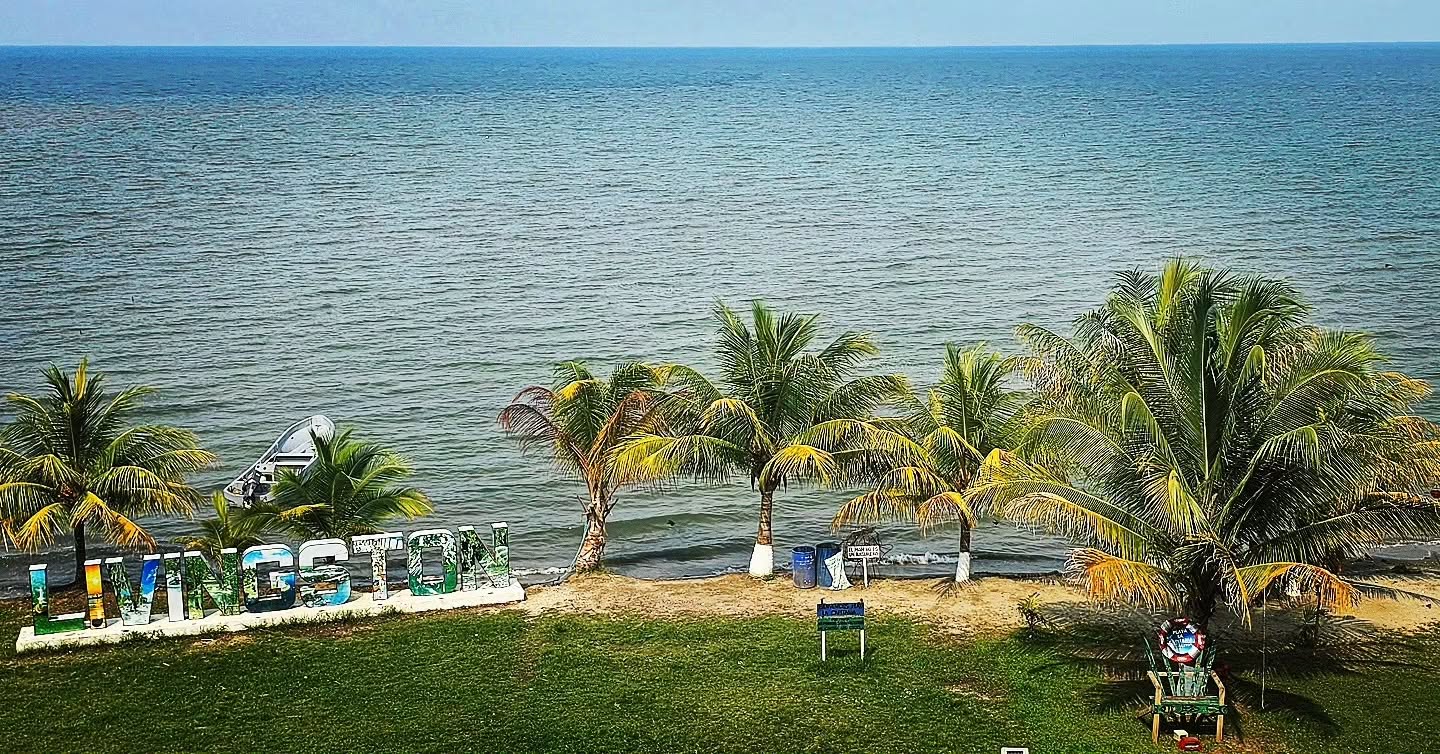
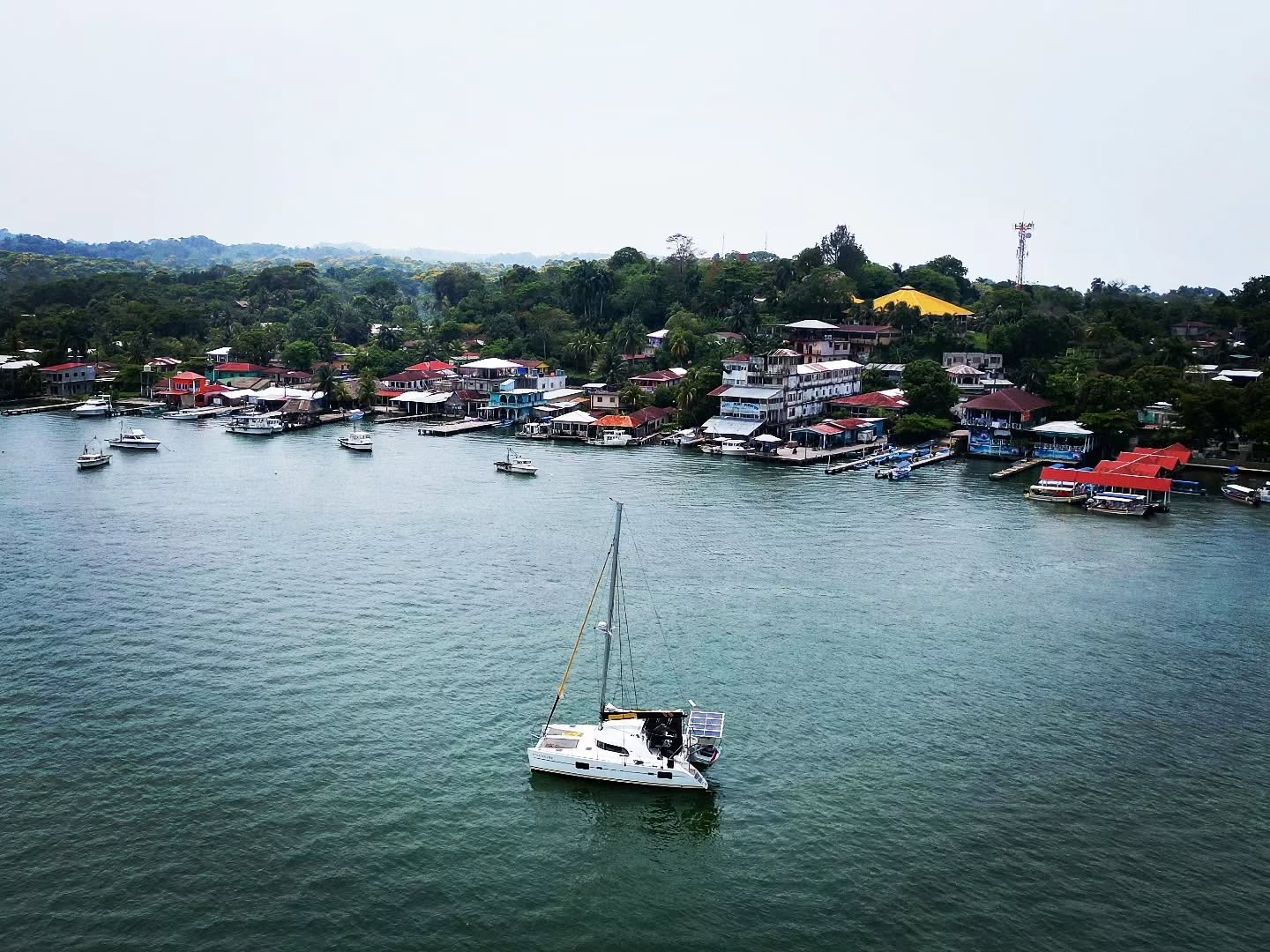
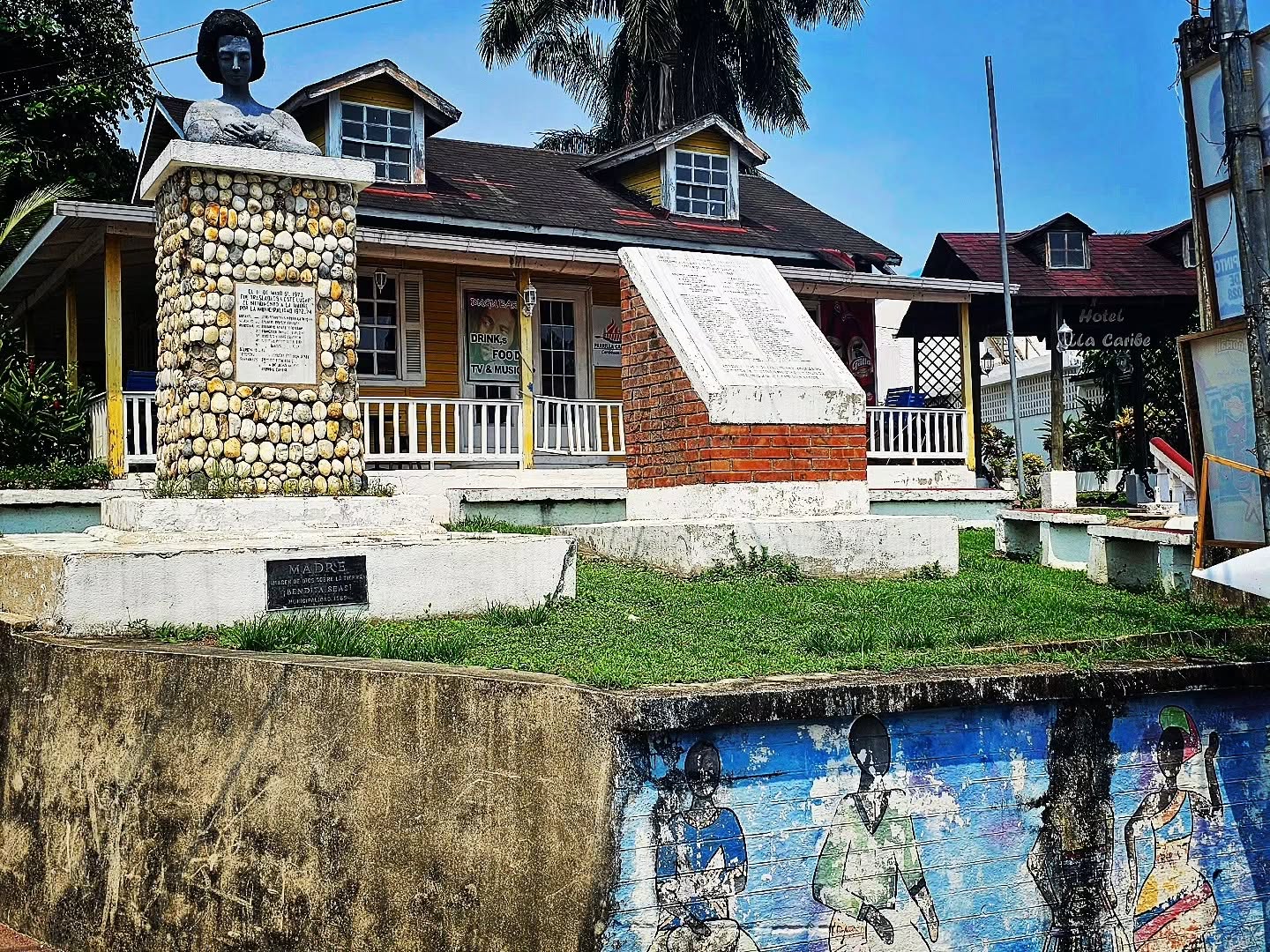
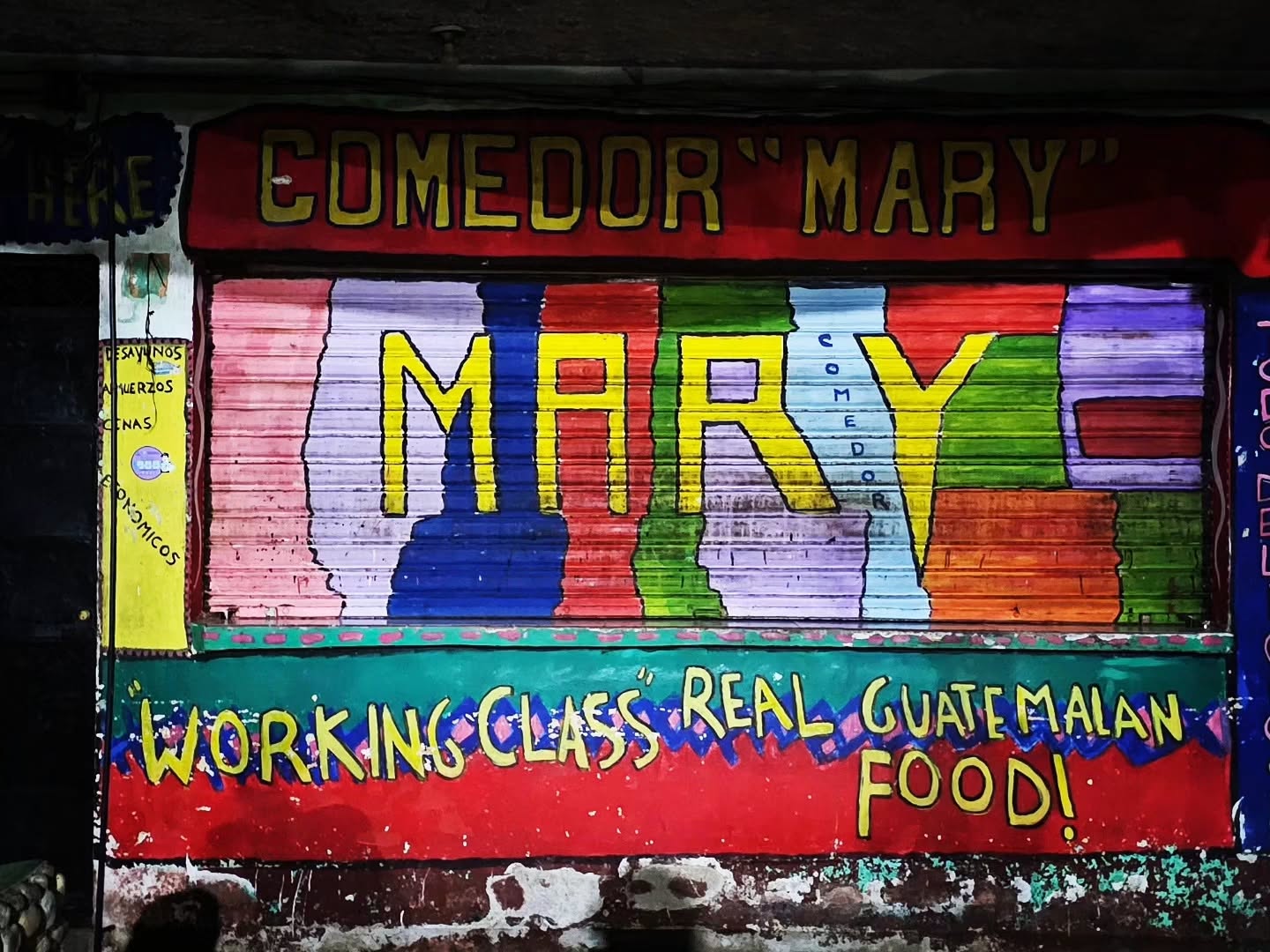
Lívingston is colourful in every sense: wooden houses with painted walls, murals and small restaurants promising real Guatemalan food. The SY Staatenlos lay at anchor in front of the waterfront.
Up the Río Dulce
Behind Lívingston the river enters a gorge with jungle-covered walls rising on both sides. It was an amazing journey into Guatemala. To me it looked like the Winnetou canyon in Croatia, just a bit greener. We spent a few days exploring the river and going into the jungle, and everyone we met asked about our Prussian flag. Life on board was simple: a Maya mango delivery brought seven big, fresh mangos for four dollars, a win-win, and one day I was hungry enough to cook for the first time since my student days.
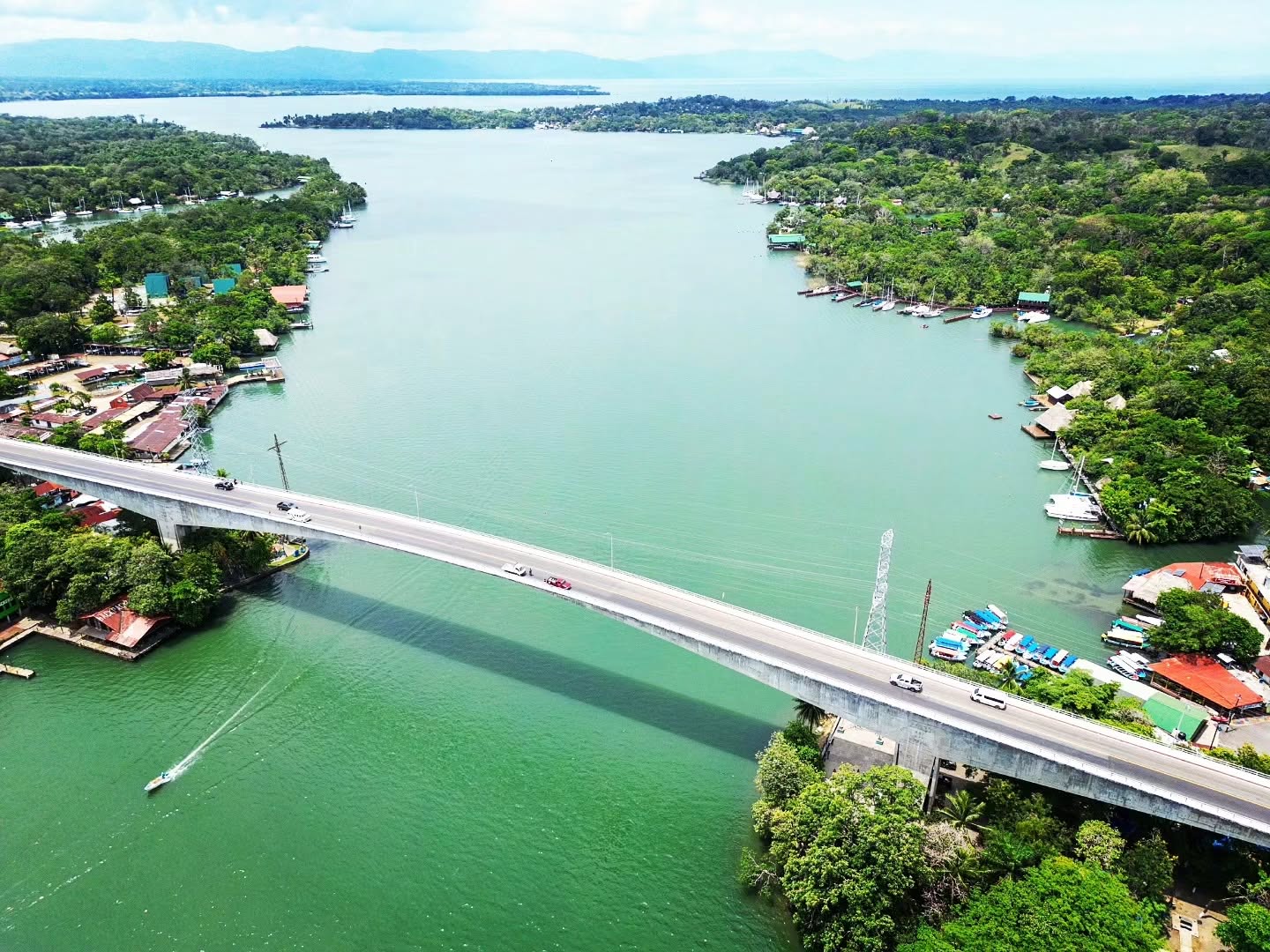
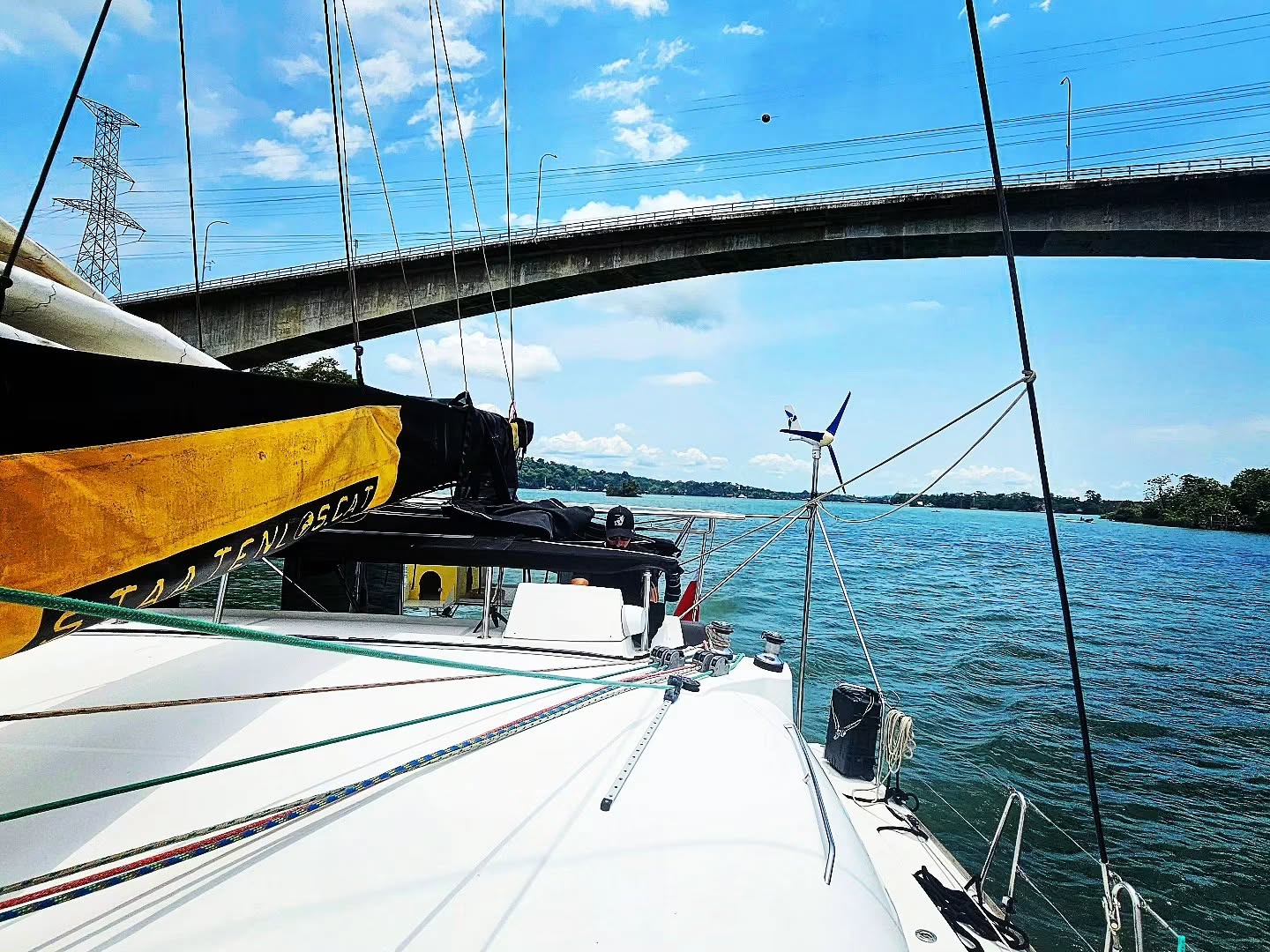
On 15 May we continued upstream to the town of Río Dulce, where a long concrete bridge spans the river. With our mast pointing at the sky we passed underneath it and continued towards the lake.
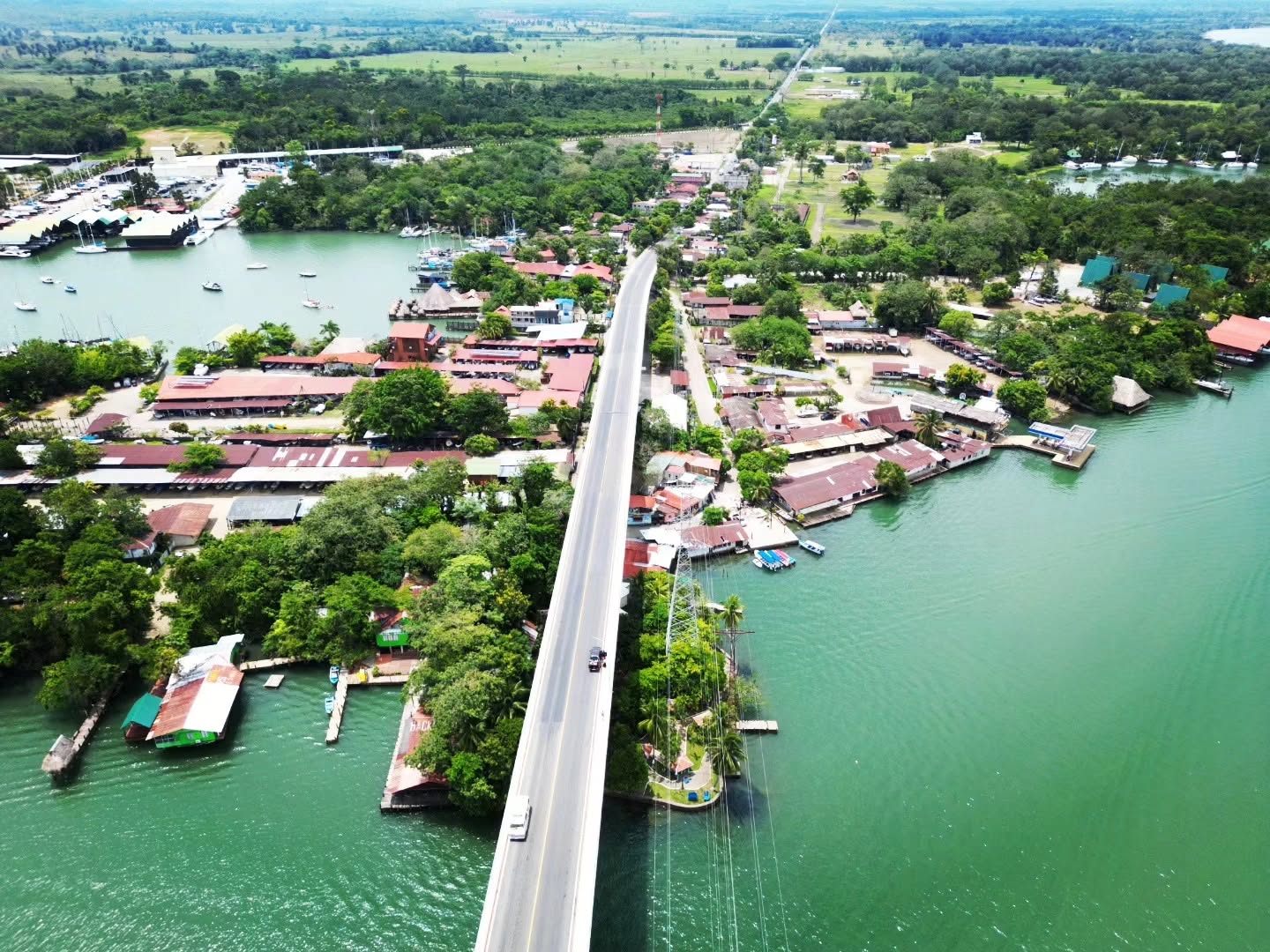
A night in the middle of Lake Izabal
Above the town the river opens into Lake Izabal, a wide inland sea with mountains on the horizon. Along the shores, palm-thatched shelters stand at the end of long wooden jetties.
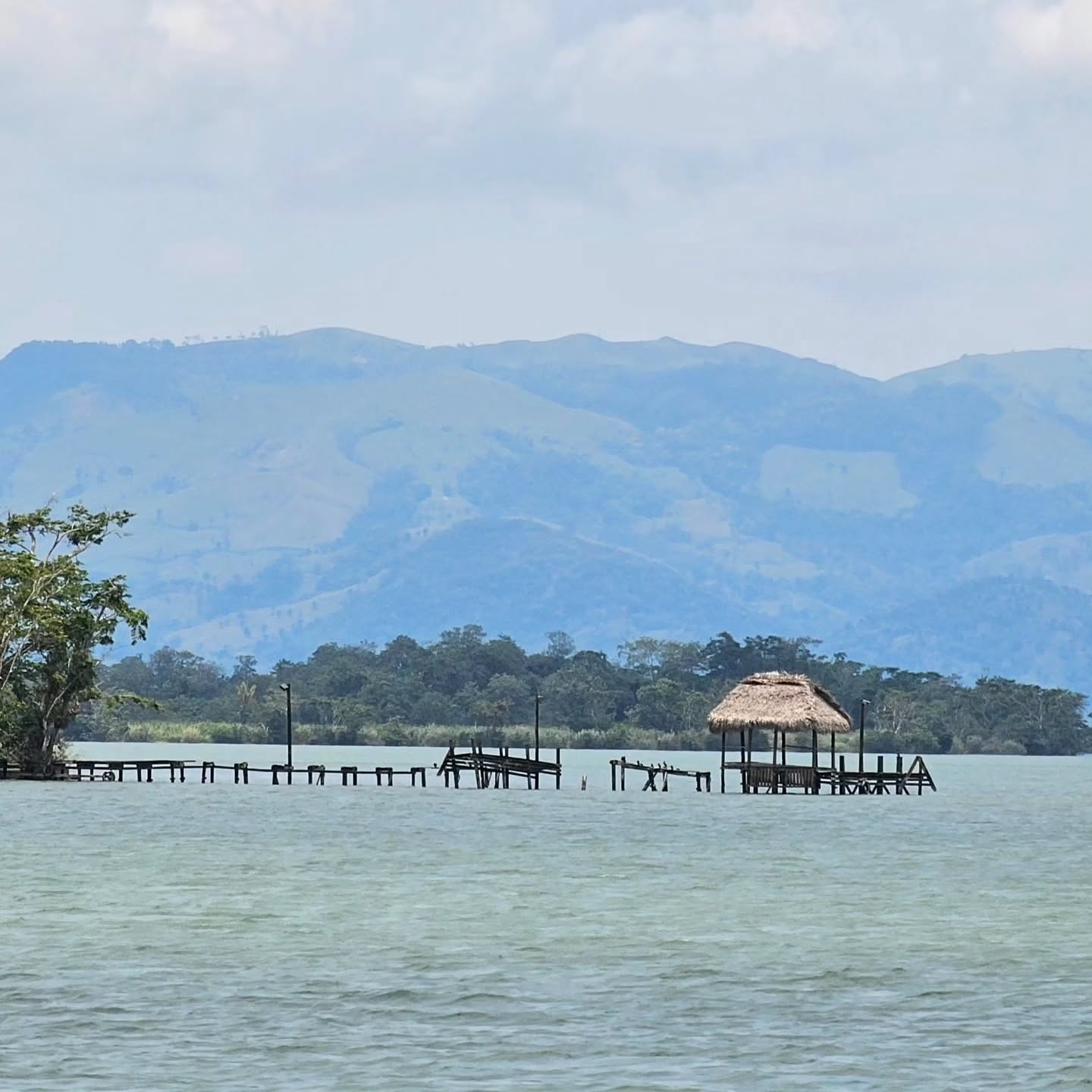
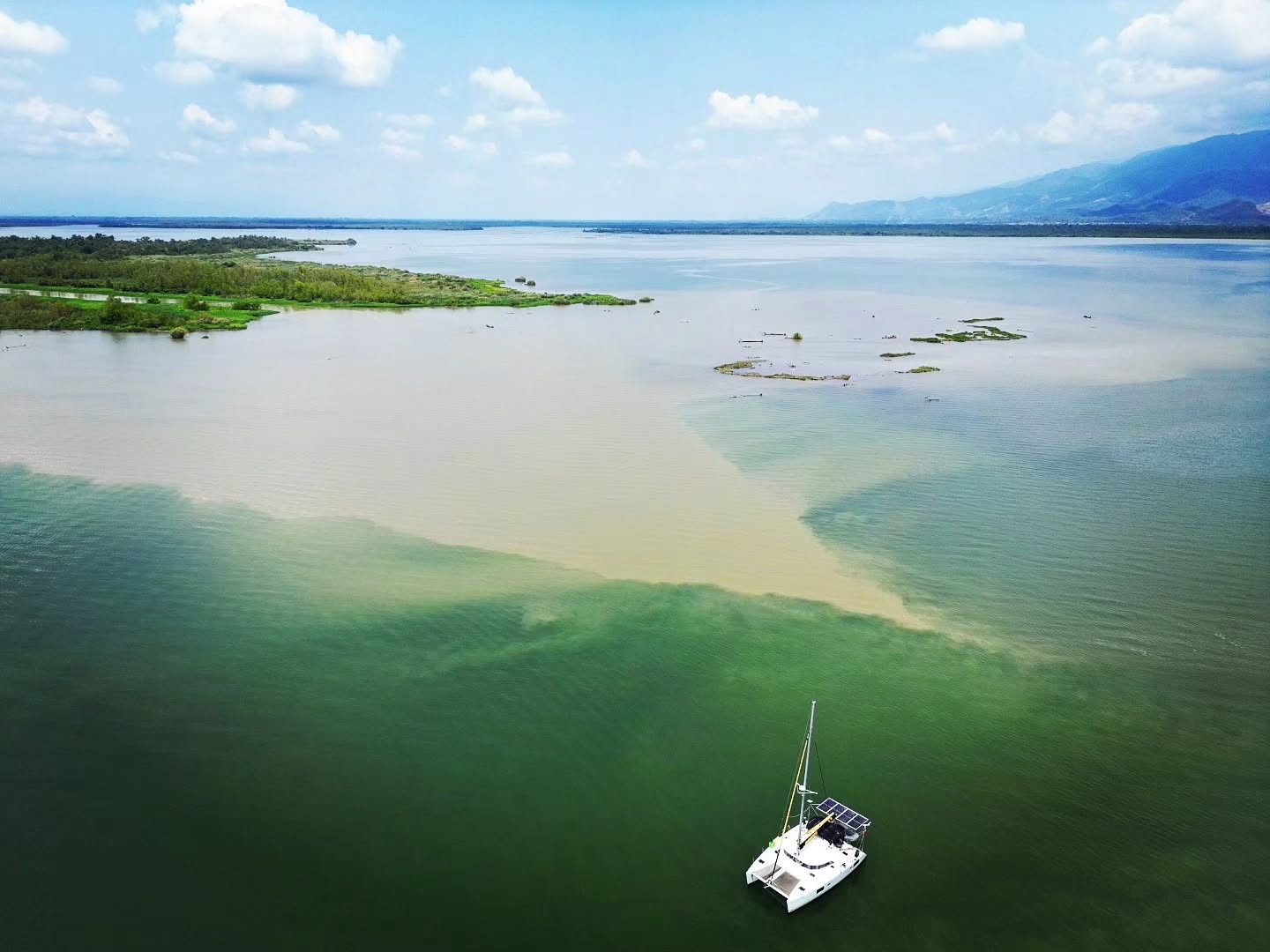
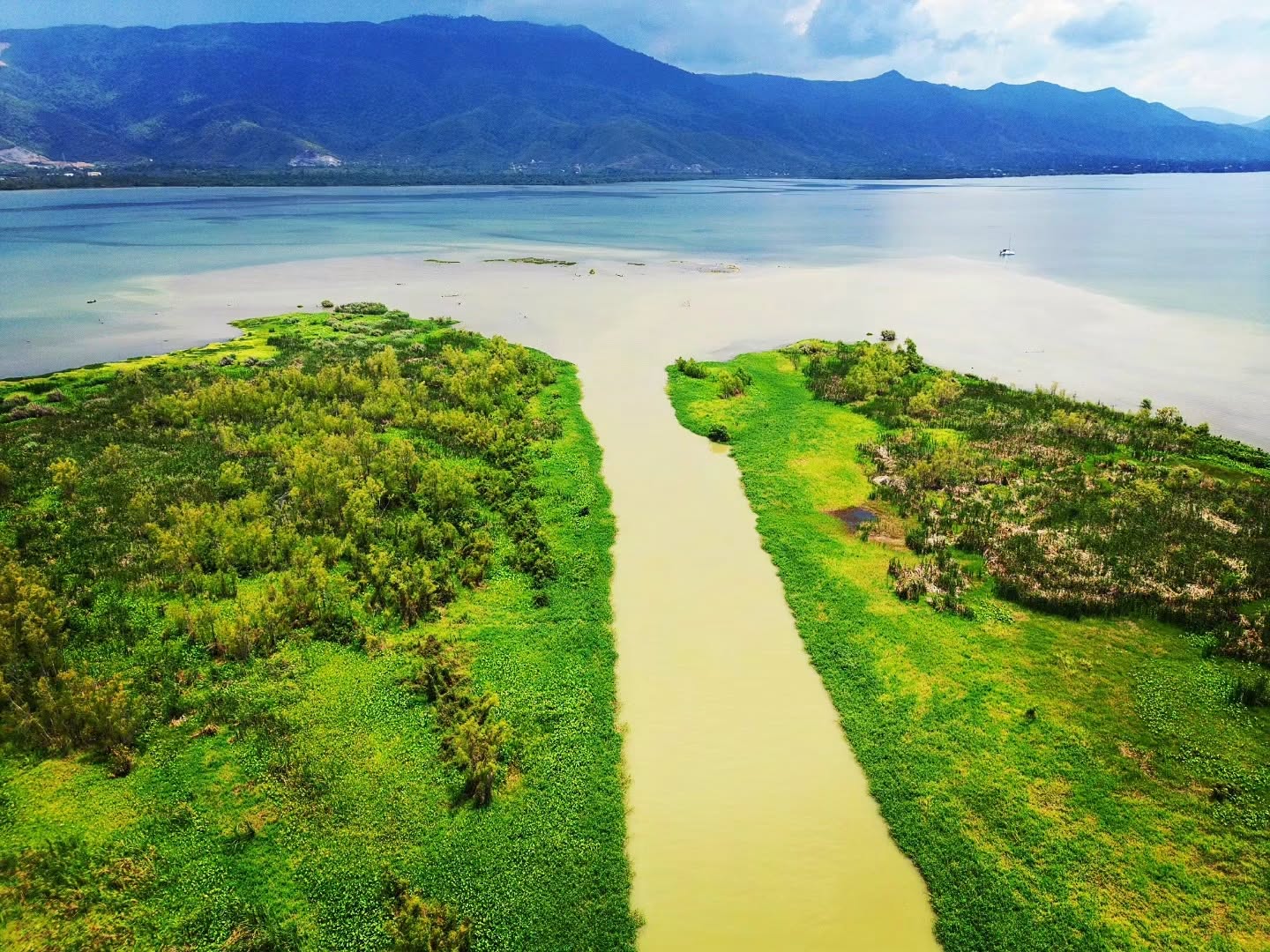
That evening we had the glorious idea of anchoring in the exact middle of the lake. It turned out to be a bit windier and deeper than imagined. The next day the drone showed where a muddy river pours into the lake: a sharp line between brown and green water, with the SY Staatenlos right on the edge.
Further in, the river winds through green marshland before it reaches the open water, and behind the shore the forested mountains rise into the clouds.
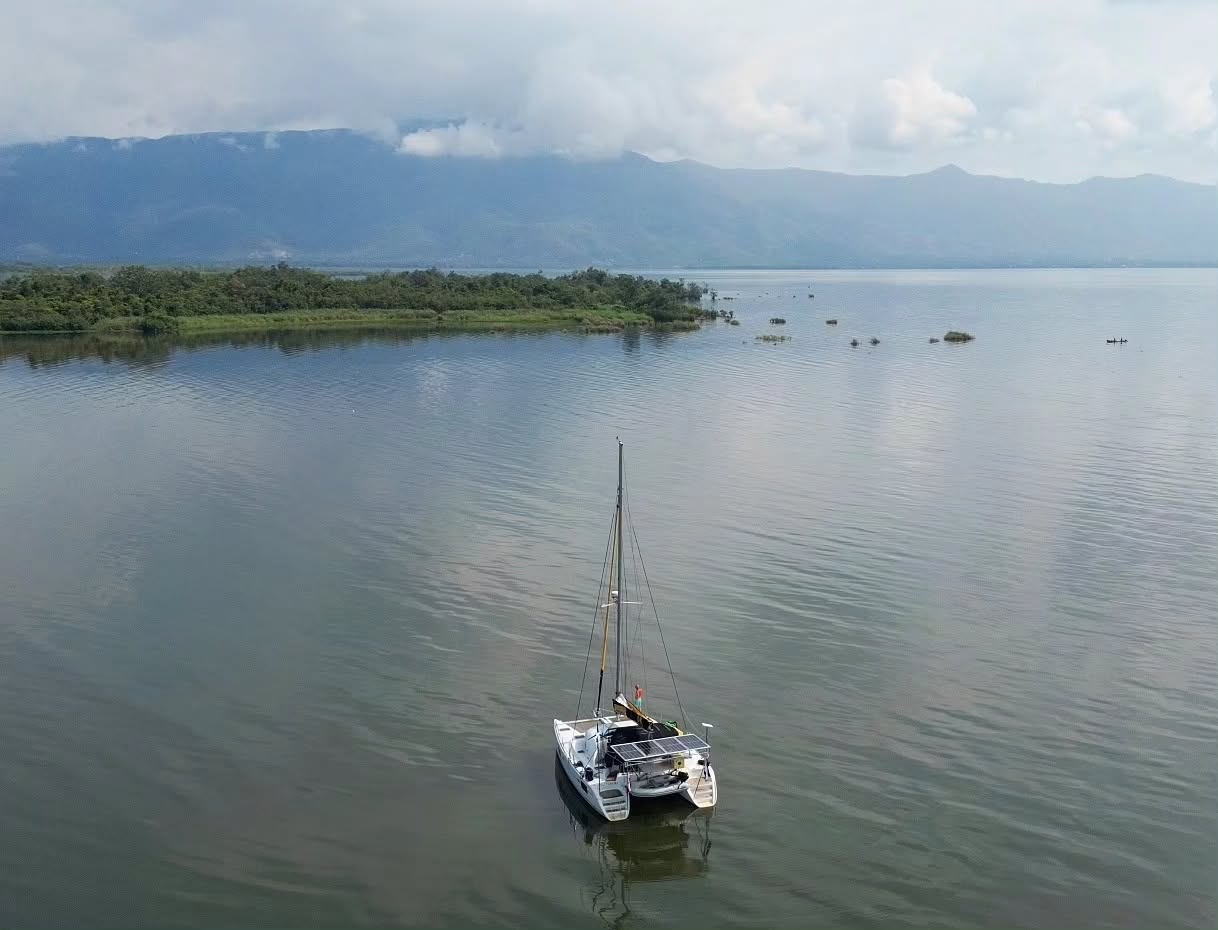
To the capital and on to the north
The SY Staatenlos stayed on the Río Dulce for the summer. I went to the capital for a night, taking in some Maya ruins I had not yet visited on the way. On 18 May I flew from Guatemala City to New York. Flying AeroMexico was the worst idea ever, and the airline went straight onto my personal no-fly list, next to Lufthansa. A parabolic flight in New York, a few minutes of weightlessness that I had booked for the next day, was cancelled as well, just like the submarine on Roatán. I hoped to try both again in October.
Ten days in the US and ten in Canada lay ahead, with my last TCC territories off the North American continent and a family trip. The first stop was St Thomas and St John in the US Virgin Islands. The boat and I met again in Guatemala in December, for sailing to Belize.