
AlUla and the Red Sea: Nabataean Tombs and Untouched Reefs in Saudi Arabia
15–19 October 2025 · AlUla, Hegra, Jabal Ikmah, Dadan, Elephant Rock, Shebara · Regions: Saudi Arabia (AlUla, Red Sea coast)
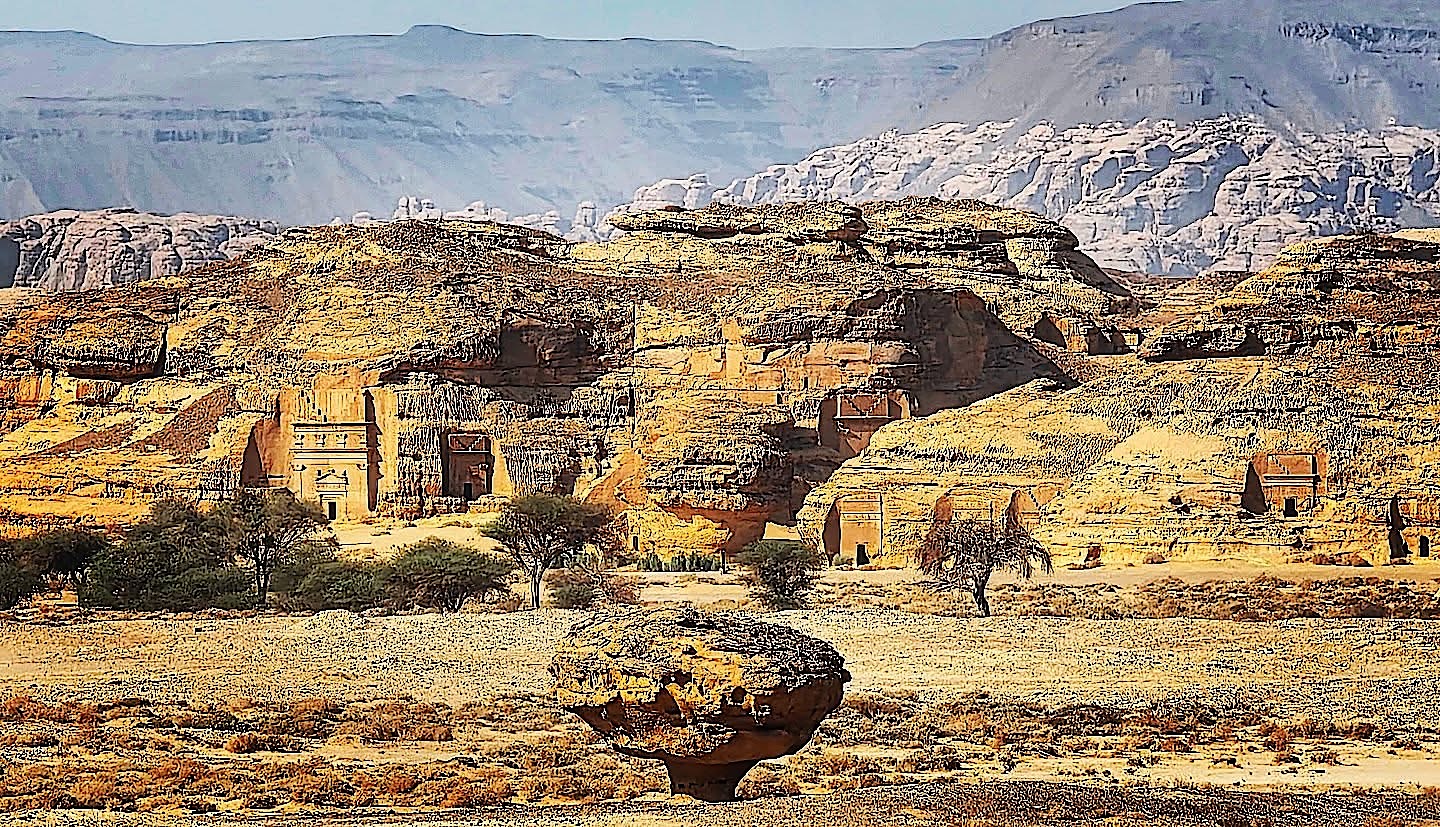
After Norway and Denmark by truck and some time back home in Dubai, the family and I set off on a short trip next door. Saudi Arabia borders the Emirates, yet this was only my second visit, after a first one in 2019. The plan was simple: two days among the sandstone cliffs and ancient tombs of AlUla, then a few days of doing very little at a Red Sea resort that many people will recognise from Instagram and TikTok.
A race to Terminal 2
We very nearly didn't make it. The traffic in Dubai was so bad that our transfer to the airport took well over an hour longer than planned, and we reached Terminal 2 just 14 minutes before the gate closed. We were still let on, but only after repacking our checked luggage into carry-on bags. By the time we arrived at Habitas AlUla, a resort of low villas in a sandstone valley, the sky above the cliffs was full of stars.
The next morning brought a first. Our driver, who had cheerfully confirmed the pick-up the night before, simply didn't turn up and didn't answer his phone. In ten years of constant travel I had basically never been forgotten by a driver. So much for Arabian reliability.
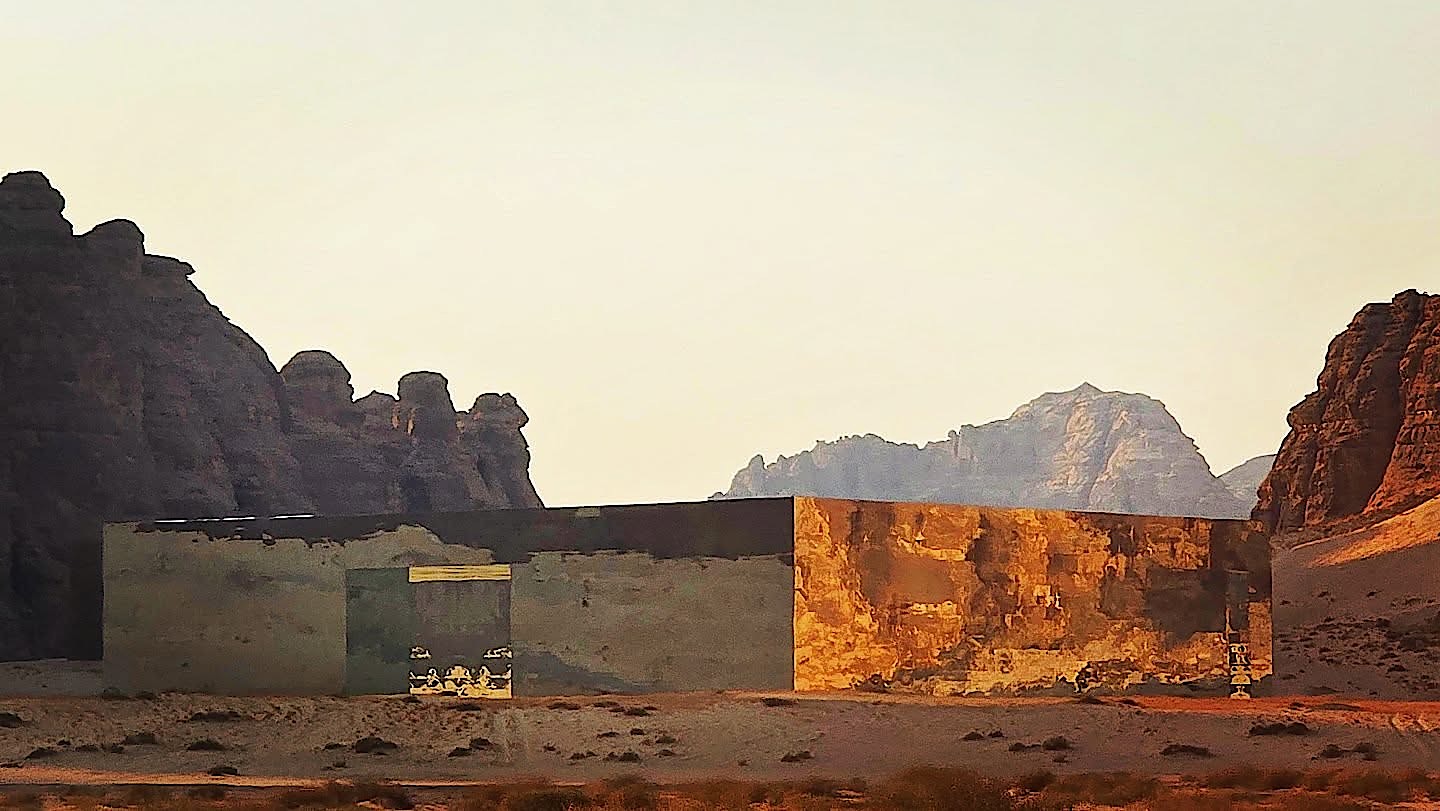
The valley's modern landmark is Maraya, a concert hall clad entirely in mirrors that holds the Guinness record as the world's largest mirrored building. At dawn it almost dissolves into the cliffs it reflects.
Hegra, Petra's southern sister
The main reason to come to AlUla is Hegra, also known as Mada'in Salih. Honey-coloured sandstone outcrops rise from a flat plain of sand, and many have monumental tomb façades carved into them. It is the same Nabataean architecture as in Petra, which is why Hegra is often called its sister city.
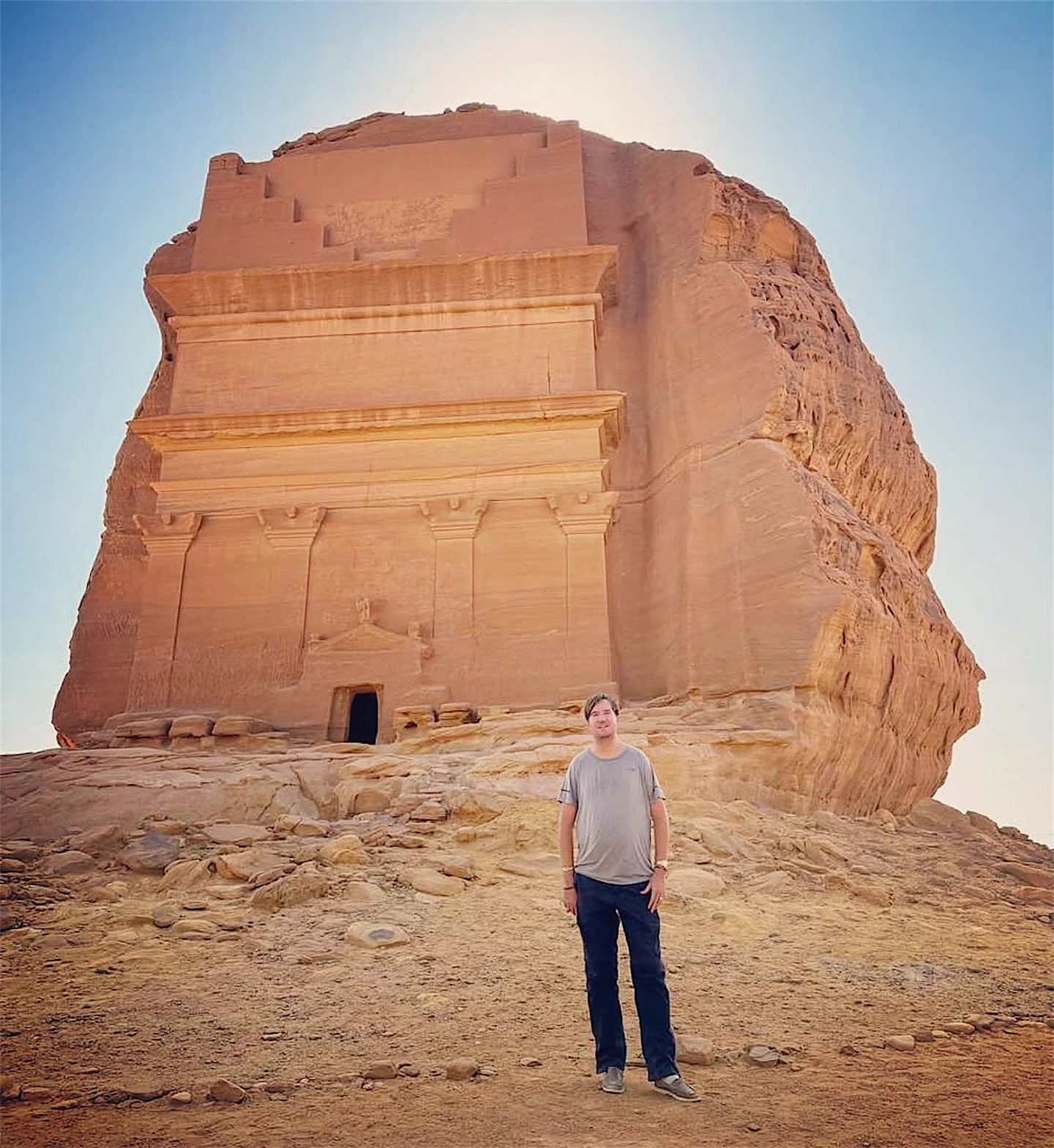
The most famous tomb is Qasr al-Farid, "the lonely castle", carved into a lone boulder in the desert. Its four-pilaster façade was never quite finished. Elsewhere eagles sit above the doorways, and many tombs carry an inscribed tablet naming whoever paid for them.
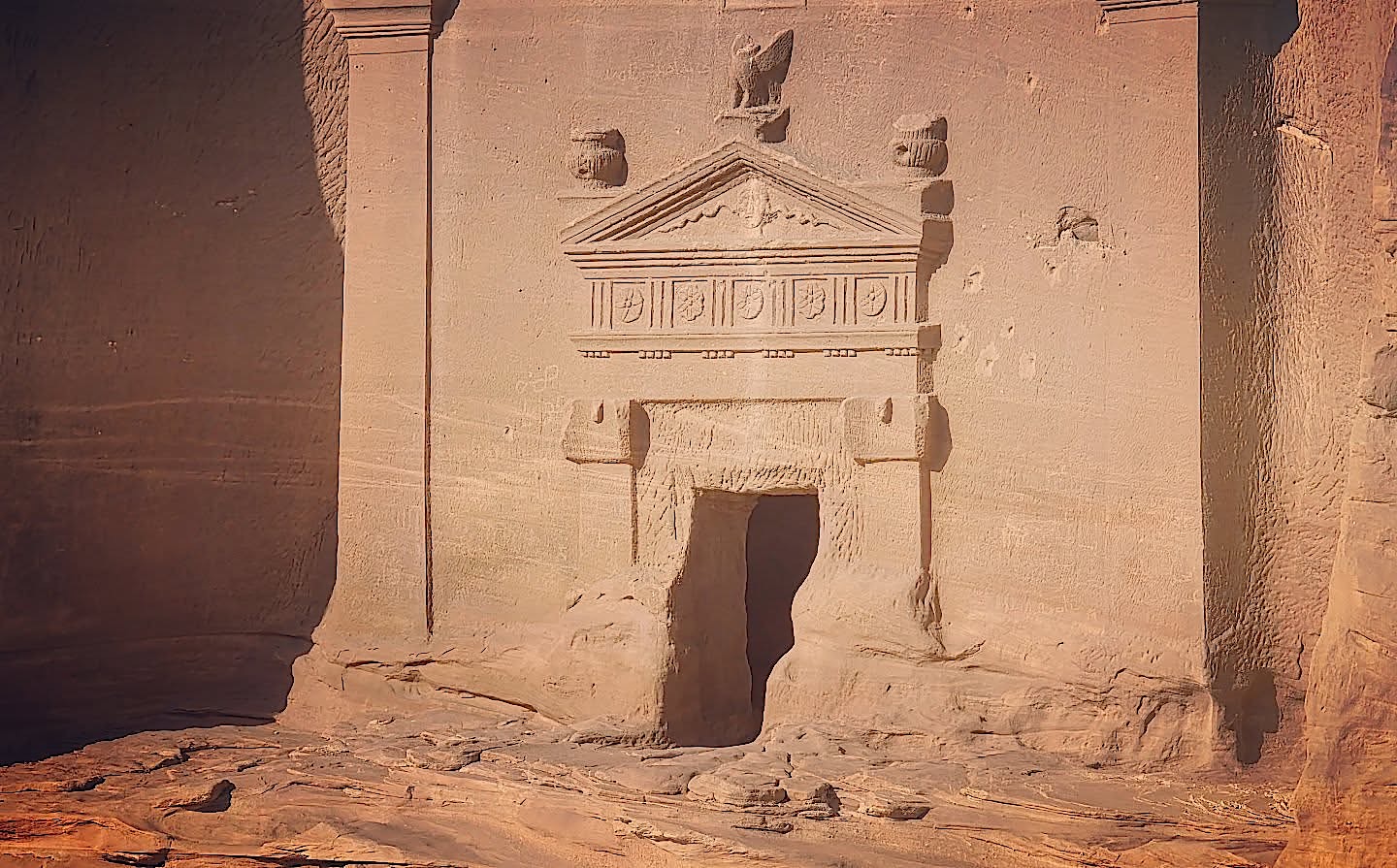
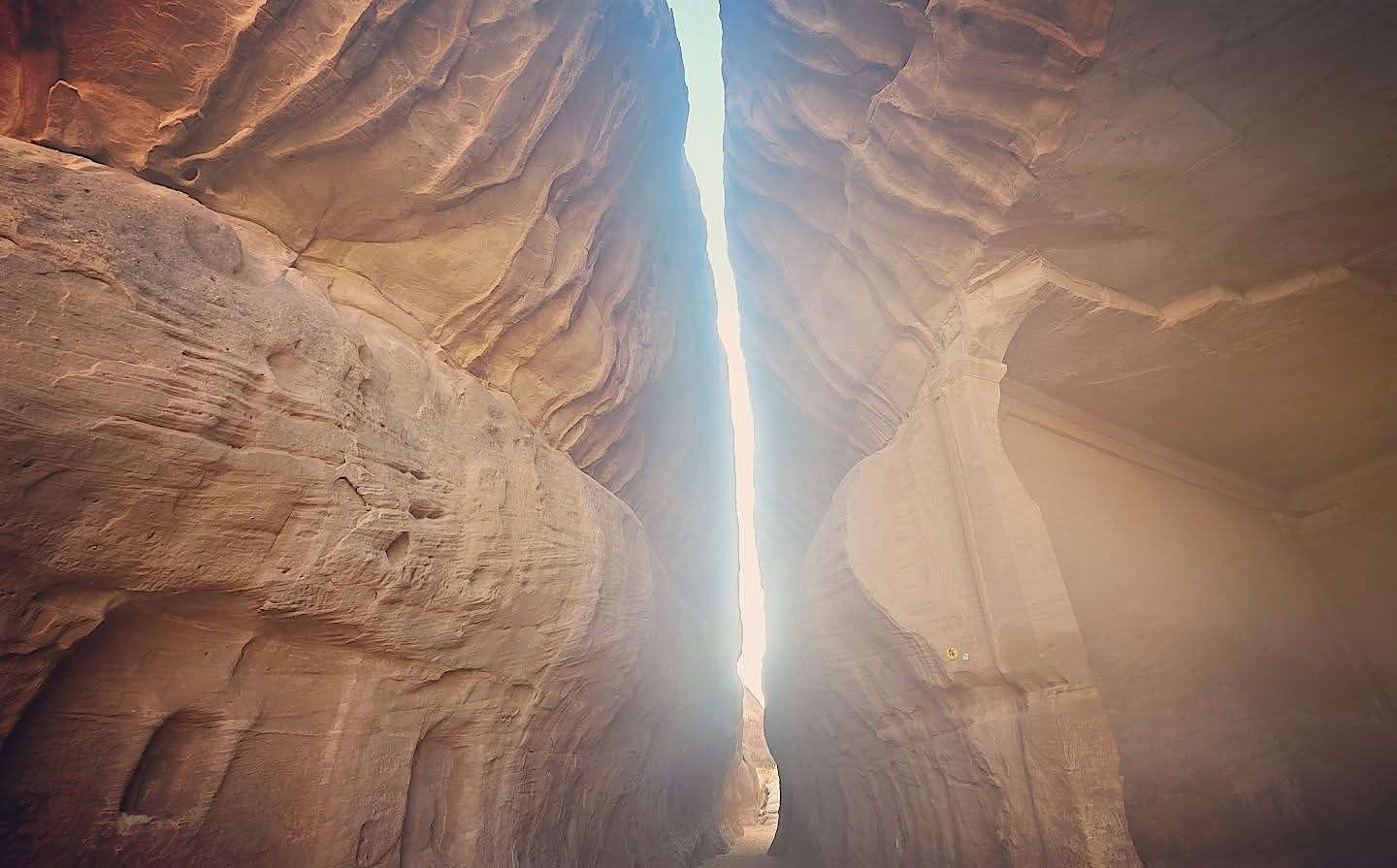
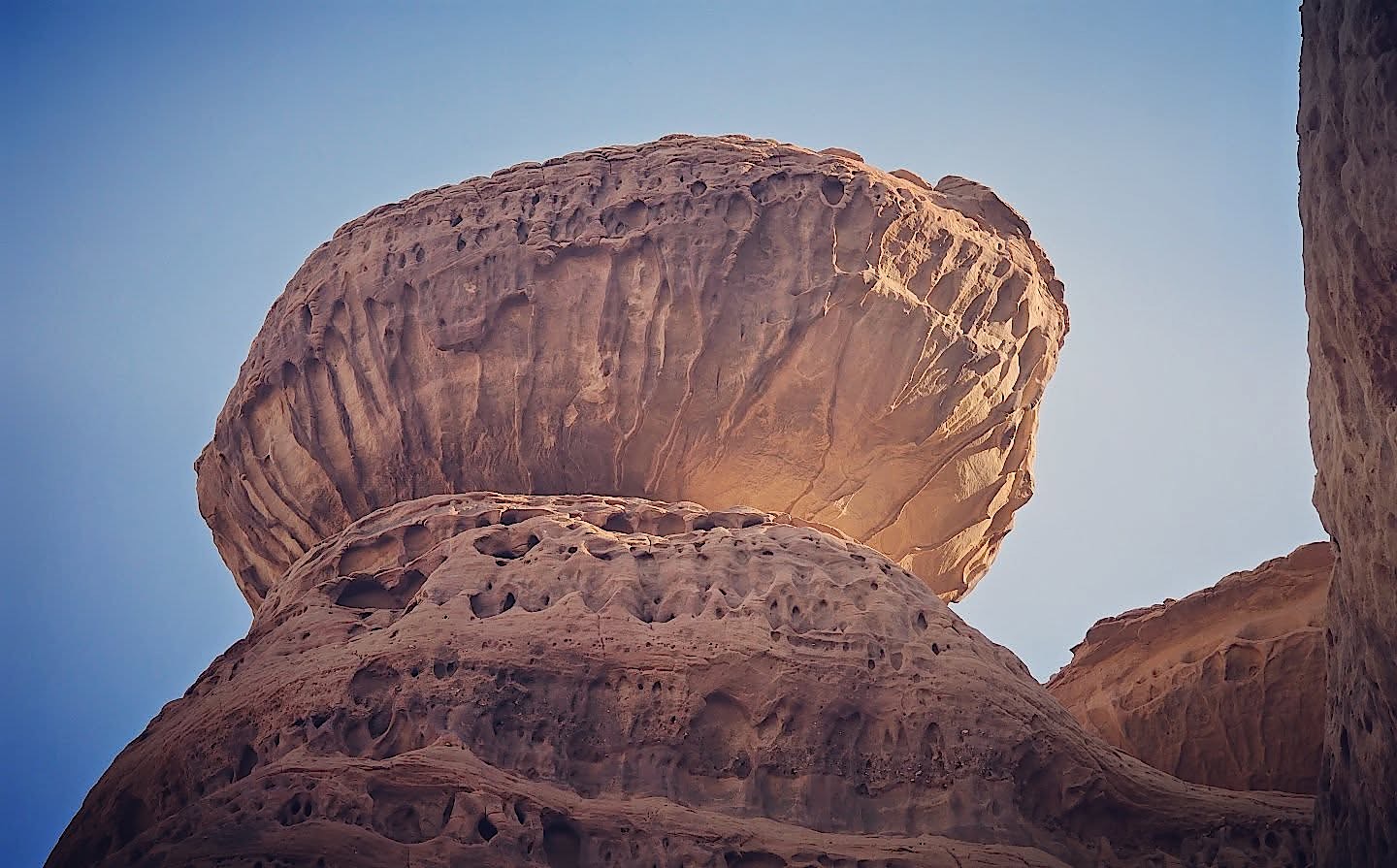
Between the tombs, wind and sand have shaped the rock into narrow clefts and strange mushroom-shaped formations. Hegra would be fascinating even without a single tomb.
Old AlUla, Dadan and Elephant Rock
On the second day we explored the valley itself. The old town of AlUla is a maze of crumbling mud-brick houses at the foot of the cliffs, with the modern town carrying on right beside it.
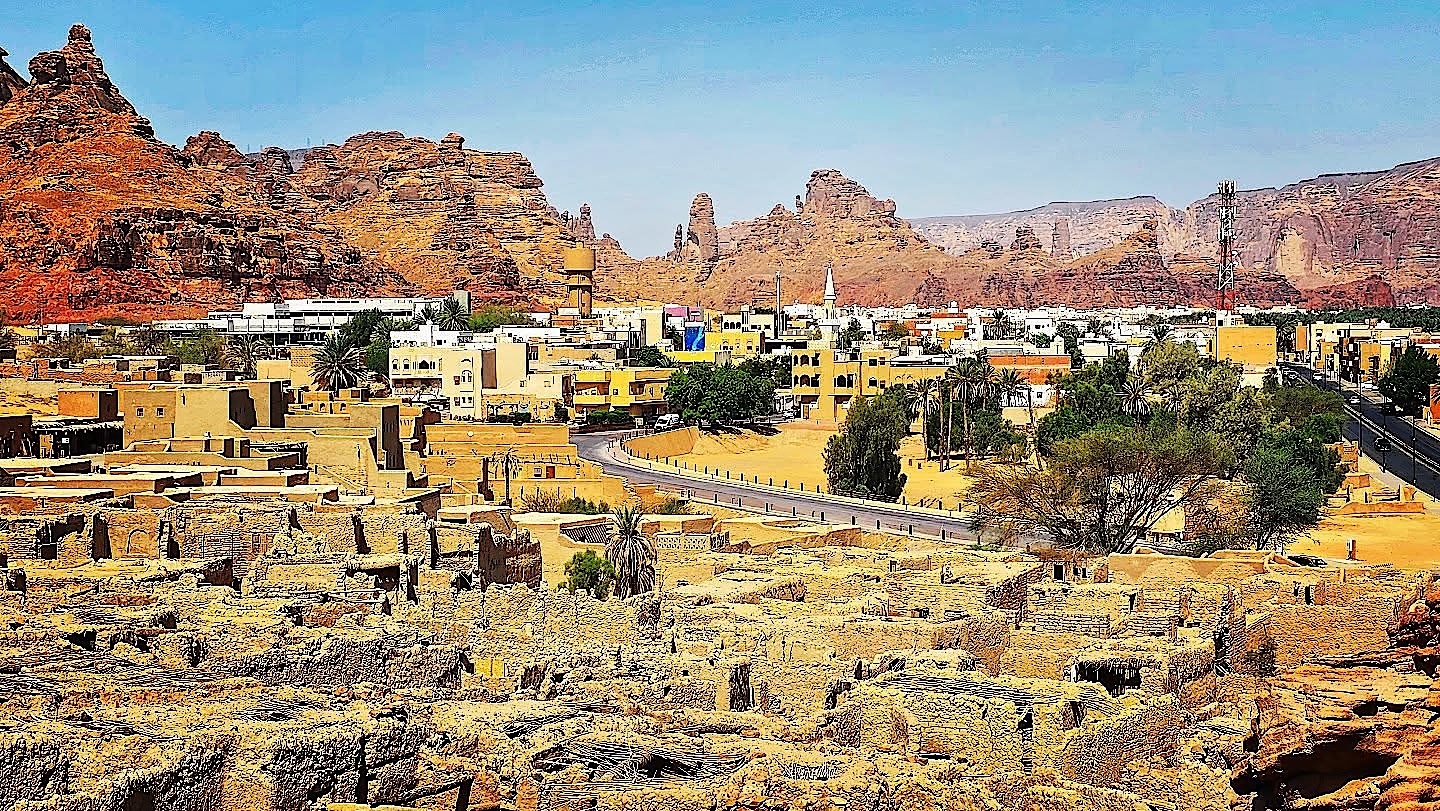
Below both stretches the oasis, a dense green band of palms and gardens that hardly seems to belong in the desert.
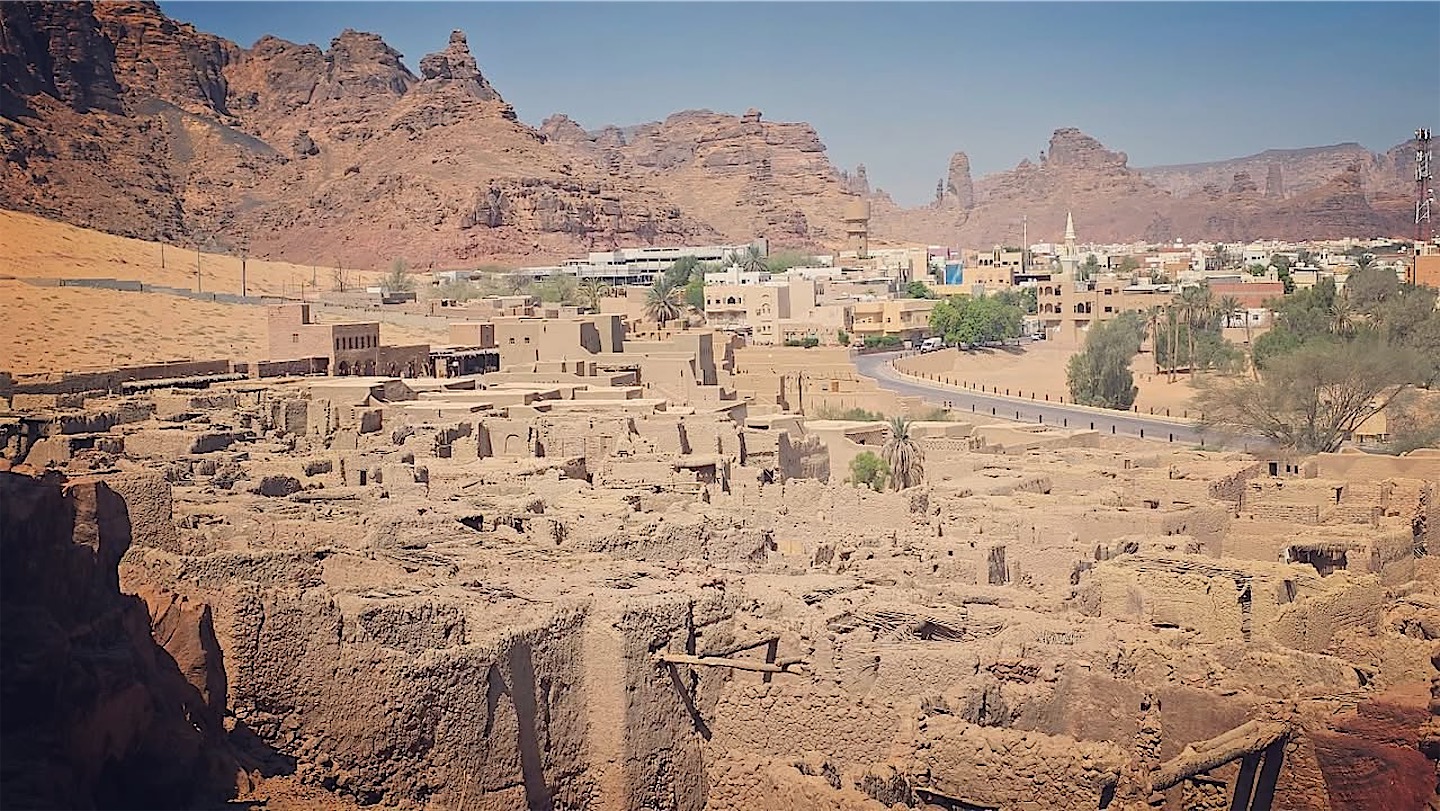
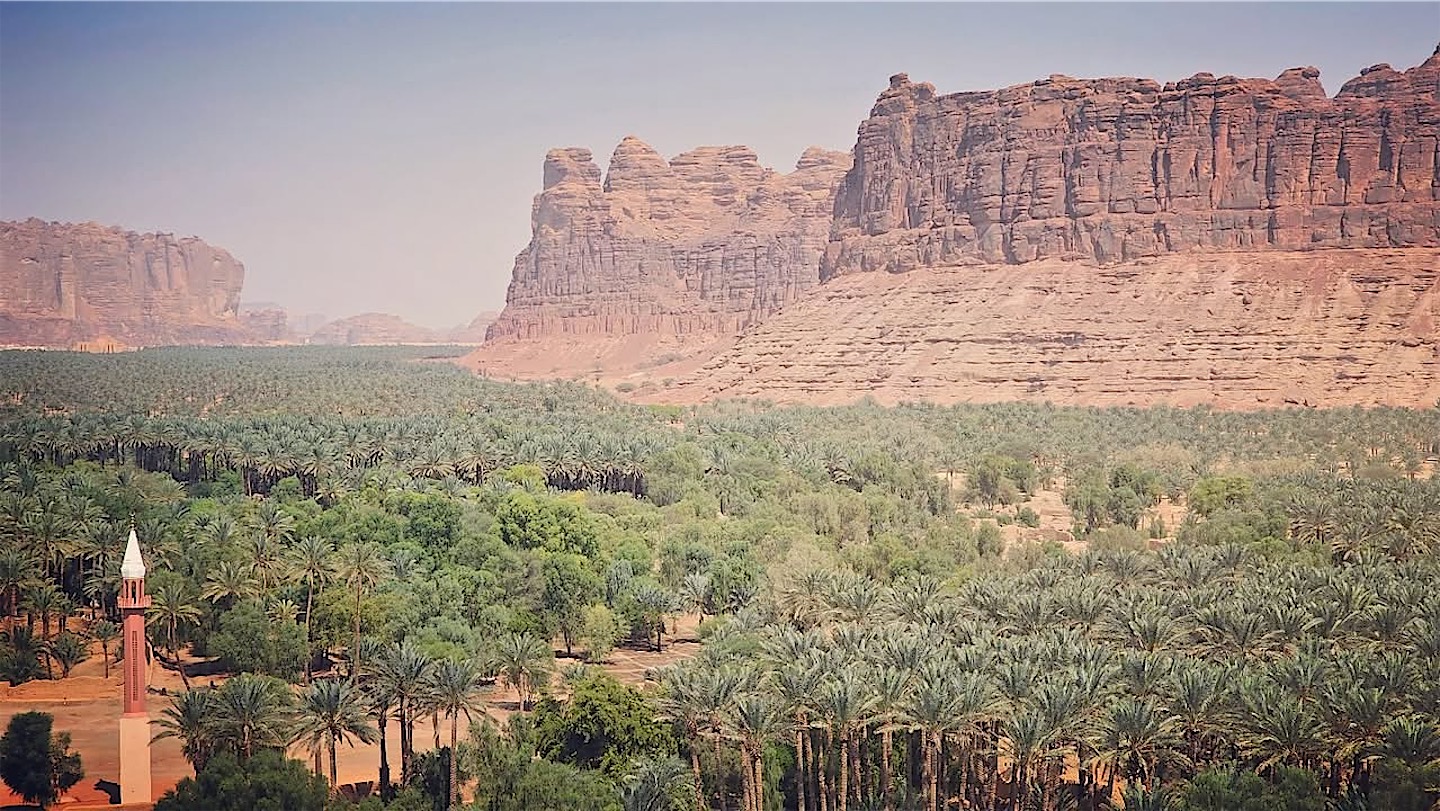
We also visited two older archaeological sites, Jabal Ikmah and Dadan, and finished the day with sunset at Elephant Rock, a sandstone monolith that erosion has shaped into an elephant with its trunk touching the ground.
Silver orbs on the Red Sea
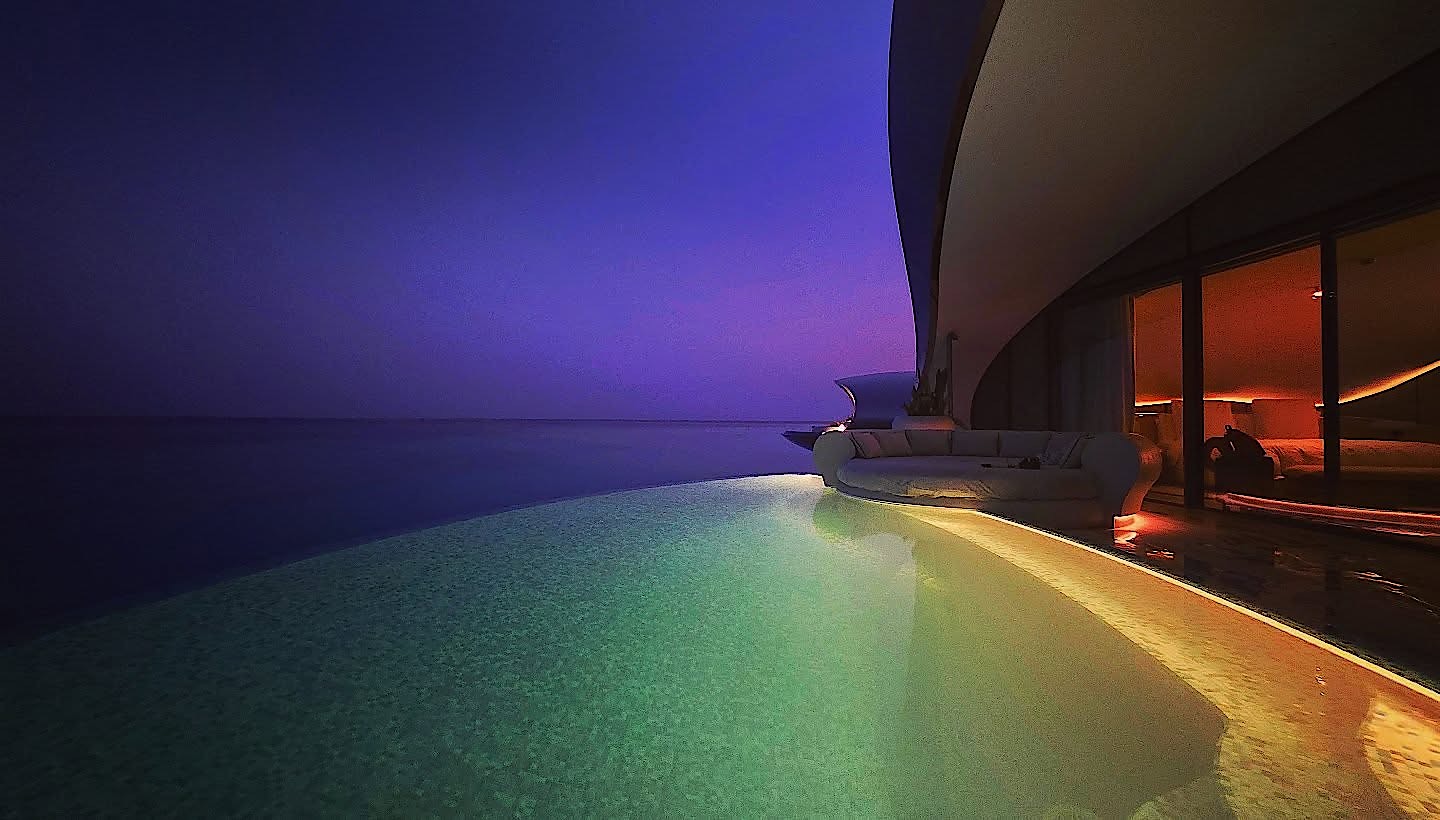
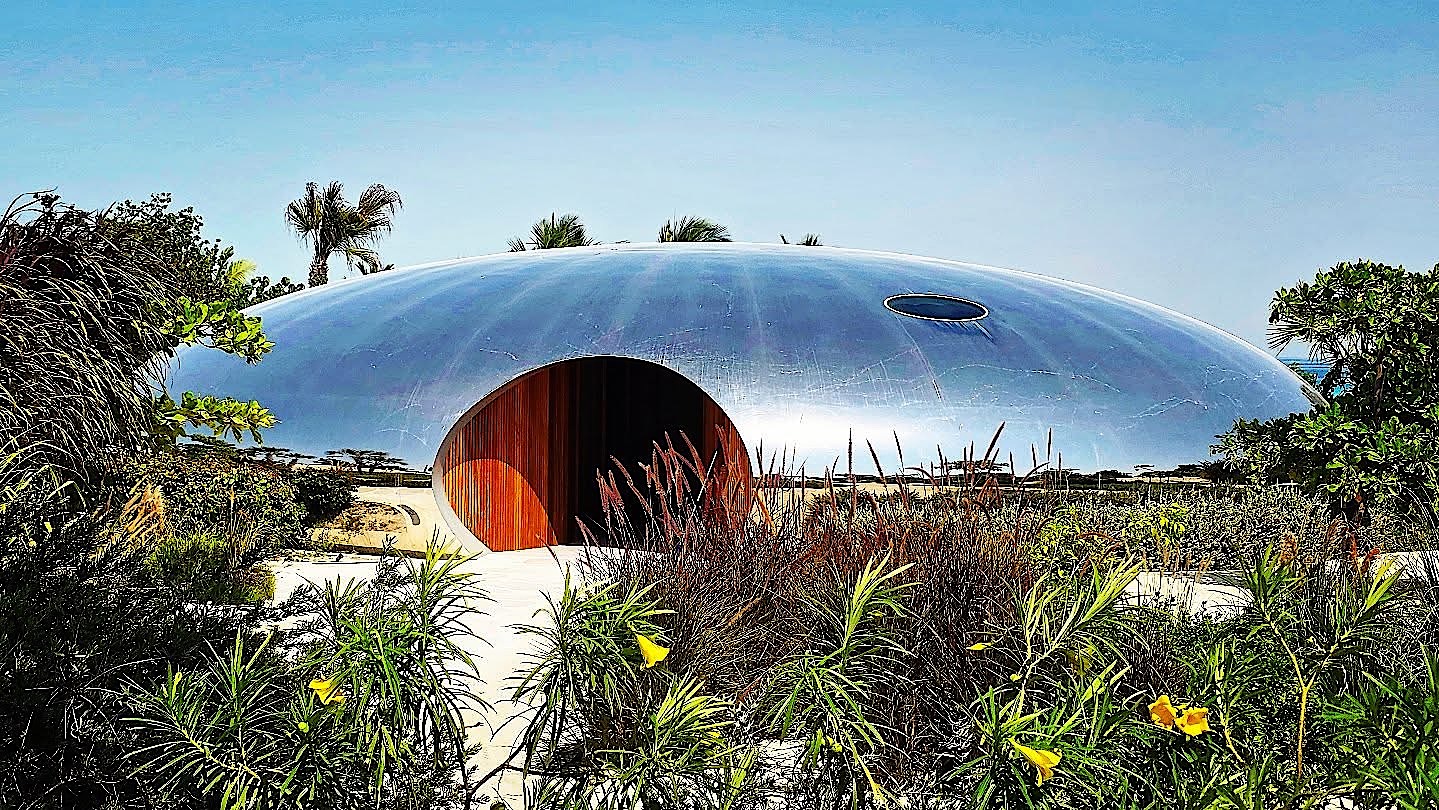
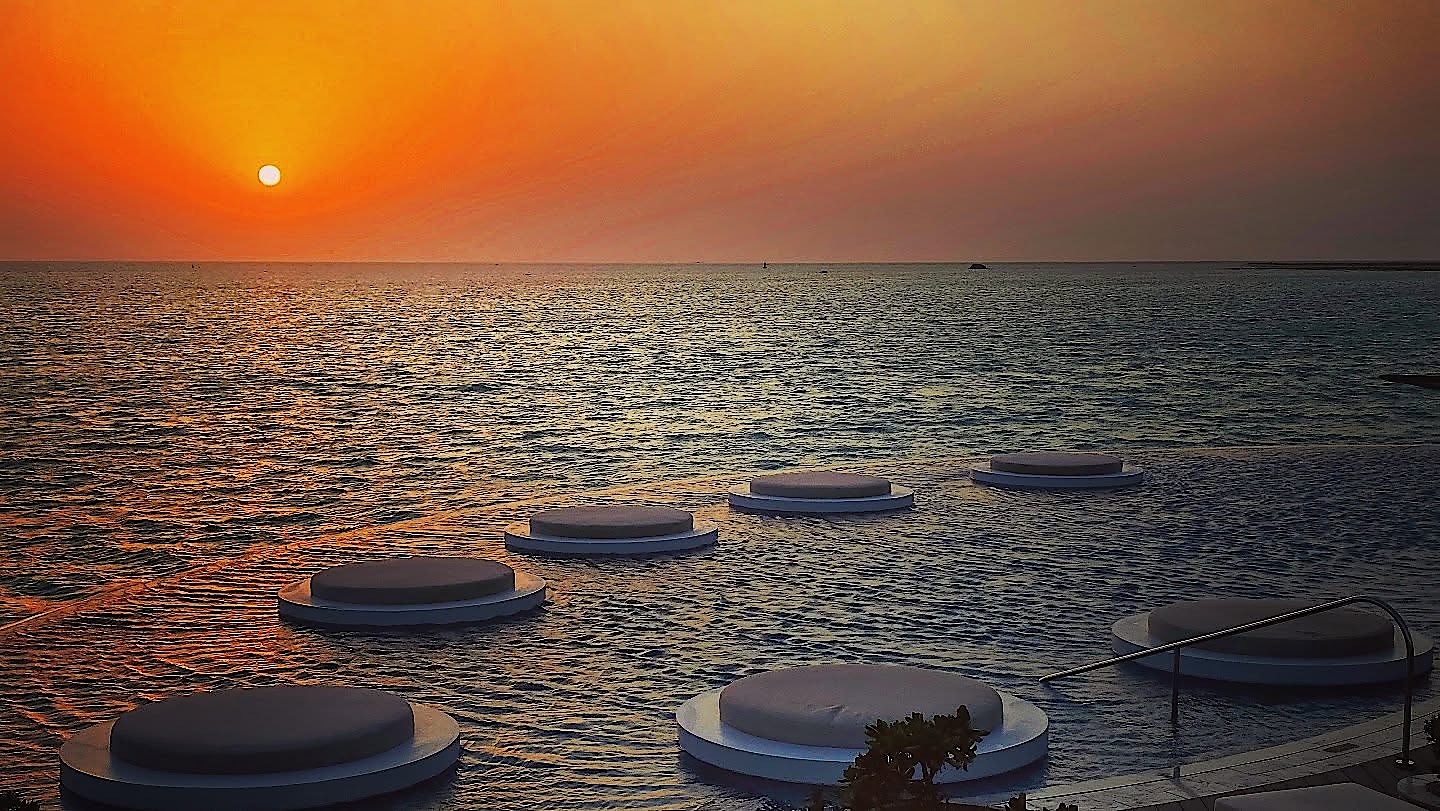
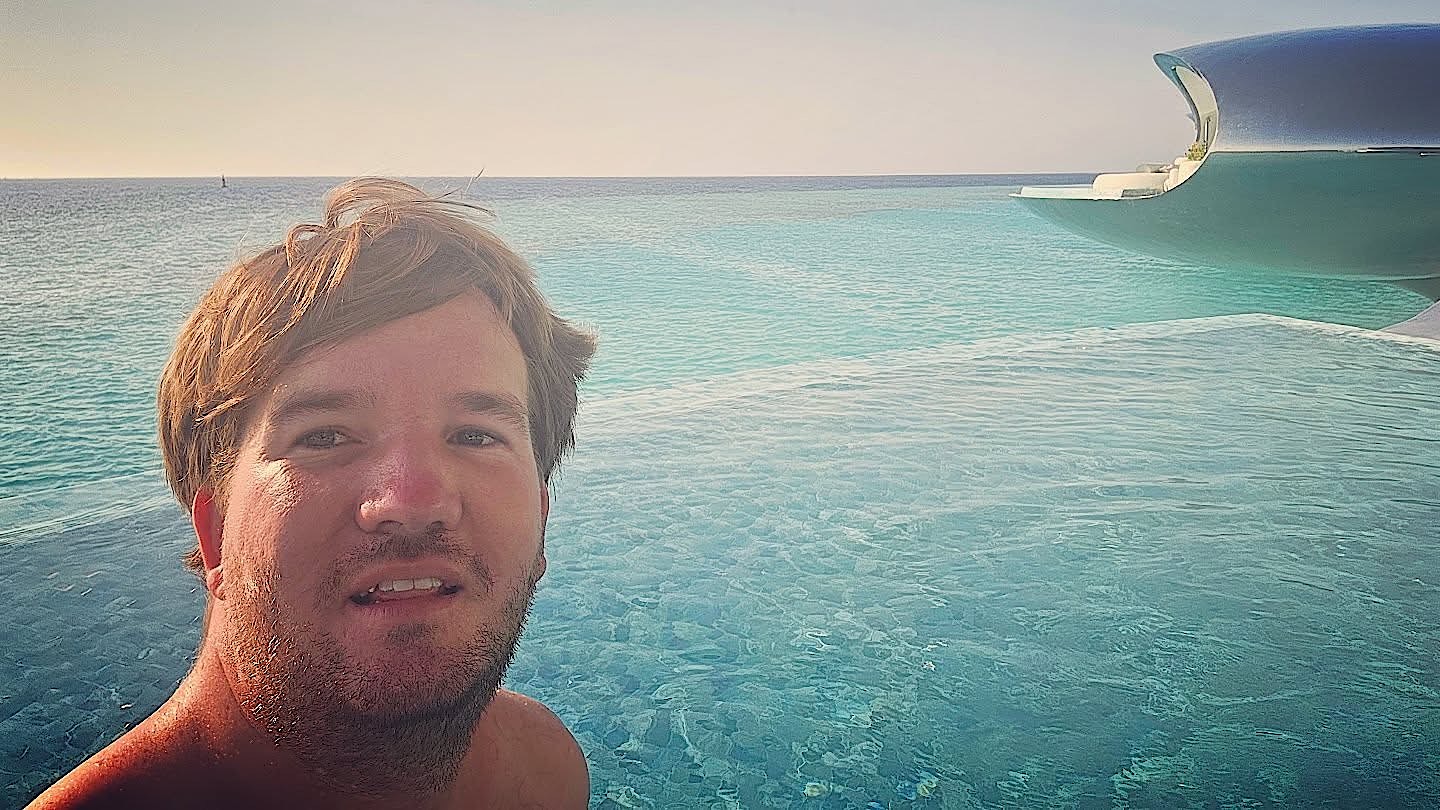
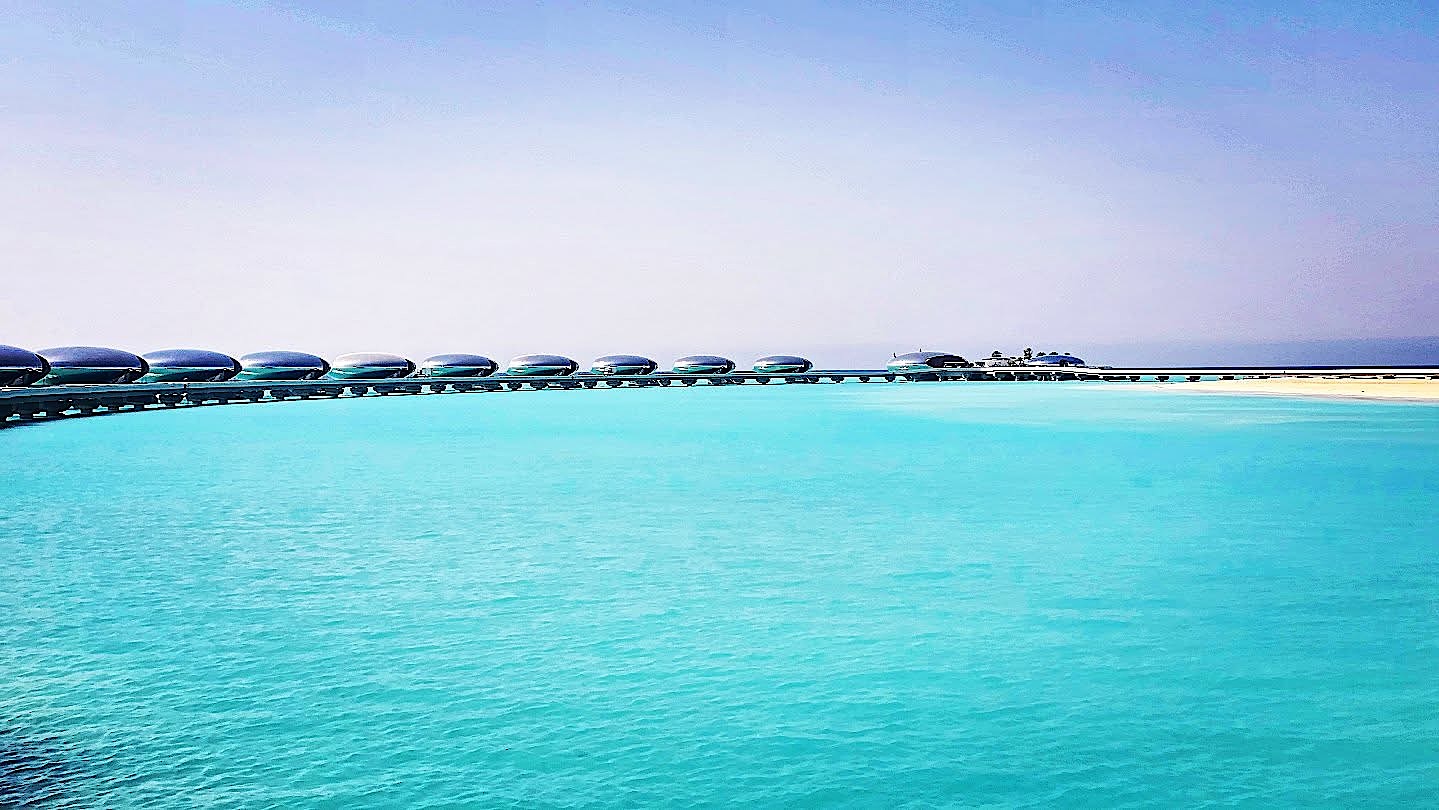
After another day of frustrating delays we finally reached the coast. Our home for the next three nights was Shebara, on an island off Saudi Arabia's west coast. Its overwater villas are polished steel orbs on stilts that mirror the sea and sky, and they look like a fleet of UFOs parked in the lagoon. It isn't the Maldives. It's something else entirely.
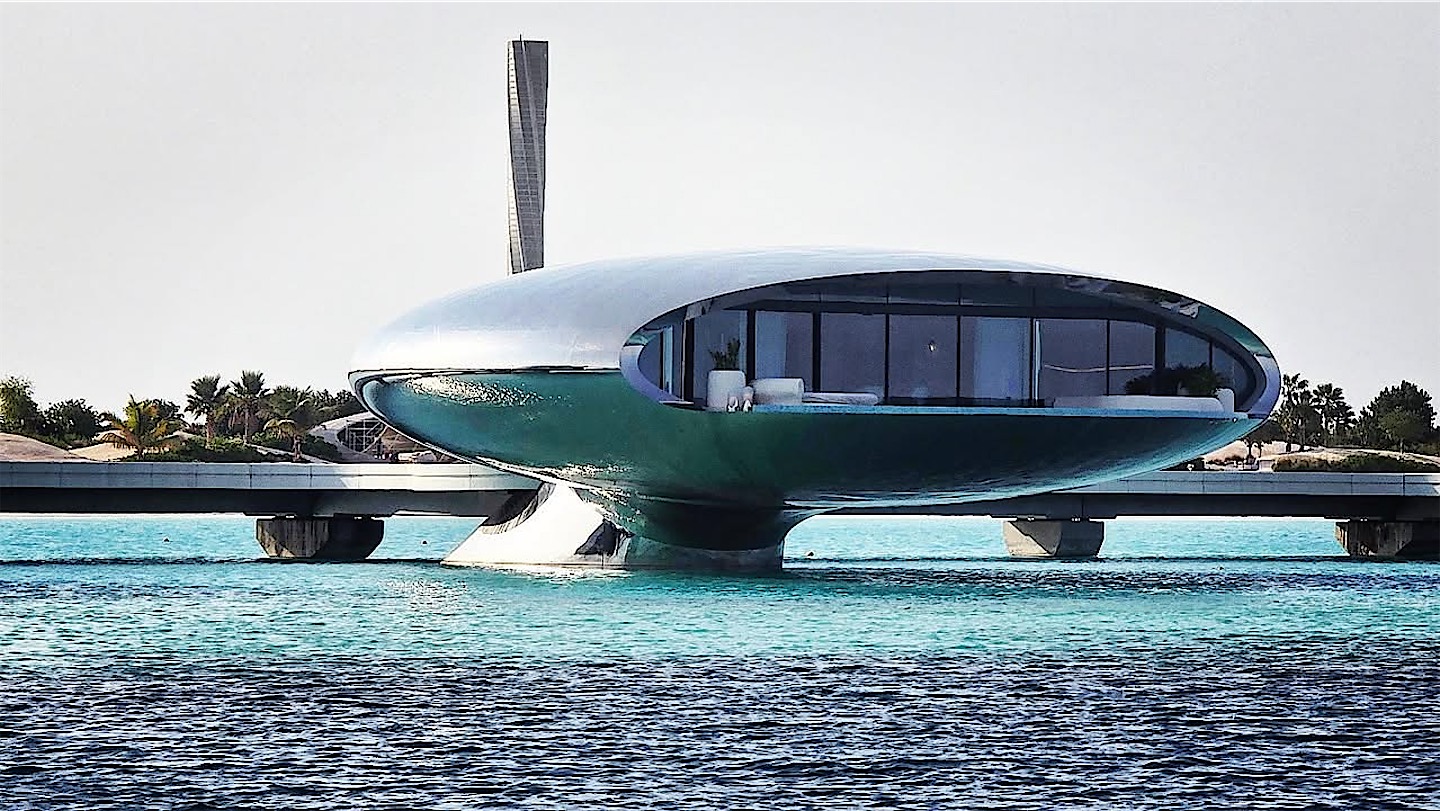
Our villa had its own infinity pool on the deck, so we spent a lot of time swimming in front of our UFO. Pictures don't do this place justice, although I certainly tried. You sleep very well in the bedroom pod, as you should at around 2,000 dollars a night.
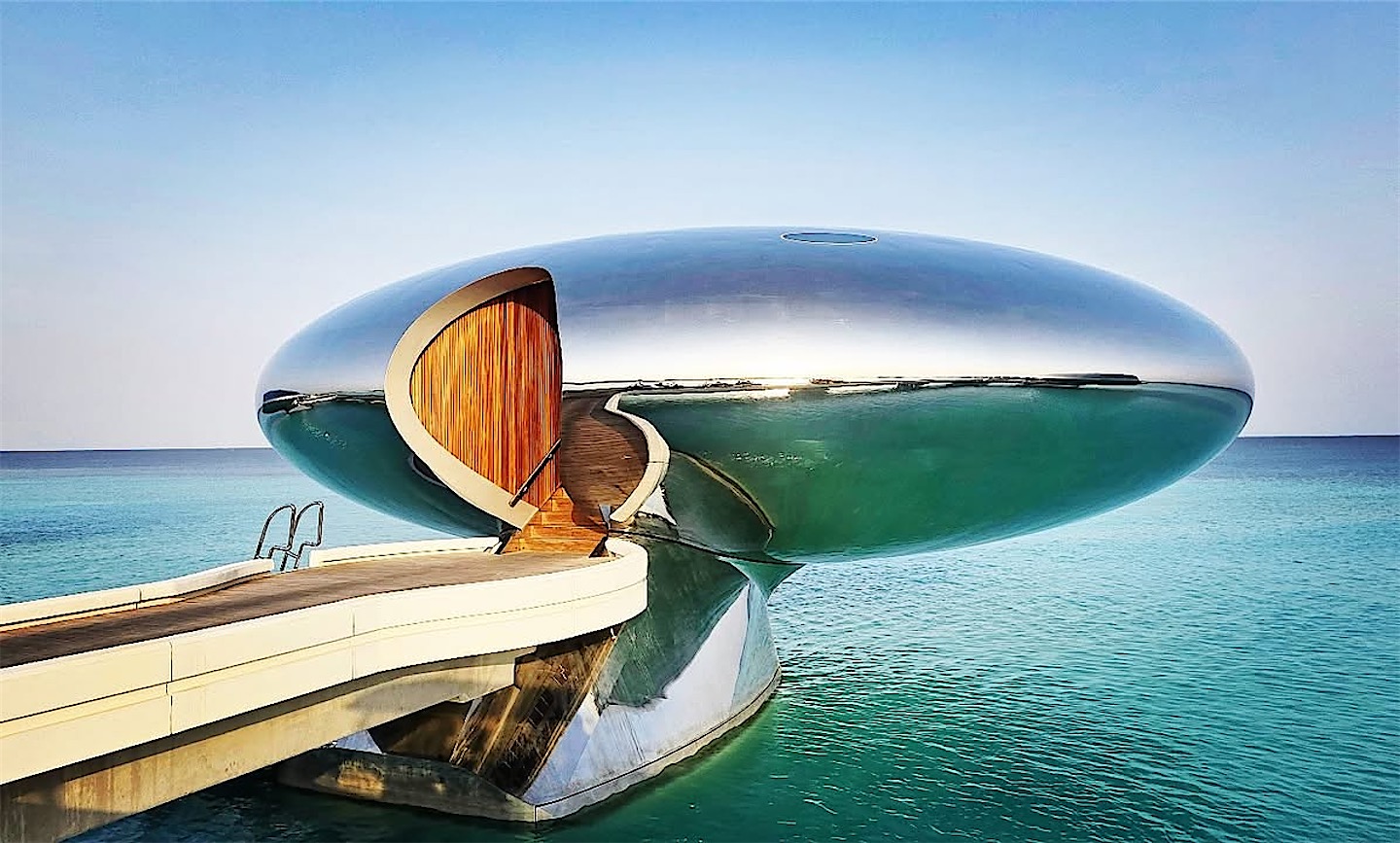
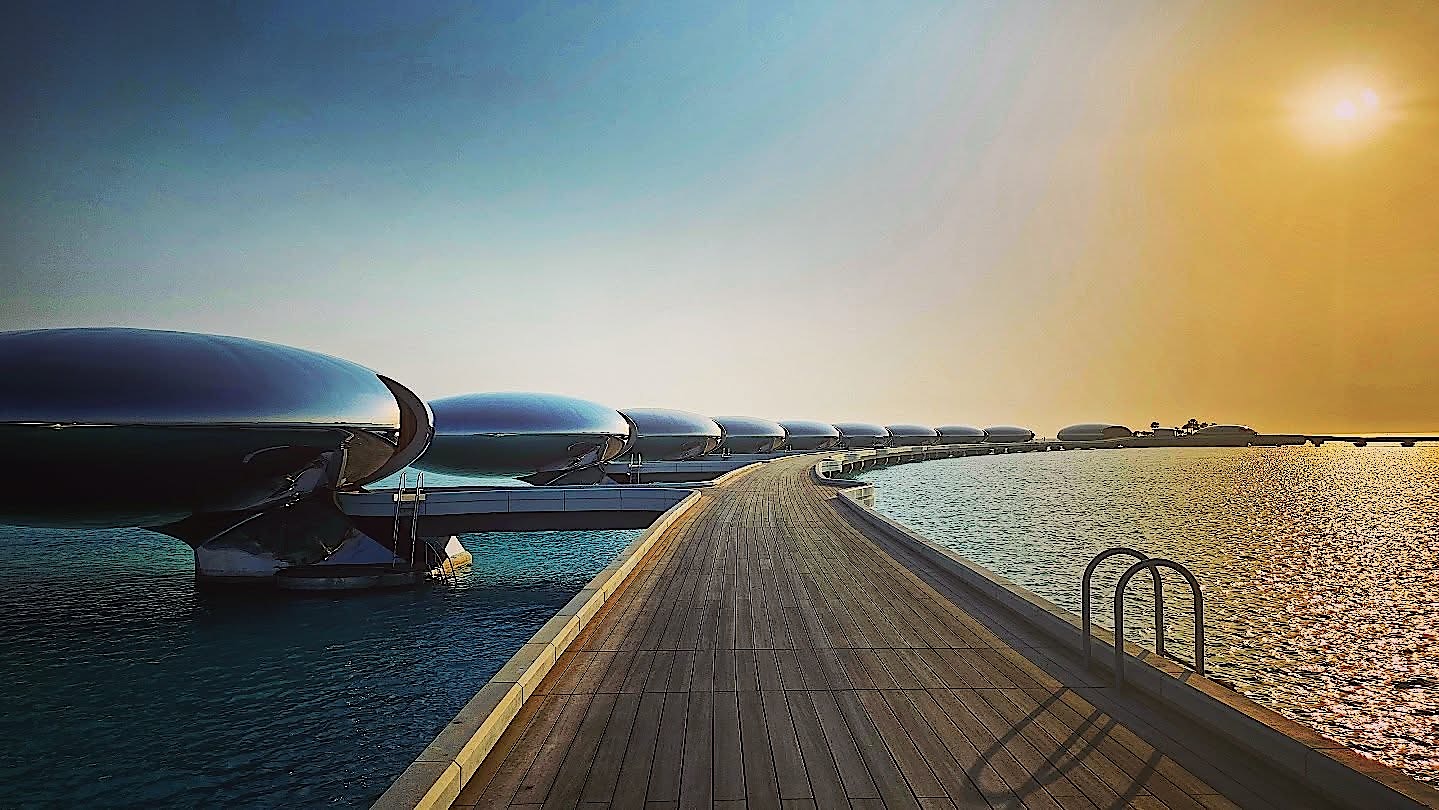
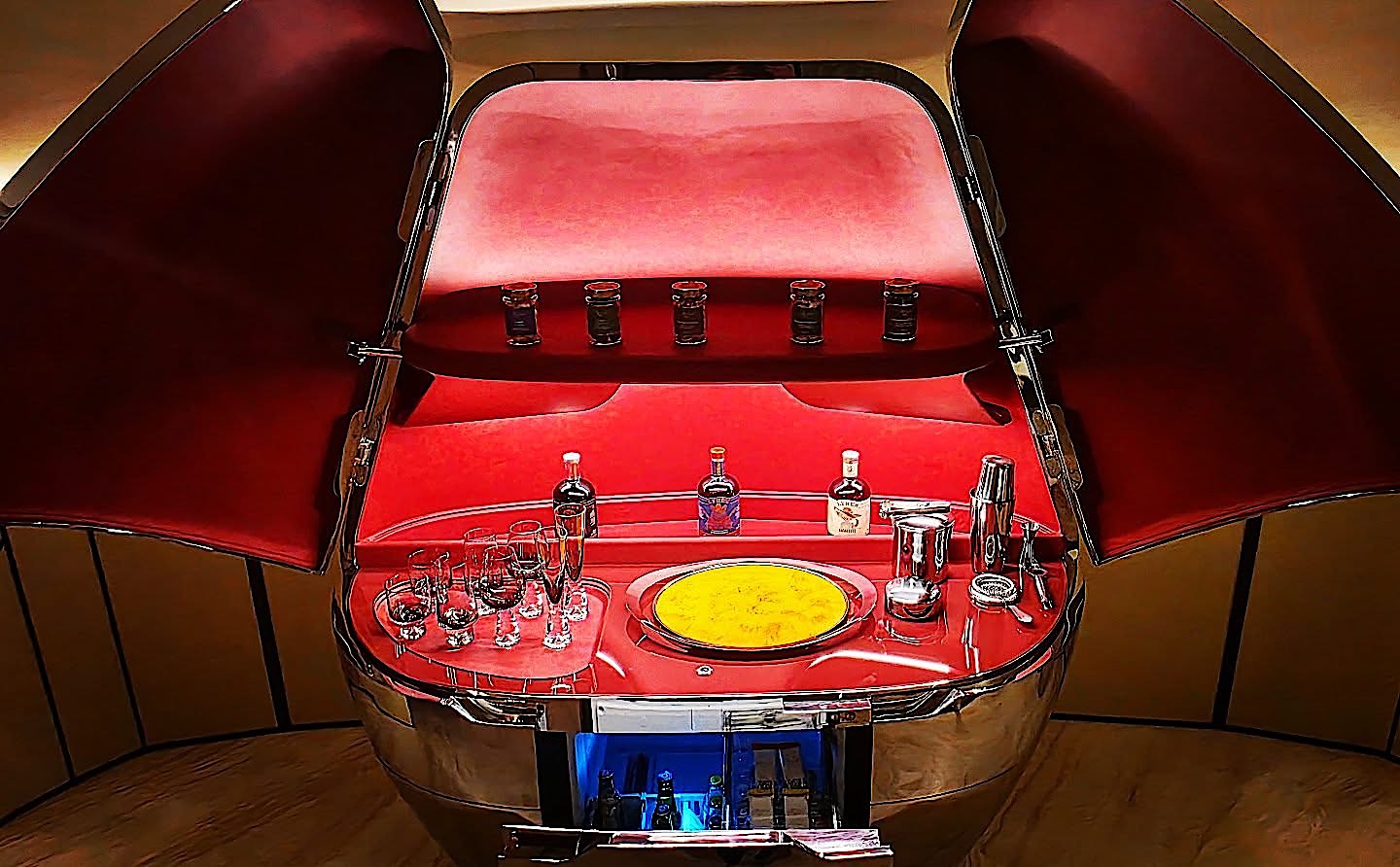
There are inland UFOs too: the beach villas share the same silver shape, half hidden among palms. The minibar in our villa, a red-lined capsule, held an impressive selection of spirits and wines, and the restaurants offered just as many. Then you read the labels and discover that every single bottle is alcohol-free. Even the most luxurious Saudi resorts are completely dry.
The food made up for it. A breakfast restaurant, two pool restaurants, an Italian and a Japanese restaurant for dinner plus room service were plenty for three nights. If you get bored of your own pool there are several larger ones, and one day my office was simply a lounger next to one of them. On the last evening Karyna and I booked the couples' spa.
Four dives on untouched reefs
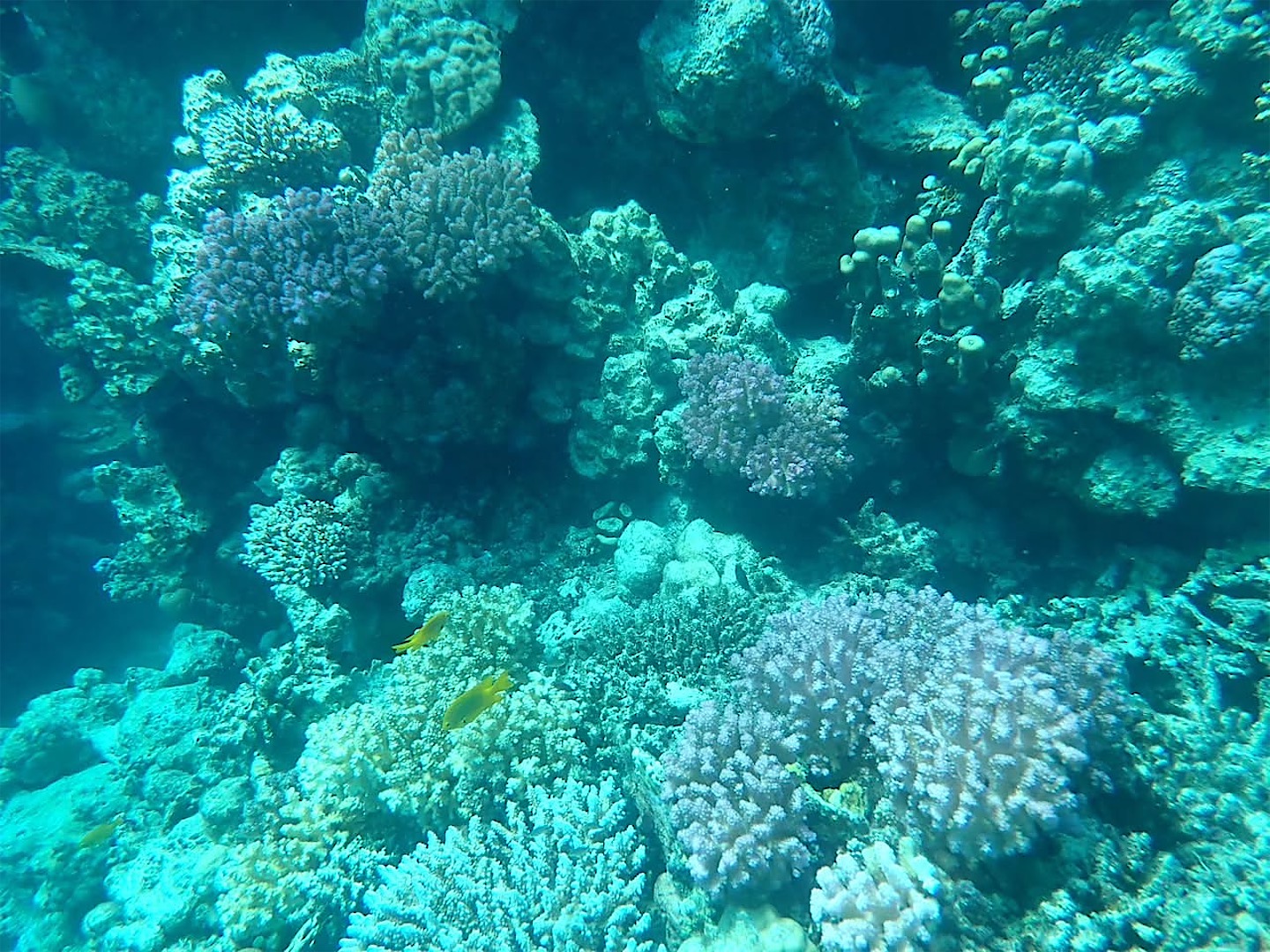
The highlight for me was underwater. Diving here is exactly how I like it: a flat, warm sea where you don't even need a wetsuit, superb visibility, healthy coral, and a roomy speedboat with an attentive crew.
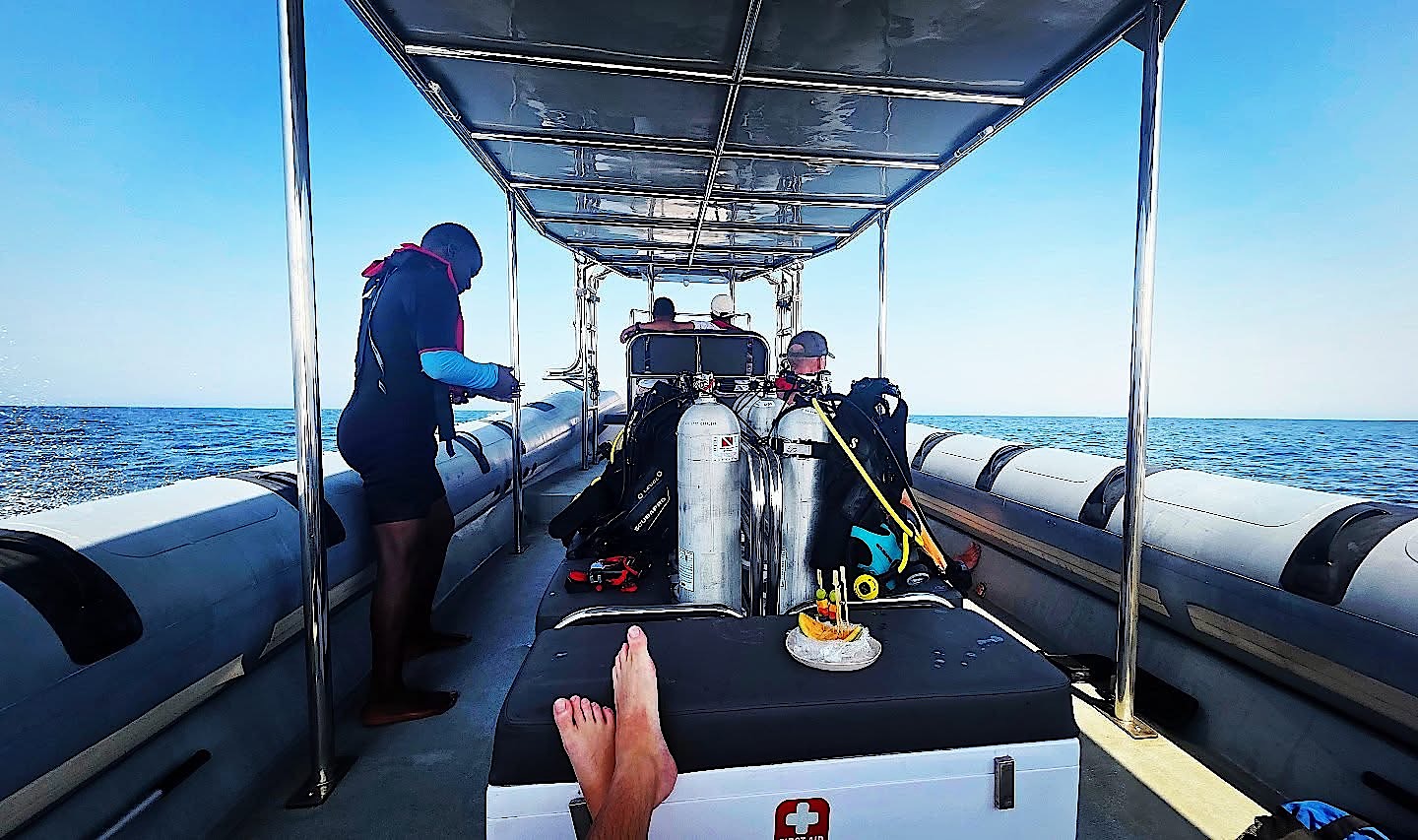
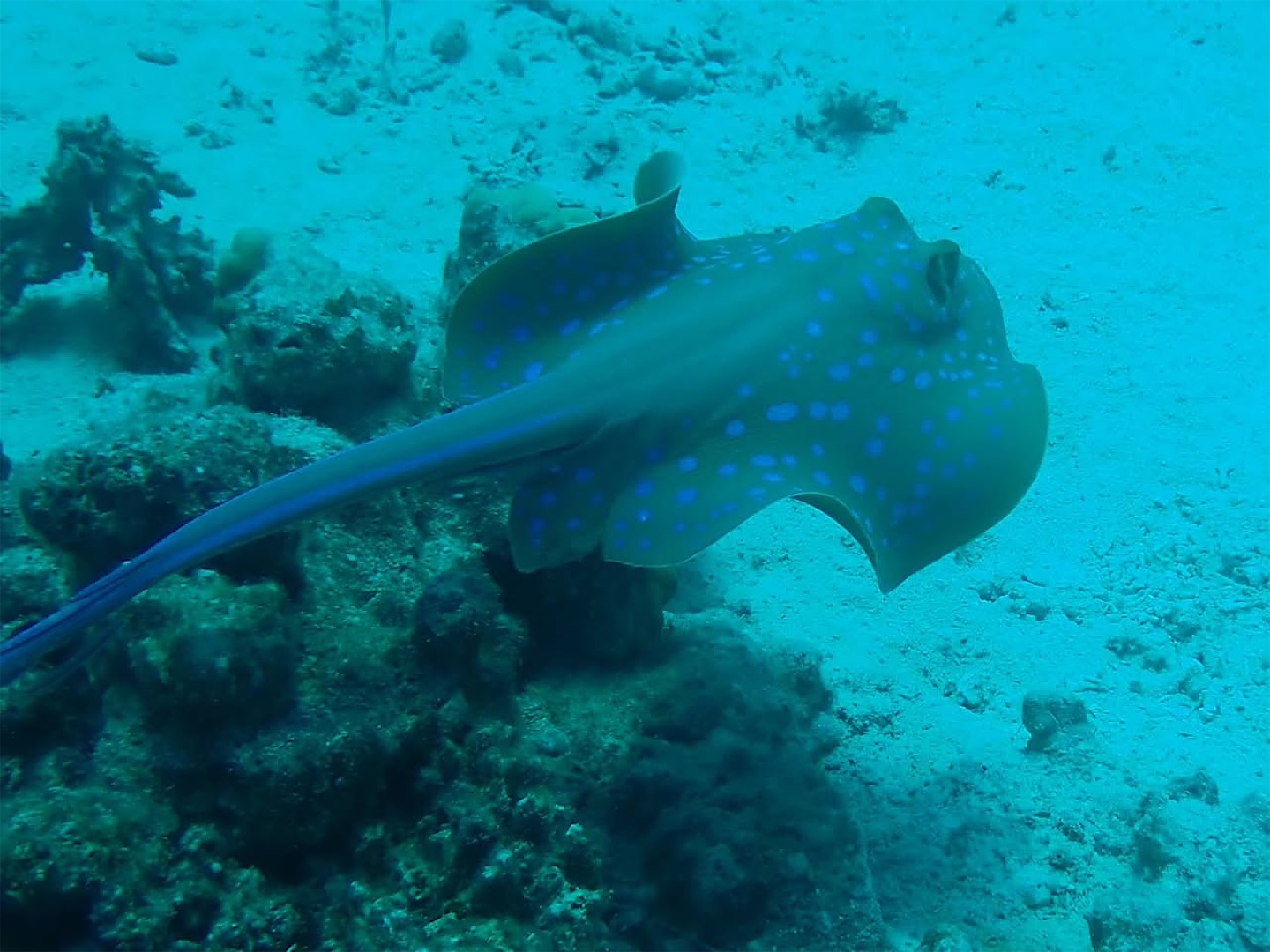
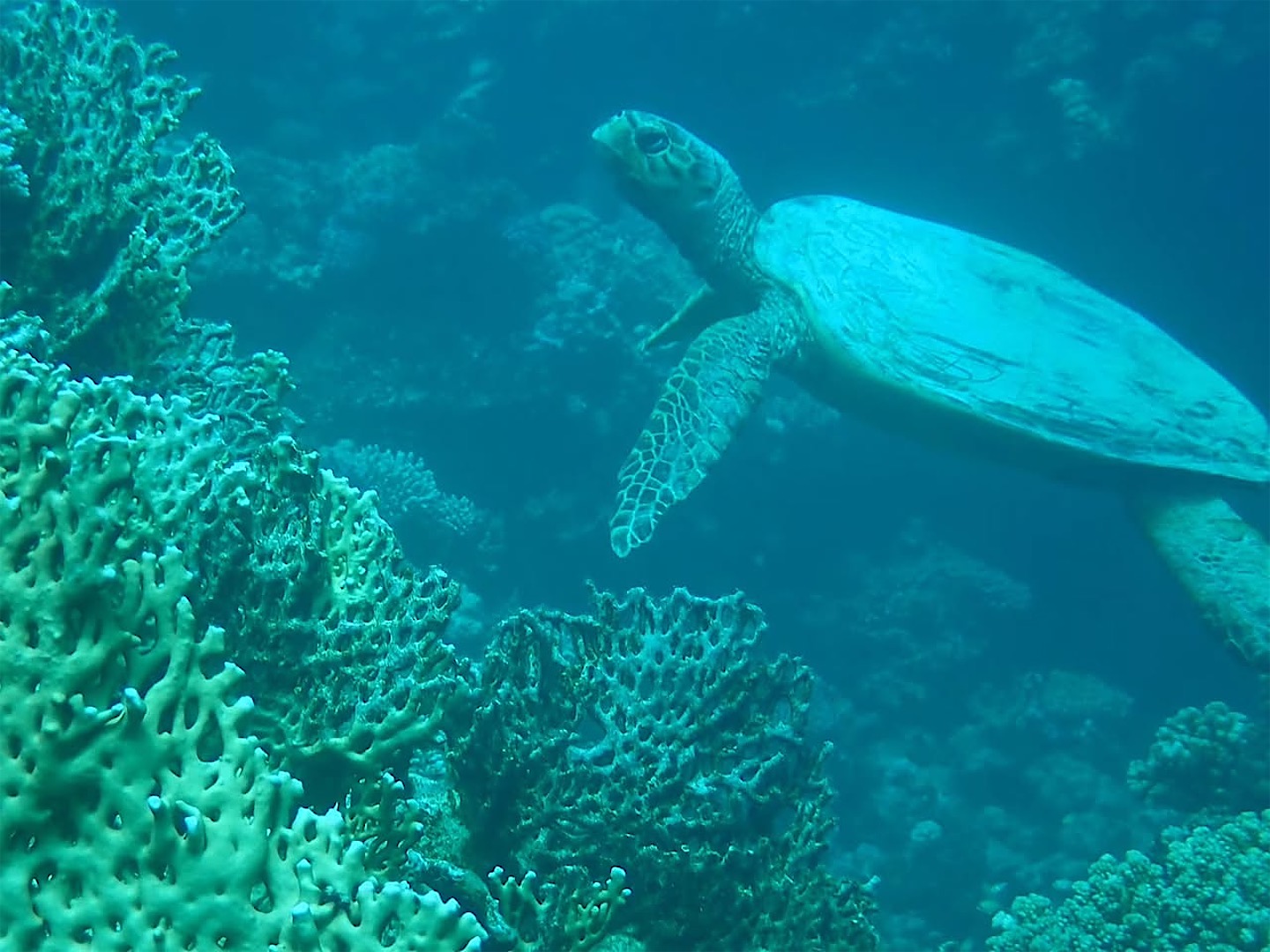
Over four dives I saw more clownfish in one place than ever before, plenty of turtles and several blue-spotted rays. Most of the reefs here are virtually untouched, and many have barely been explored.
Goodbye Shebara
On the last morning I went for one more swim in front of the orbs. Almost everything at Shebara was excellent. I'd give it 9.5 out of 10, losing half a point only because service was hit and miss at times, above all the transport on arrival and departure. The resort more than made up for that with generous discounts. The diving, villas, food and facilities were all outstanding, and the resort is very family-friendly while keeping some adult-only areas for peace and quiet.
Later that day we flew back to Dubai. After twelve more relaxed days there and a conference in Prague, I picked up my truck again for the road trip through northern Spain and Portugal.