
Karst, Rice Terraces and Heaven's Gate: A Week from Guilin to Chongqing
12–18 July 2024 · Yangshuo, Ping'an, Nanjing, Tianmen Mountain, Furong, Fenghuang, Chongqing, Dazu · Regions: China (Guangxi, Jiangsu, Hunan, Guizhou, Chongqing)
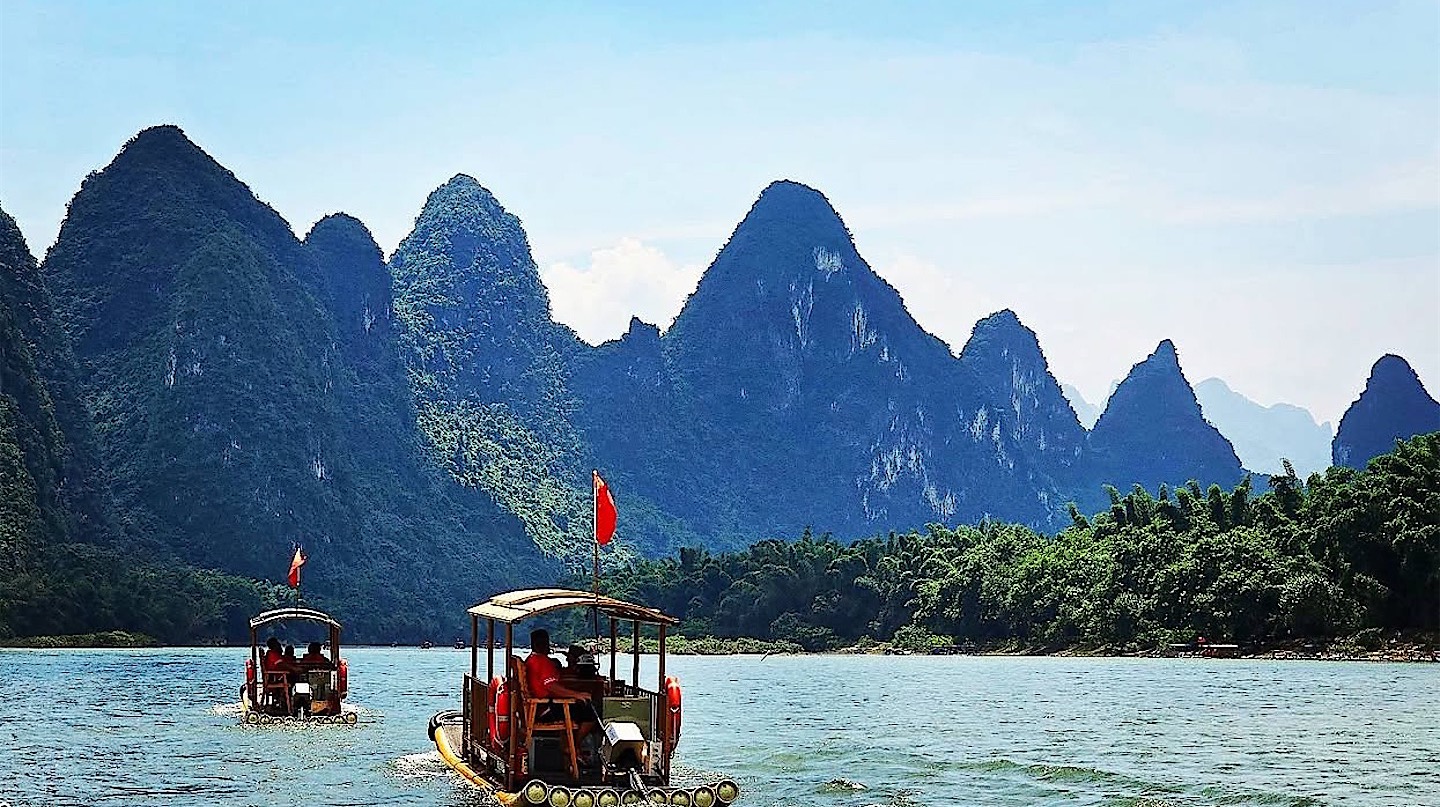
After island-hopping from Korea to Hainan, told in Seoul, Saipan, Okinawa, Hong Kong and Hainan, Karyna and I swapped the beaches of Sanya for the interior of mainland China. The plan for the following week was ambitious: the limestone towers around Guilin, the rice terraces of northern Guangxi, the cliffs of Zhangjiajie, two old towns in western Hunan and finally the megacity of Chongqing. China's bullet trains and domestic flights make a route like this possible in a week, at least on paper. In practice almost every flight we took was delayed or cancelled, and one of those delays turned into an unexpected bonus.
Cycling through the karst of Yangshuo
We started in Yangshuo, south of Guilin, where the best way to see the countryside is by bicycle. Smooth cycling paths lead past rice paddies, small villages and flooded fields that mirror the sky, while steep green peaks rise straight out of the flat land in every direction.
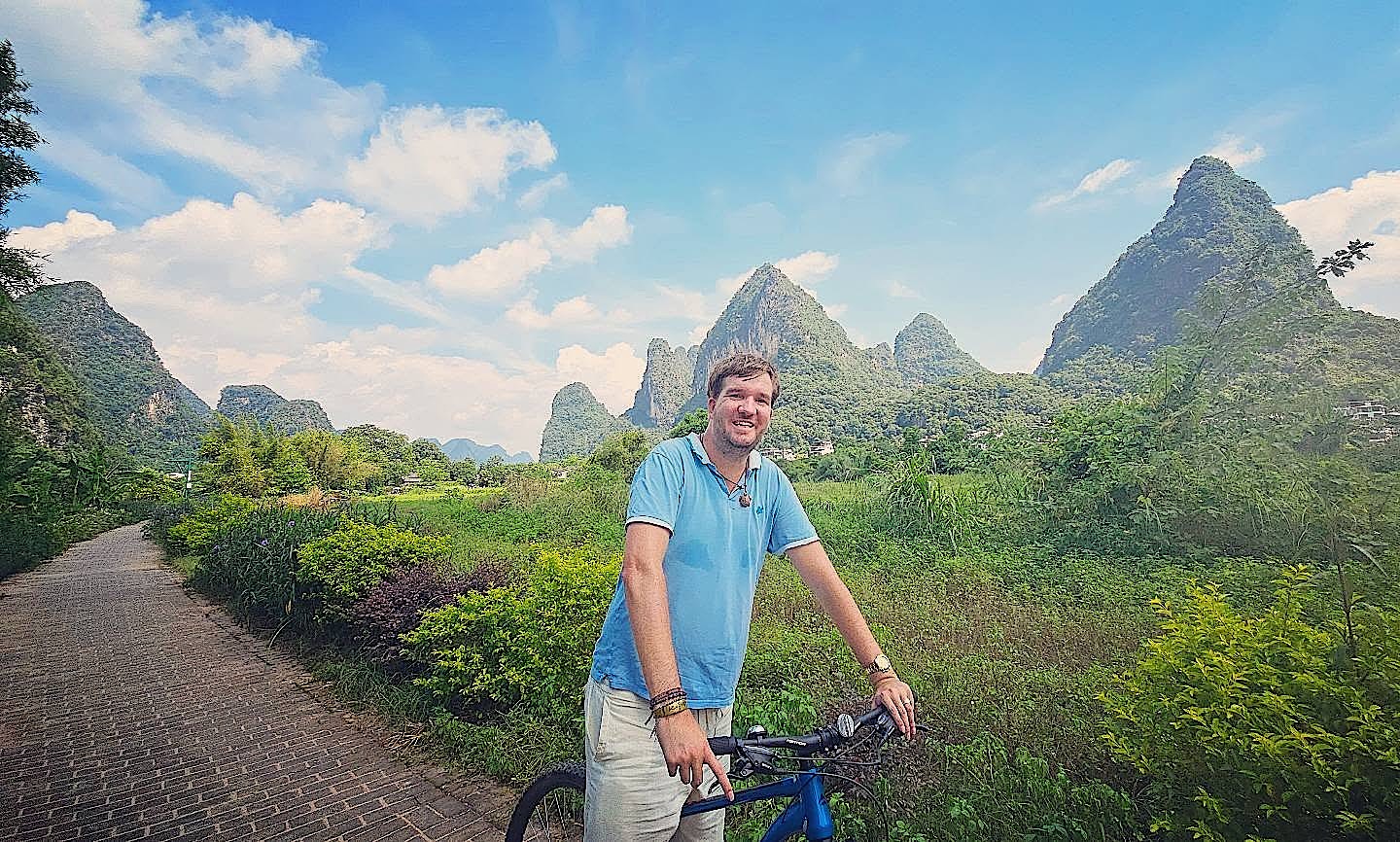
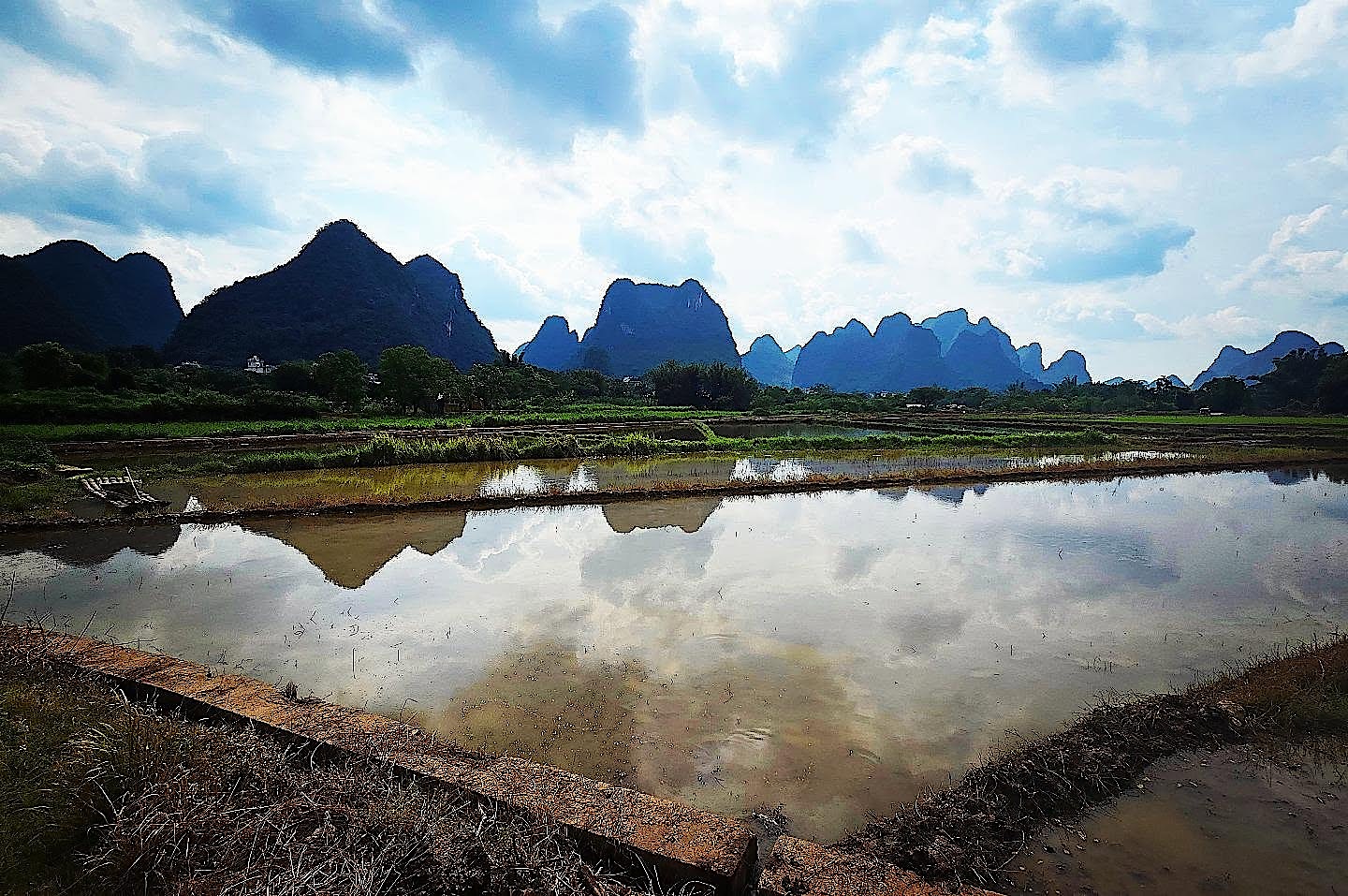
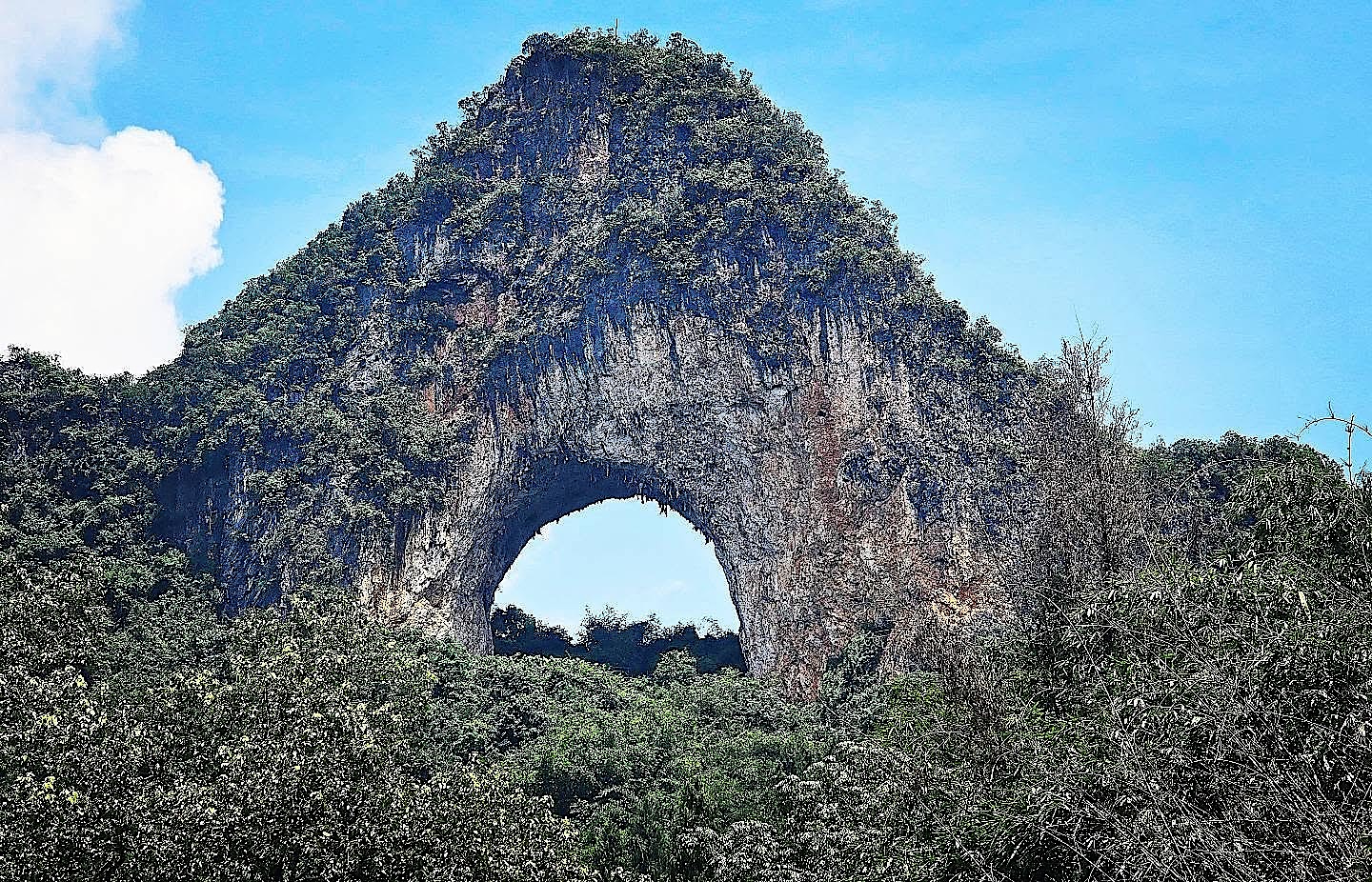
One of the best-known peaks is Moon Hill, a ridge with a huge semicircular arch worn right through it. From the right angle the hole looks like a half moon, which gave the hill its name.
Then we went out onto the water. Motorised bamboo rafts, each flying a small red flag, chugged along the river between the peaks, and the scenery changed with every bend. The Li River between Guilin and Yangshuo is the classic postcard view of China; a stretch near the village of Xingping is even printed on the back of the 20-yuan note.
The Dragon's Backbone at Ping'an
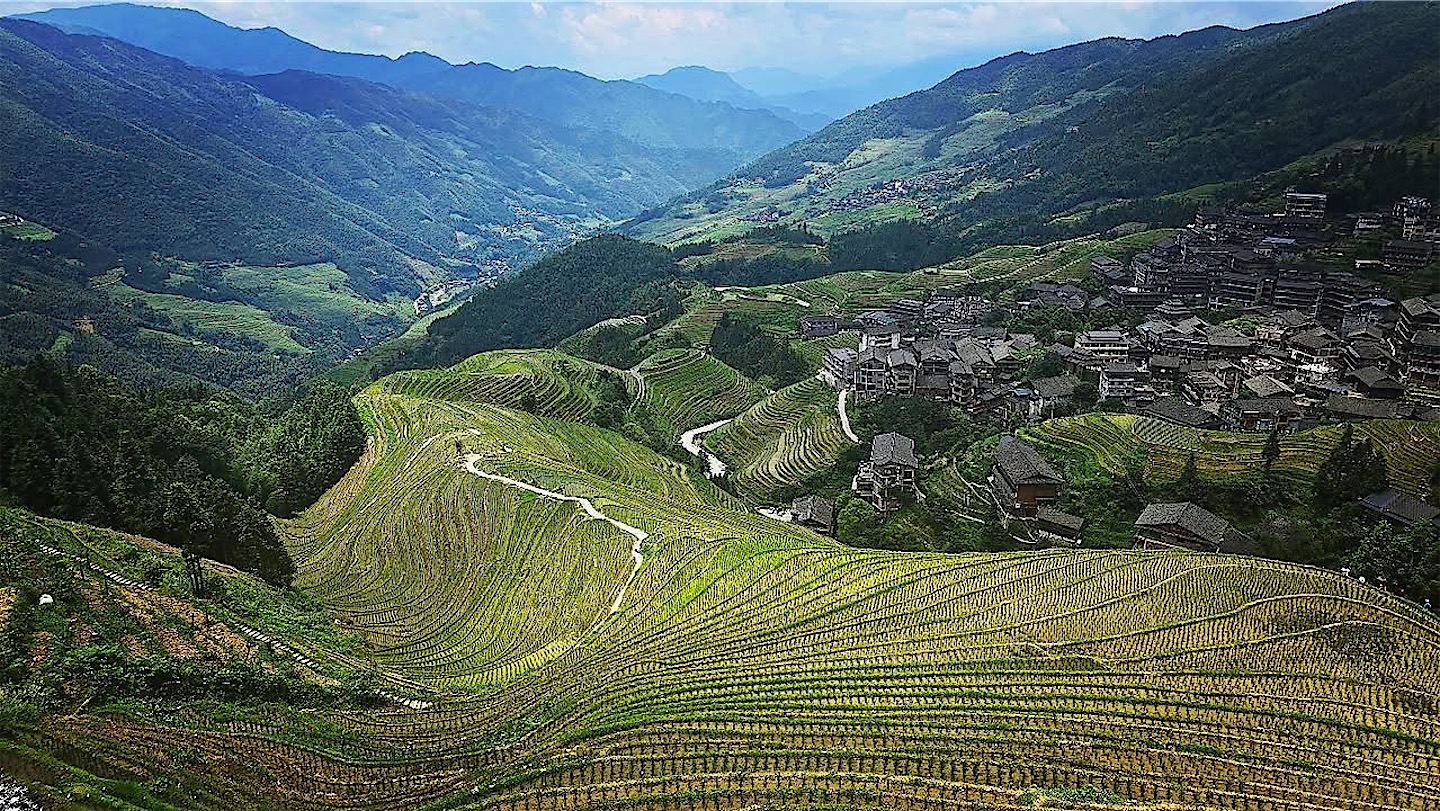
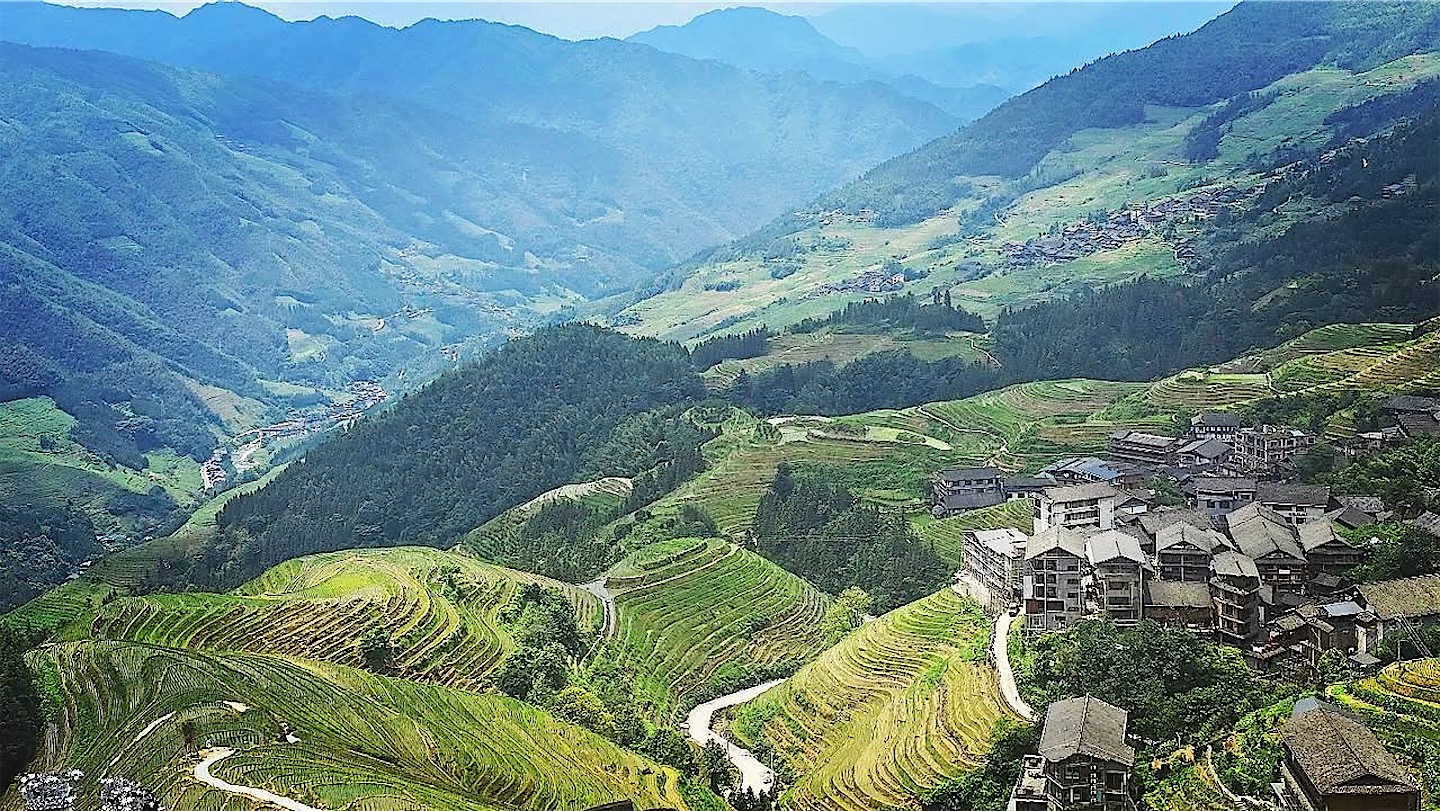
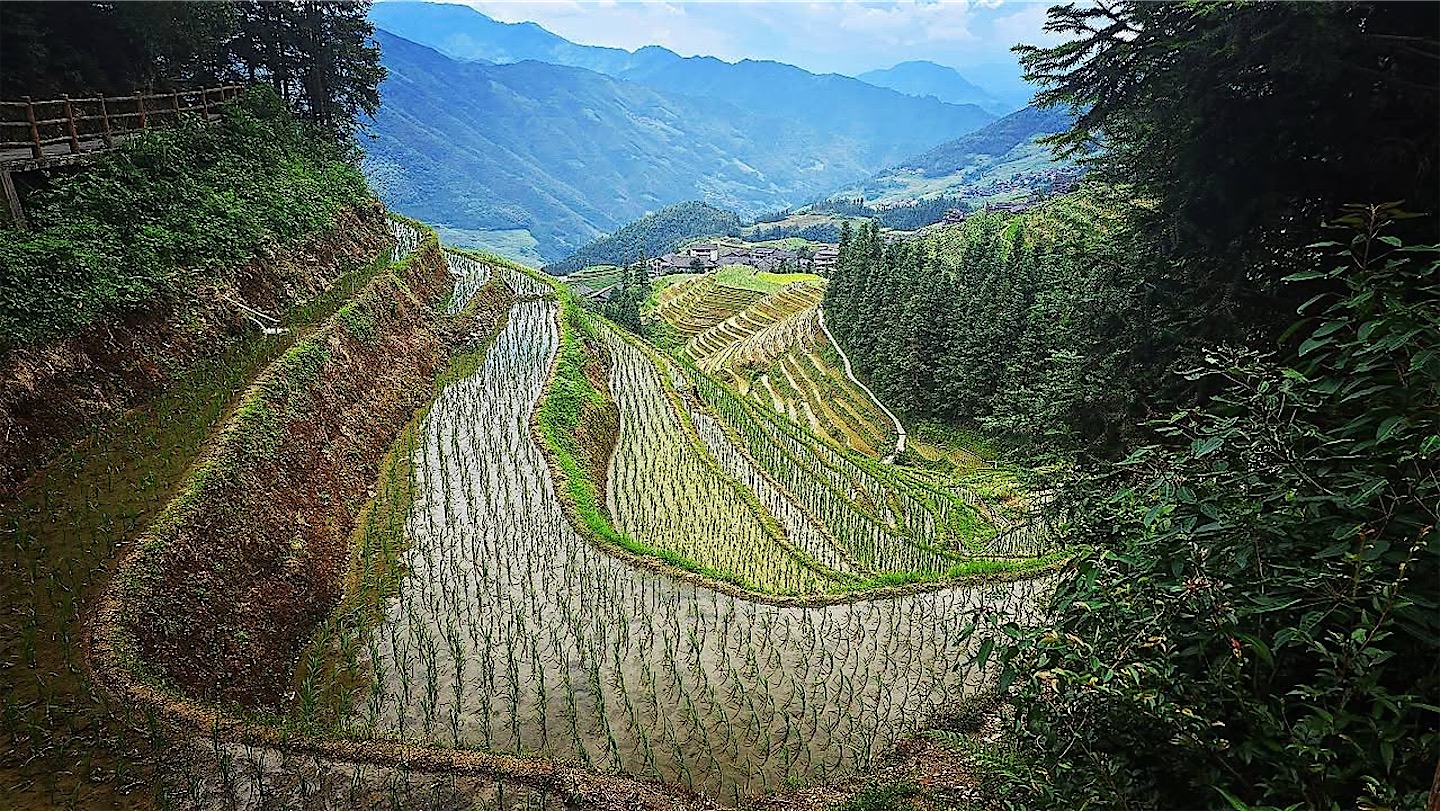
From the karst lowlands we went north into the mountains of Longsheng County to see the Longji rice terraces from the village of Ping'an. In July the paddies were bright green, and the terraces curved around the hillsides like the contour lines on a map, from the valley floor almost to the ridges. The wooden houses of the village sit on the slope in between.
A lucky delay in Nanjing
The next leg was supposed to be a simple change of planes: from Guilin to Nanjing, and from there on to Hunan. Our first flight left four hours late, and I had written off any sightseeing in Nanjing. Then the connecting flight was delayed by three hours as well, and suddenly there was time for a short visit to the old capital after all.
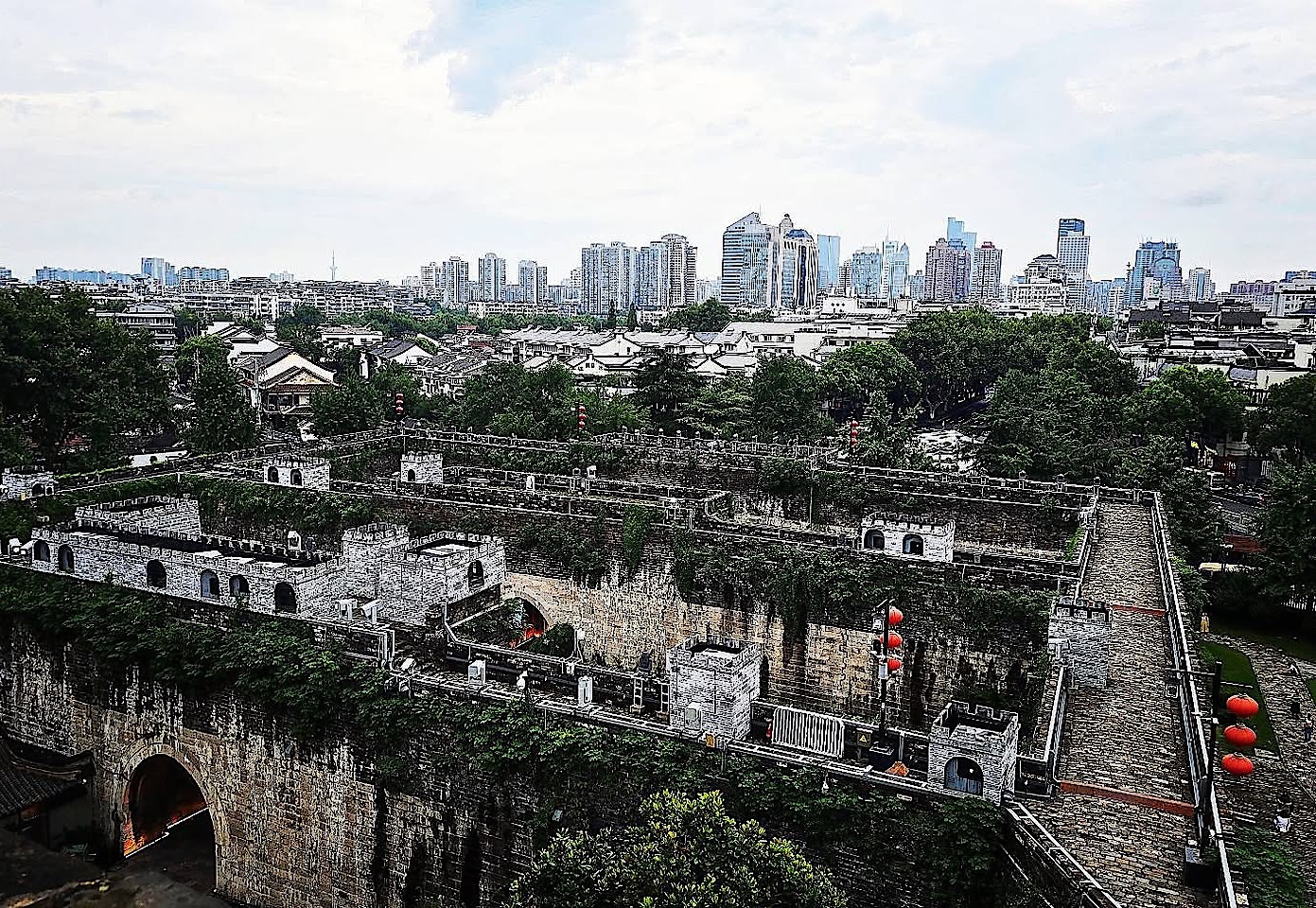
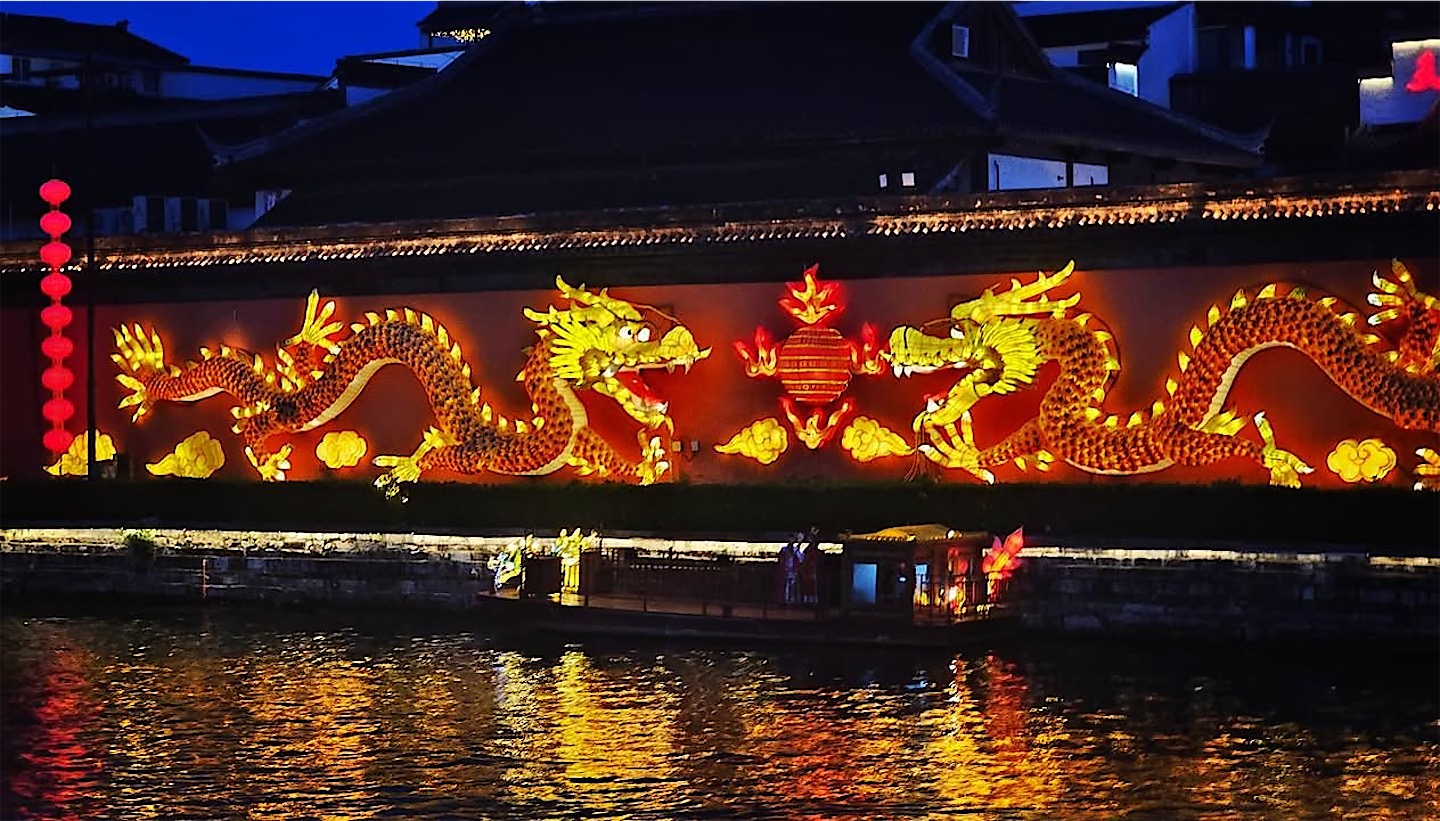
We climbed onto the city wall at Zhonghua Gate, where the old gate courtyards and the skyscrapers of the modern city fit into a single view. In the evening we made it to the Confucius Temple on the Qinhuai River, where giant illuminated dragons glowed above the water.
Tianmen Mountain and the Gate of Heaven
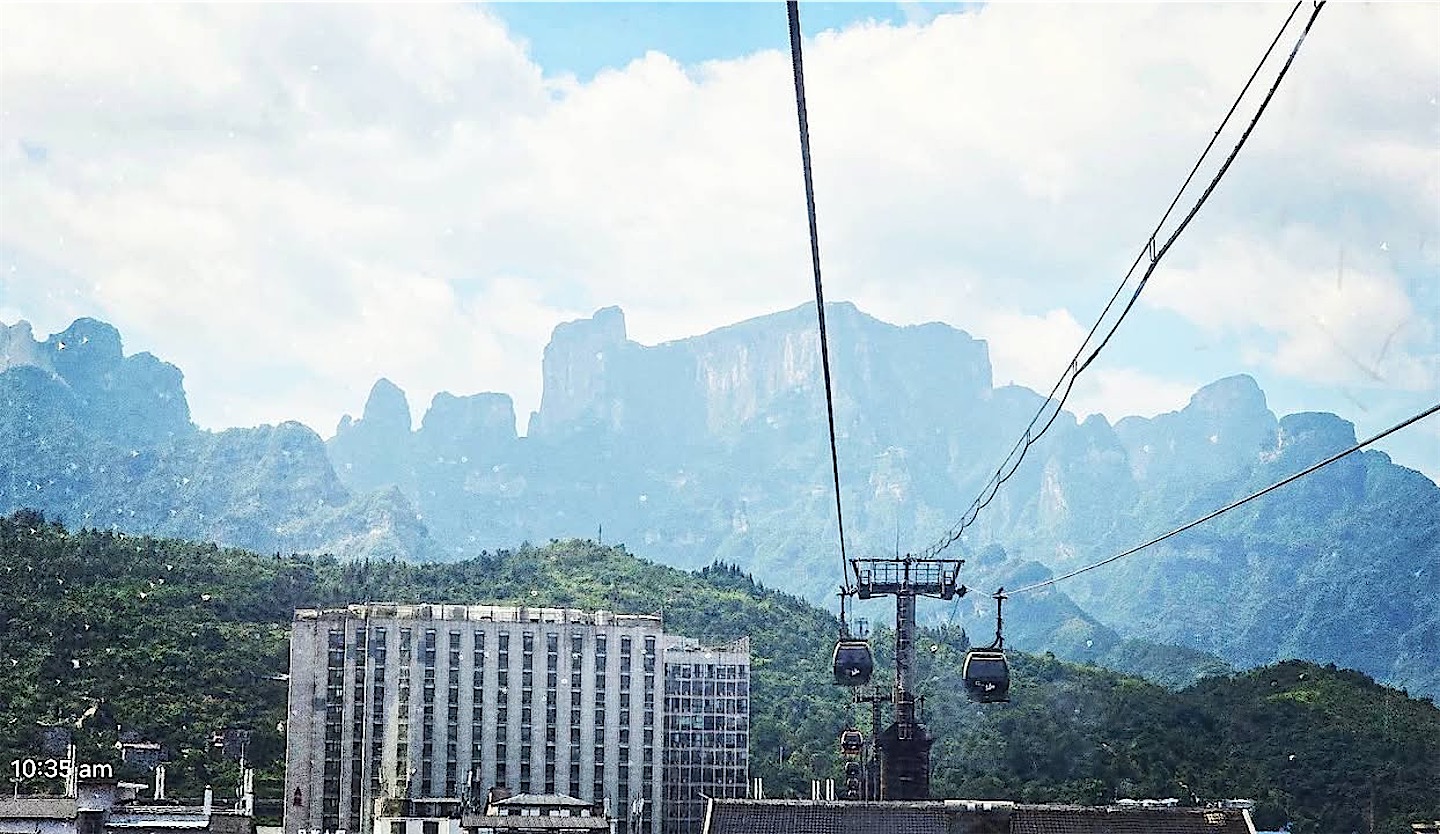
Zhangjiajie is best known for the sandstone pillars that inspired the floating mountains of the film Avatar, but our goal was Tianmen Mountain on the edge of the city. The ride starts right in town: a cable car of more than seven kilometres, billed as one of the longest in the world, floats over rooftops and fields before climbing steeply towards the cliffs.
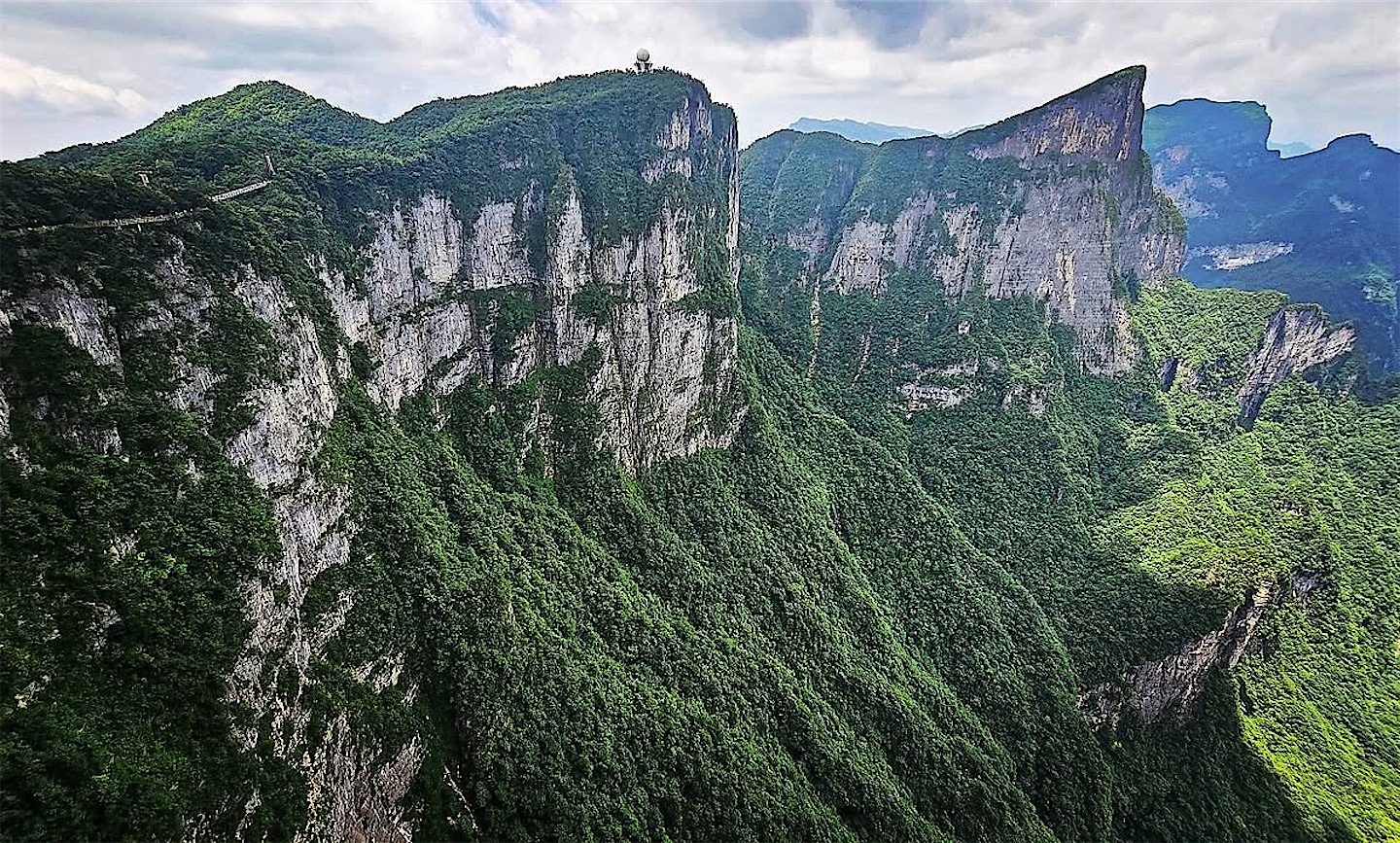
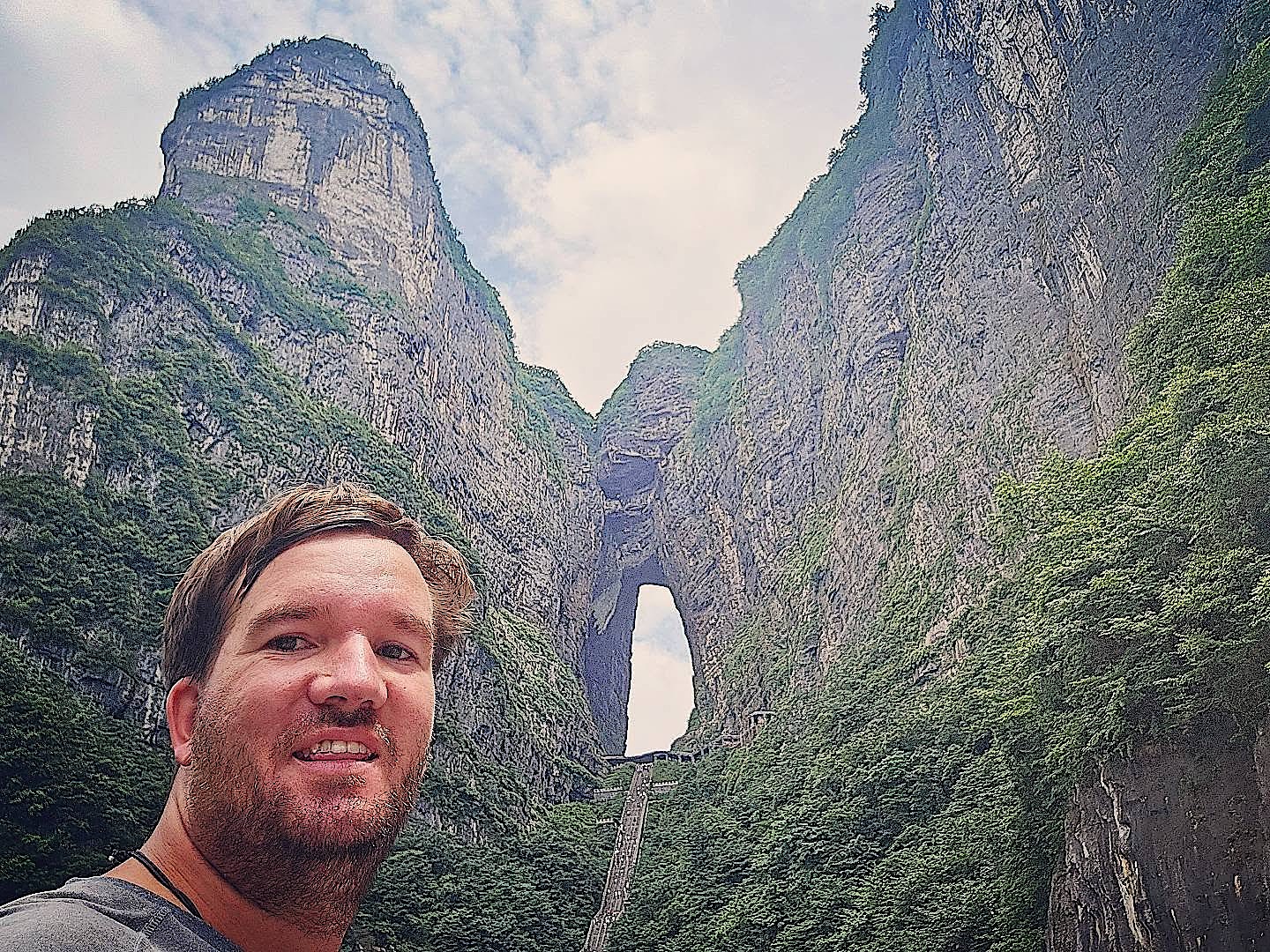
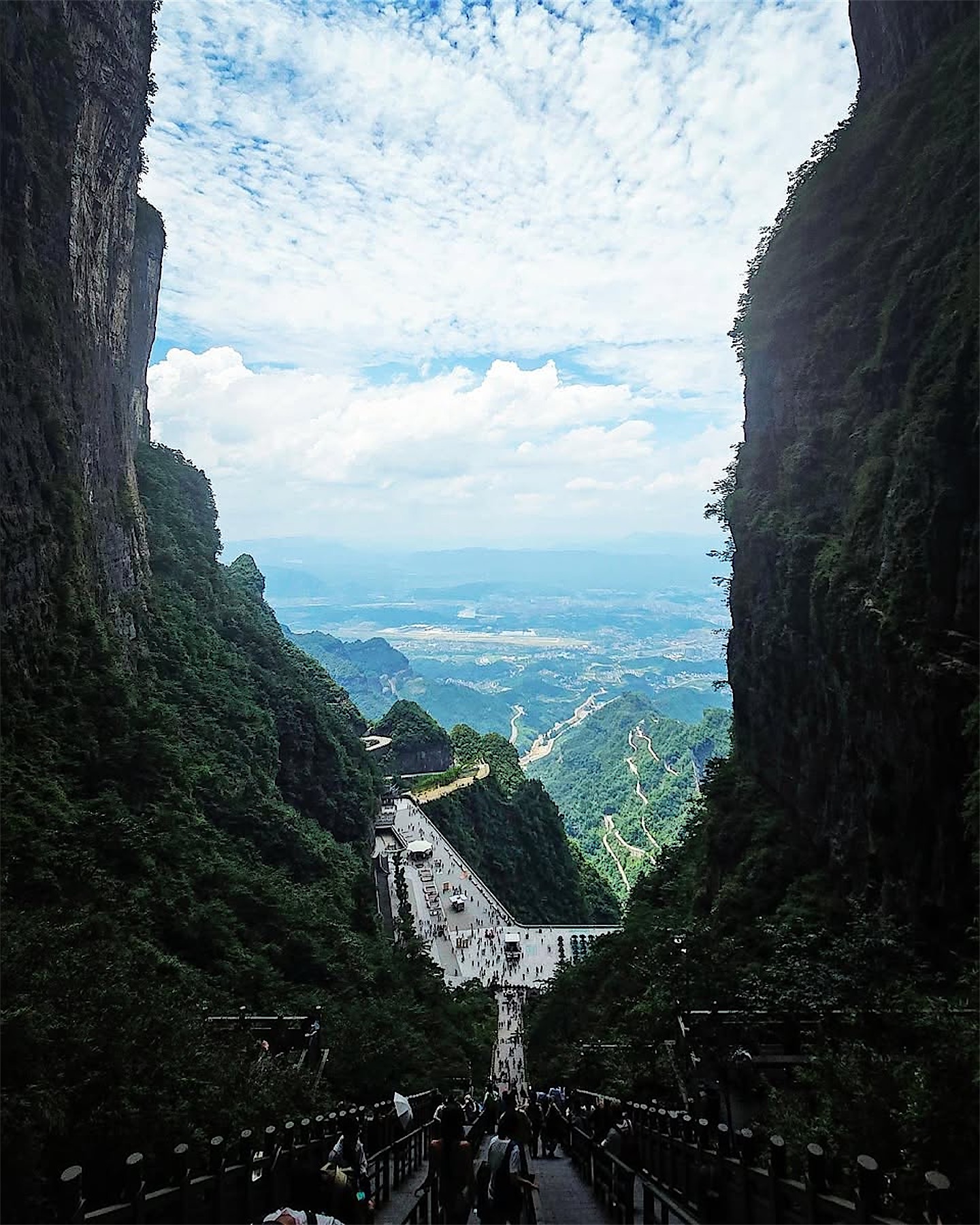
The real highlight is Tianmen Cave, the Gate of Heaven, an enormous natural arch high up in the mountain. A staircase of 999 steps, the "Stairway to Heaven", leads up to it. It is a sight to behold and also to climb, together with crowds of Chinese visitors.
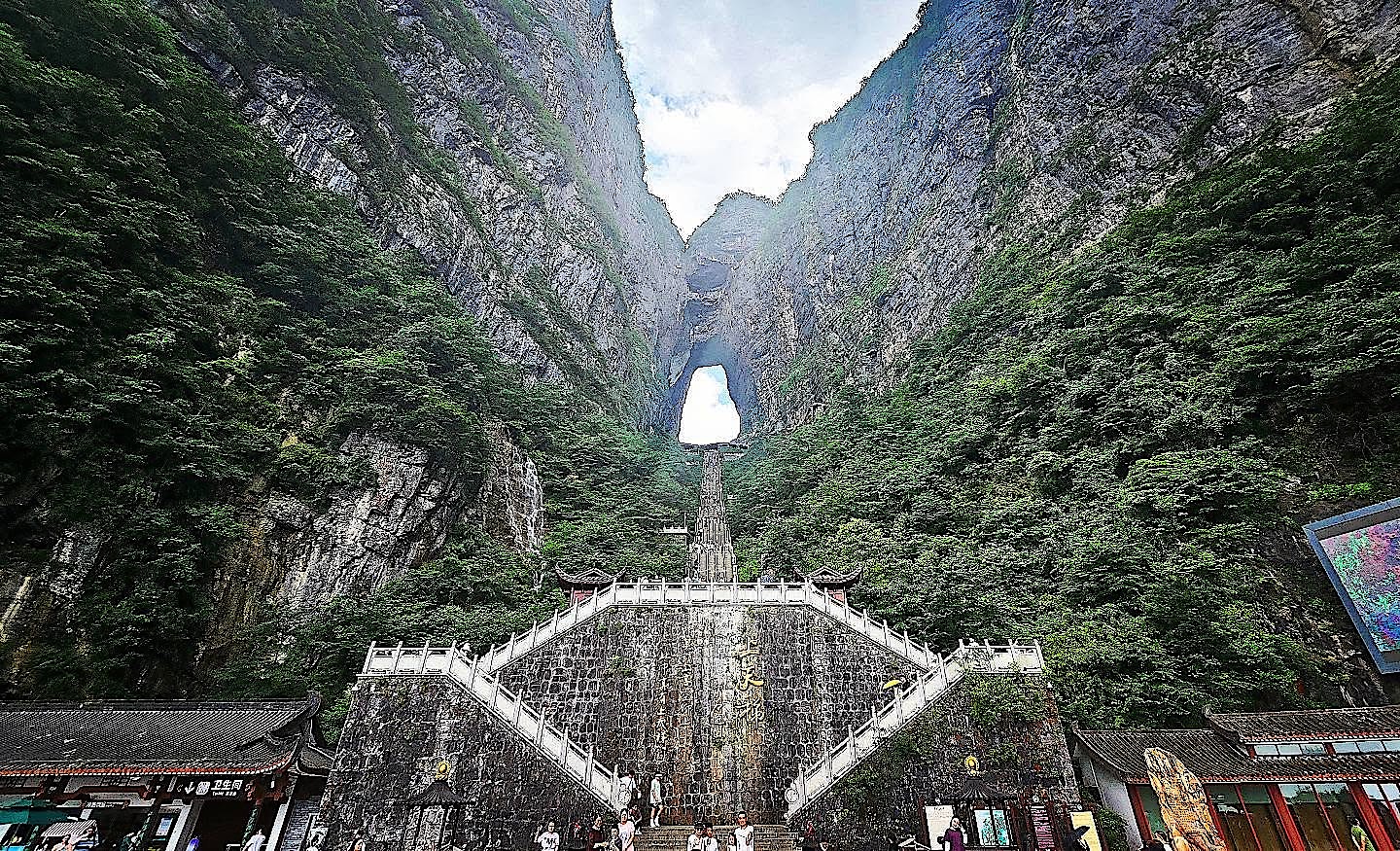
From inside the arch the view runs back down the staircase to the switchbacks of that famous road and the plain beyond.
Waterfall Town and Phoenix Town
West of Zhangjiajie lies Xiangxi, the mountainous western corner of Hunan, home to two of the prettiest historic towns we have seen in China. The first was Furong, the Waterfall Town. Its old wooden houses stand on a cliff edge, and a waterfall drops right through the town into the river below. After dark the whole cliff is lit up, and even in daylight it looks almost too romantic to be real.
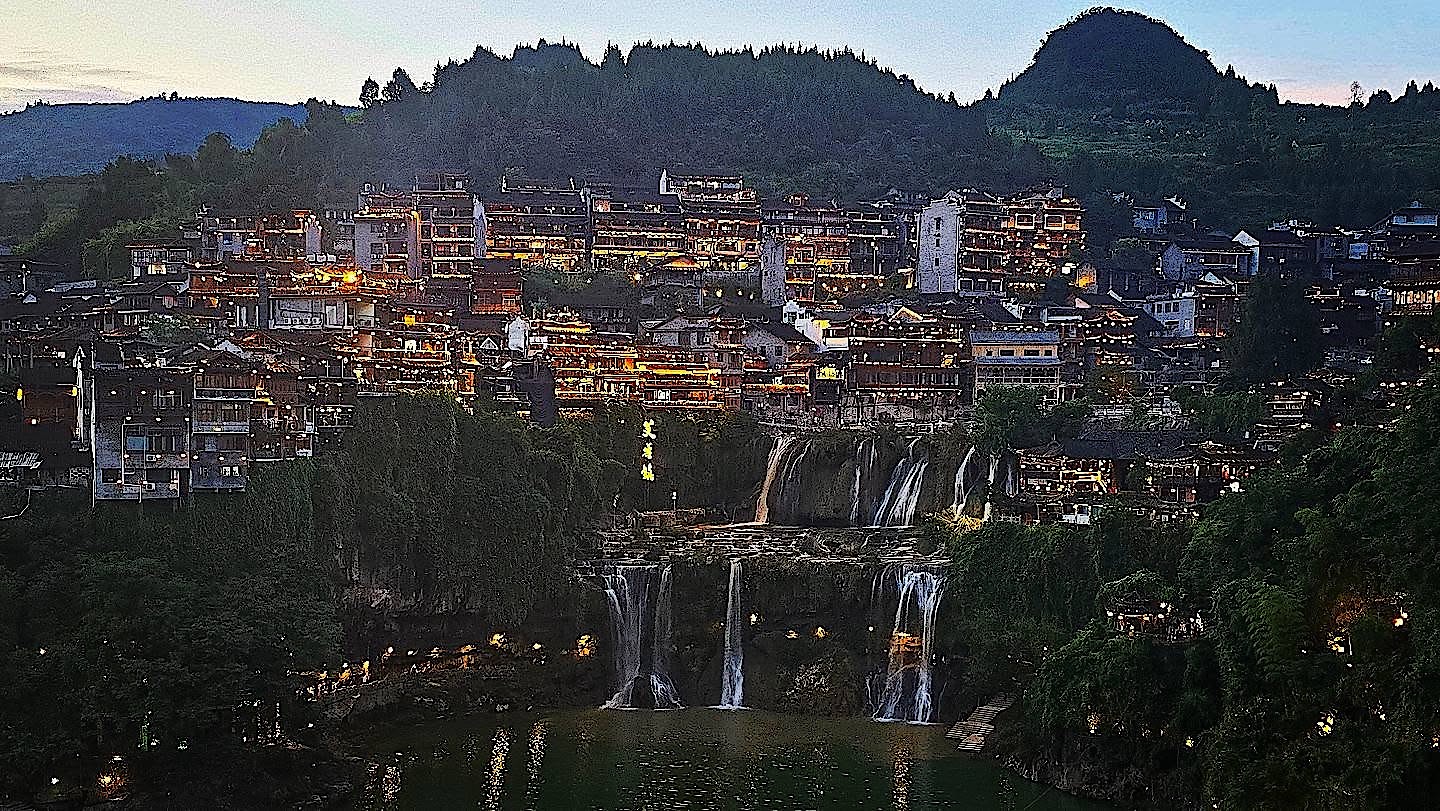
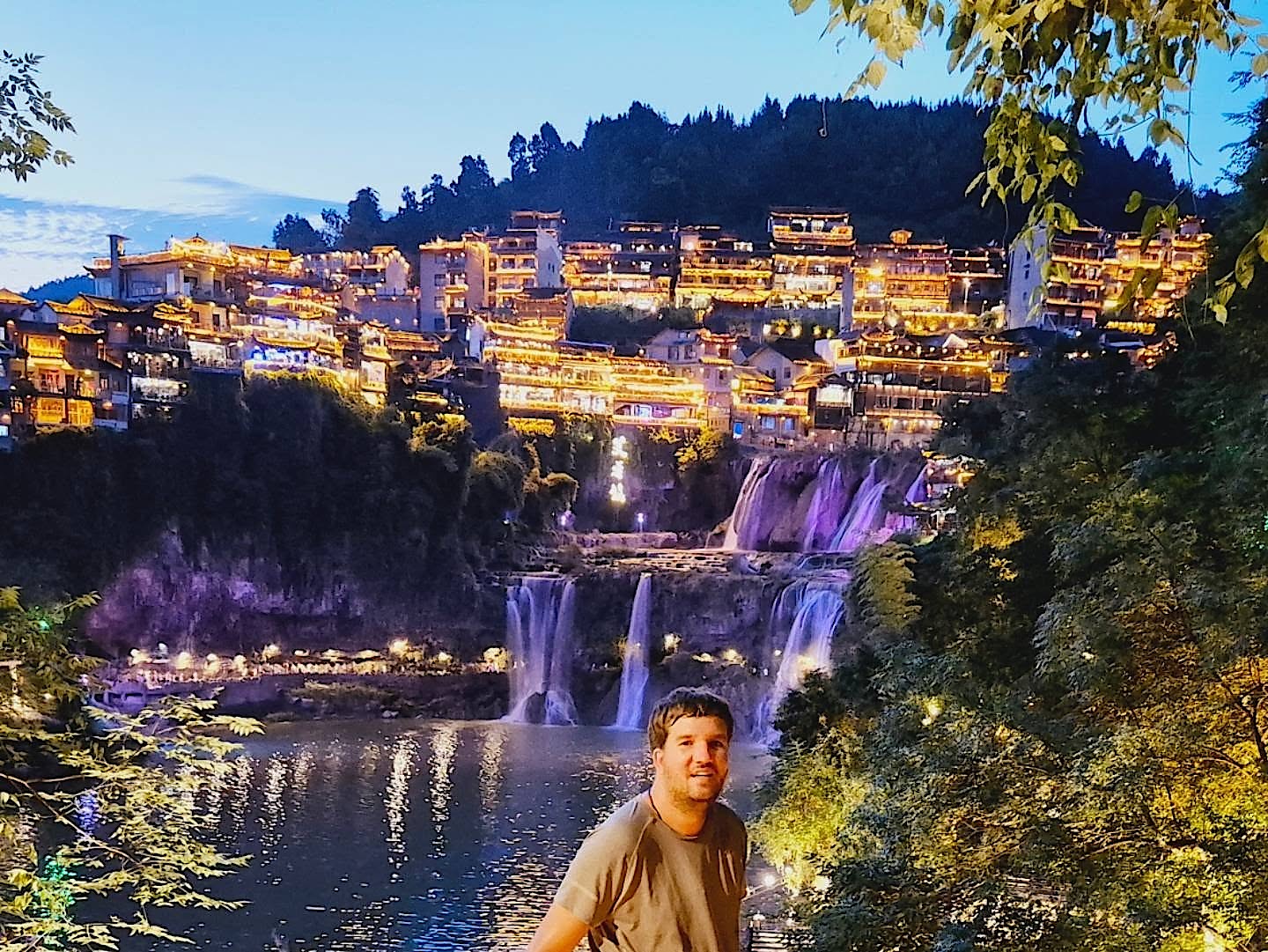
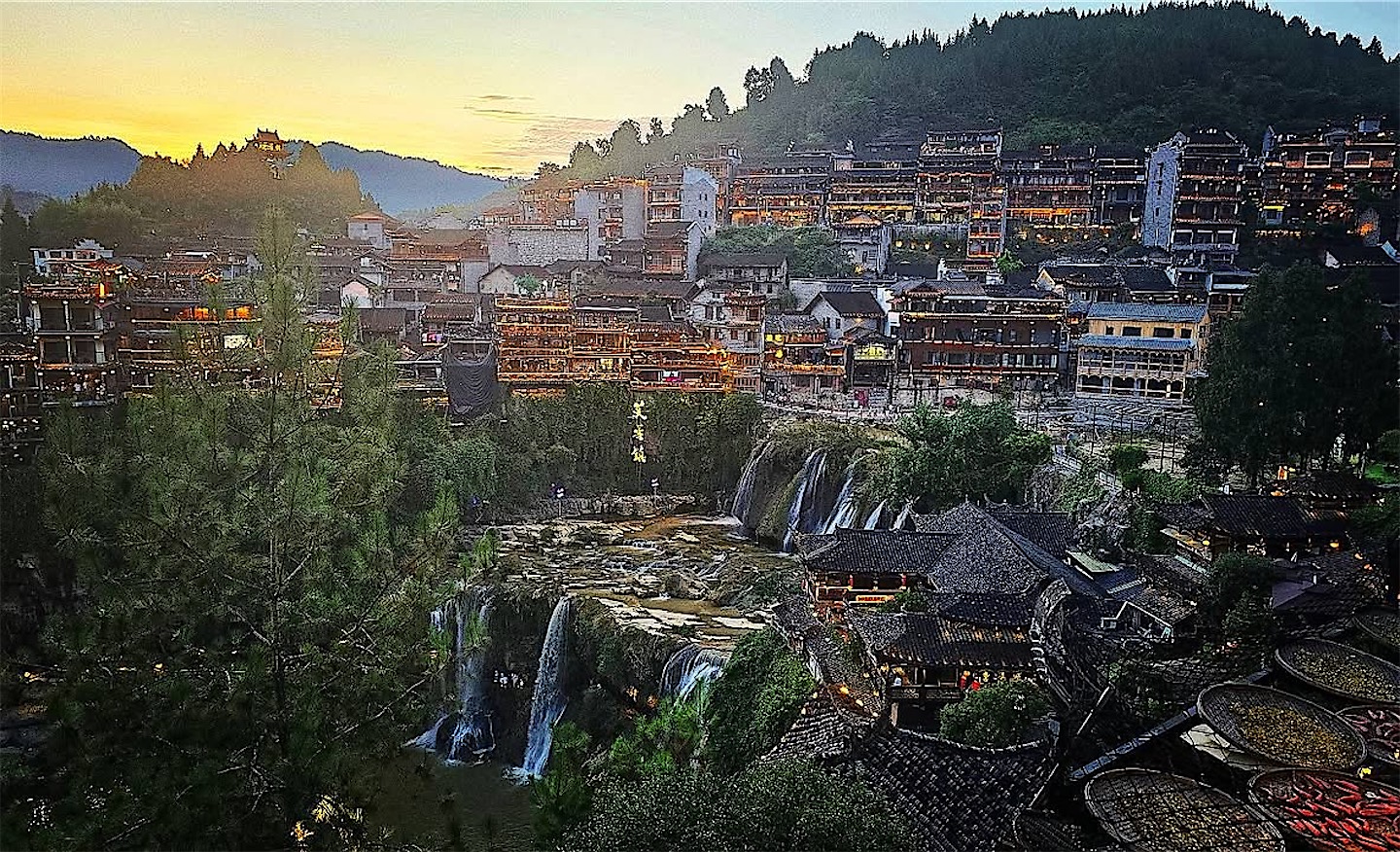
The town was once called Wangcun. It was renamed Furong, "hibiscus", after the 1986 film Hibiscus Town, which was shot there and made it famous across China.
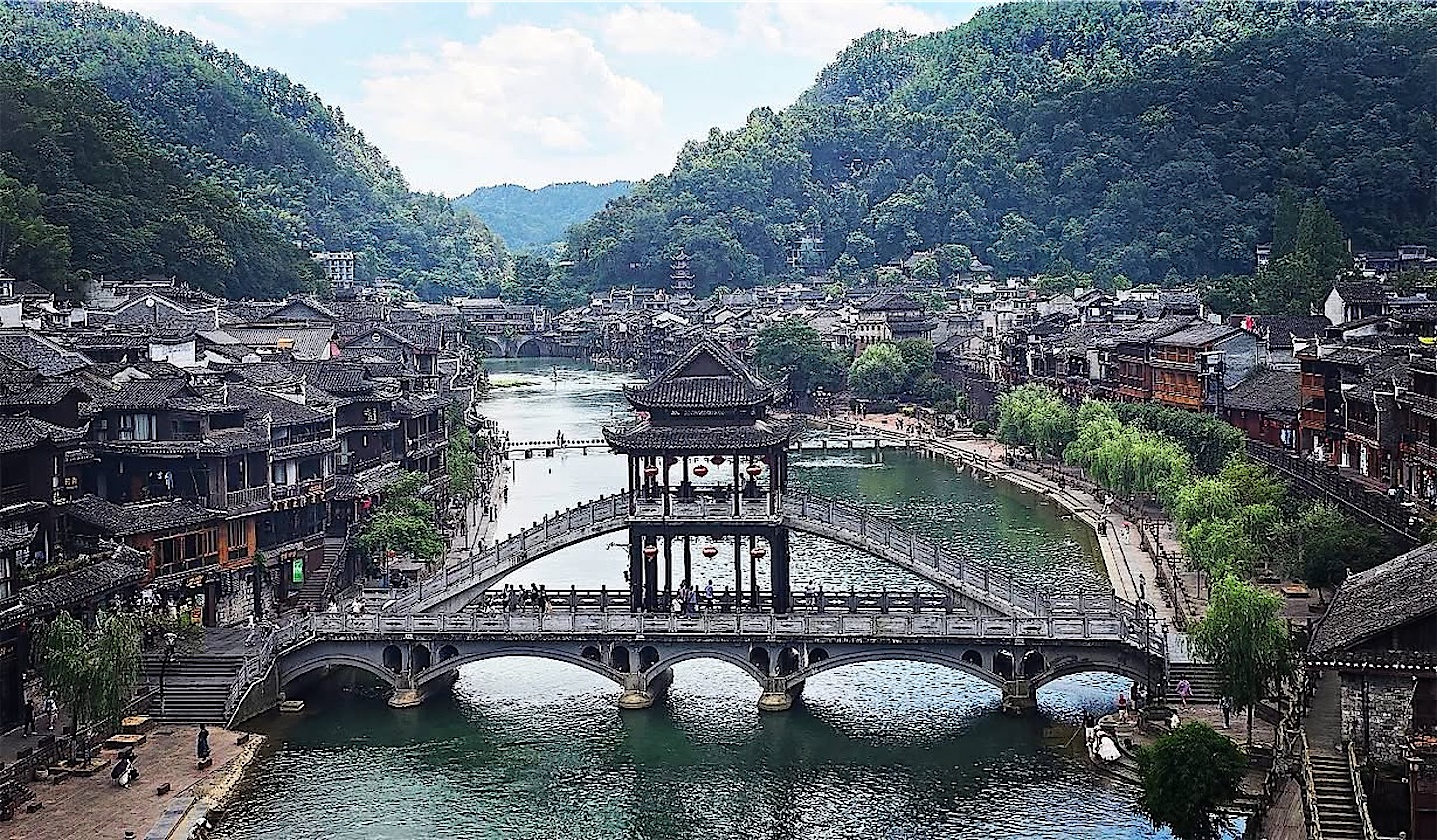
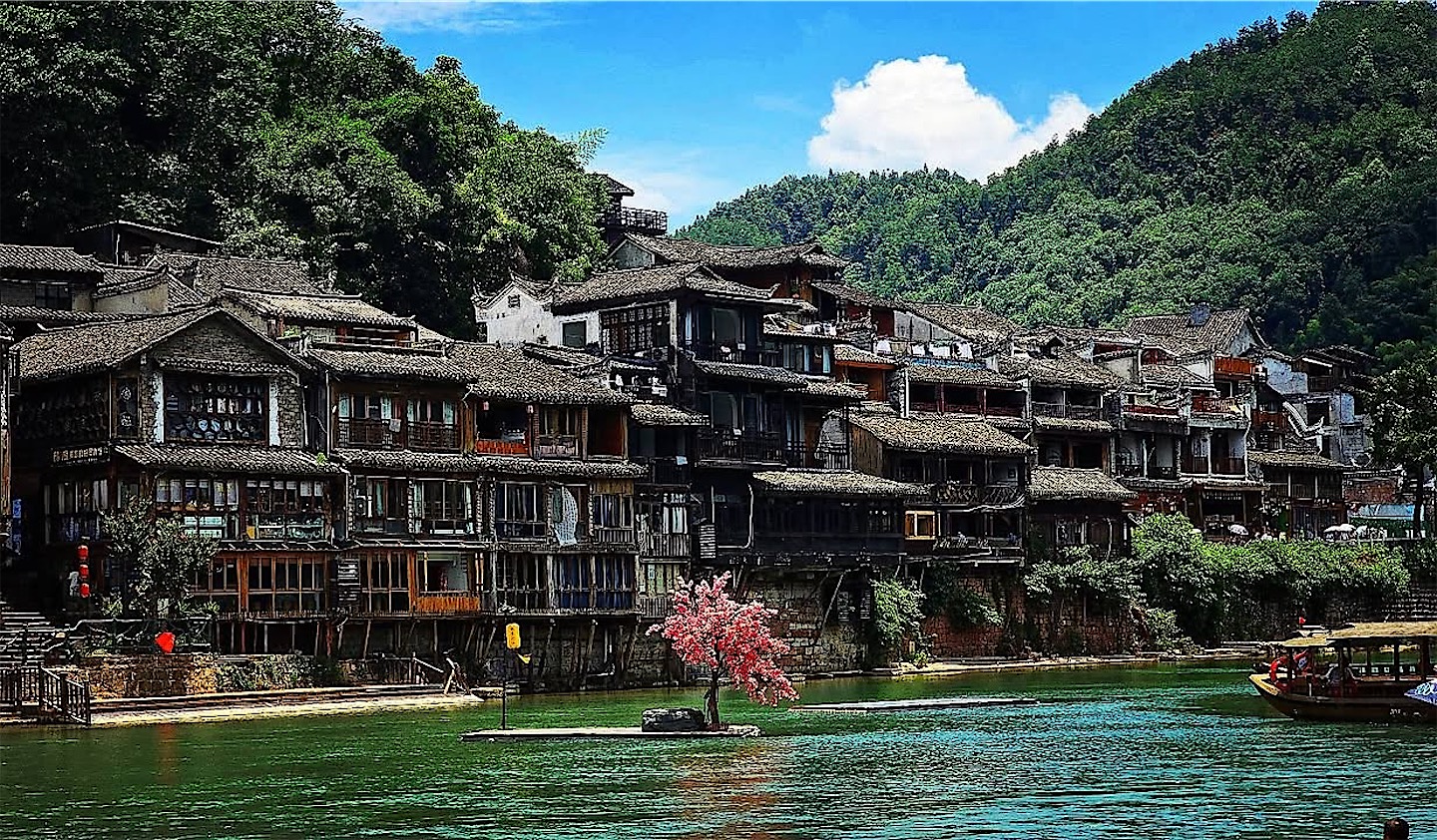
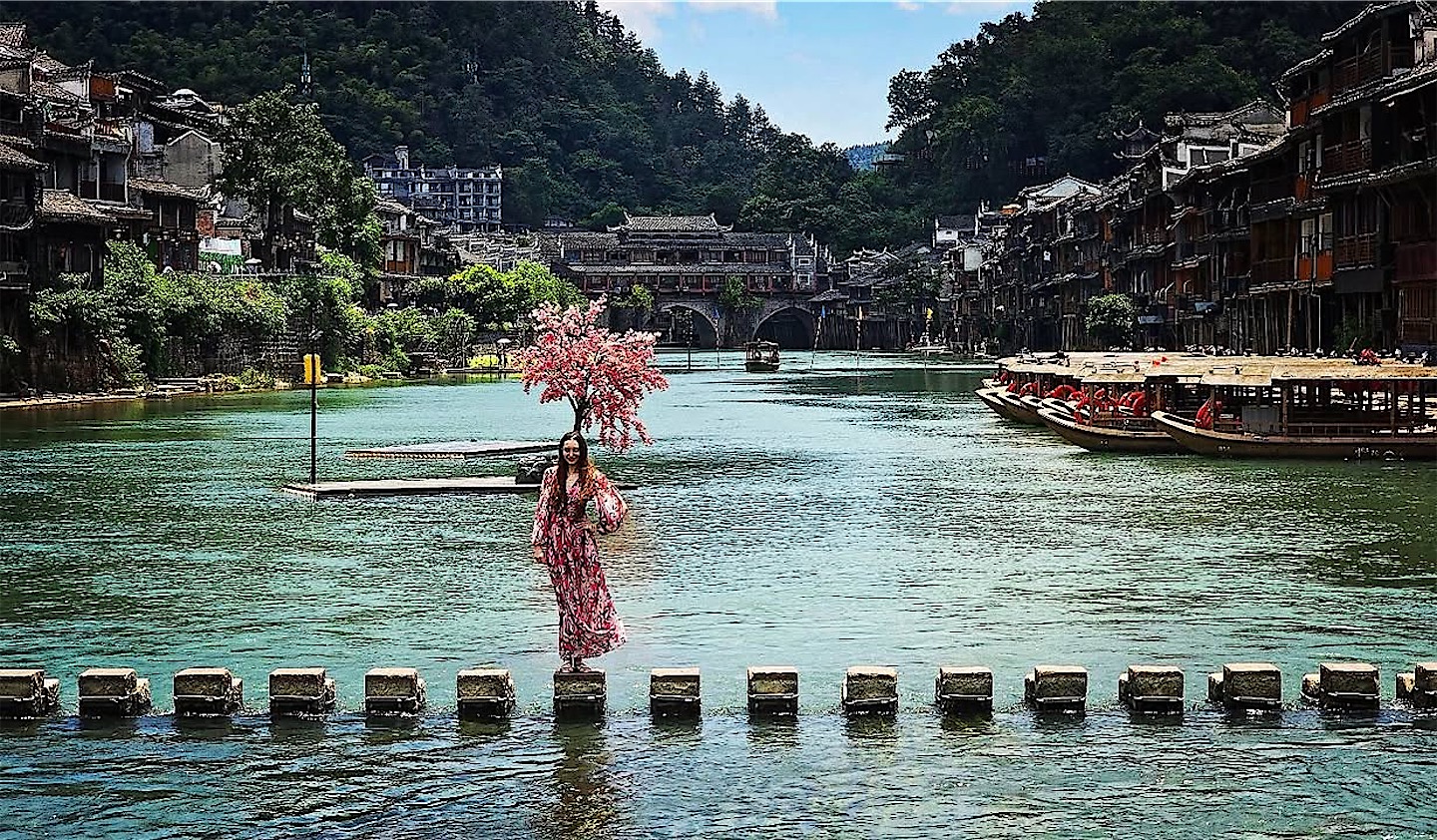
Fenghuang, the Ancient Phoenix City, was the second. Wooden stilt houses line both banks of the jade-green Tuo River, covered bridges span it, and a row of stepping stones lets you cross the river on foot. It is easily one of the most beautiful small towns in China.
Chongqing, the Buddhas of Dazu and one last delay
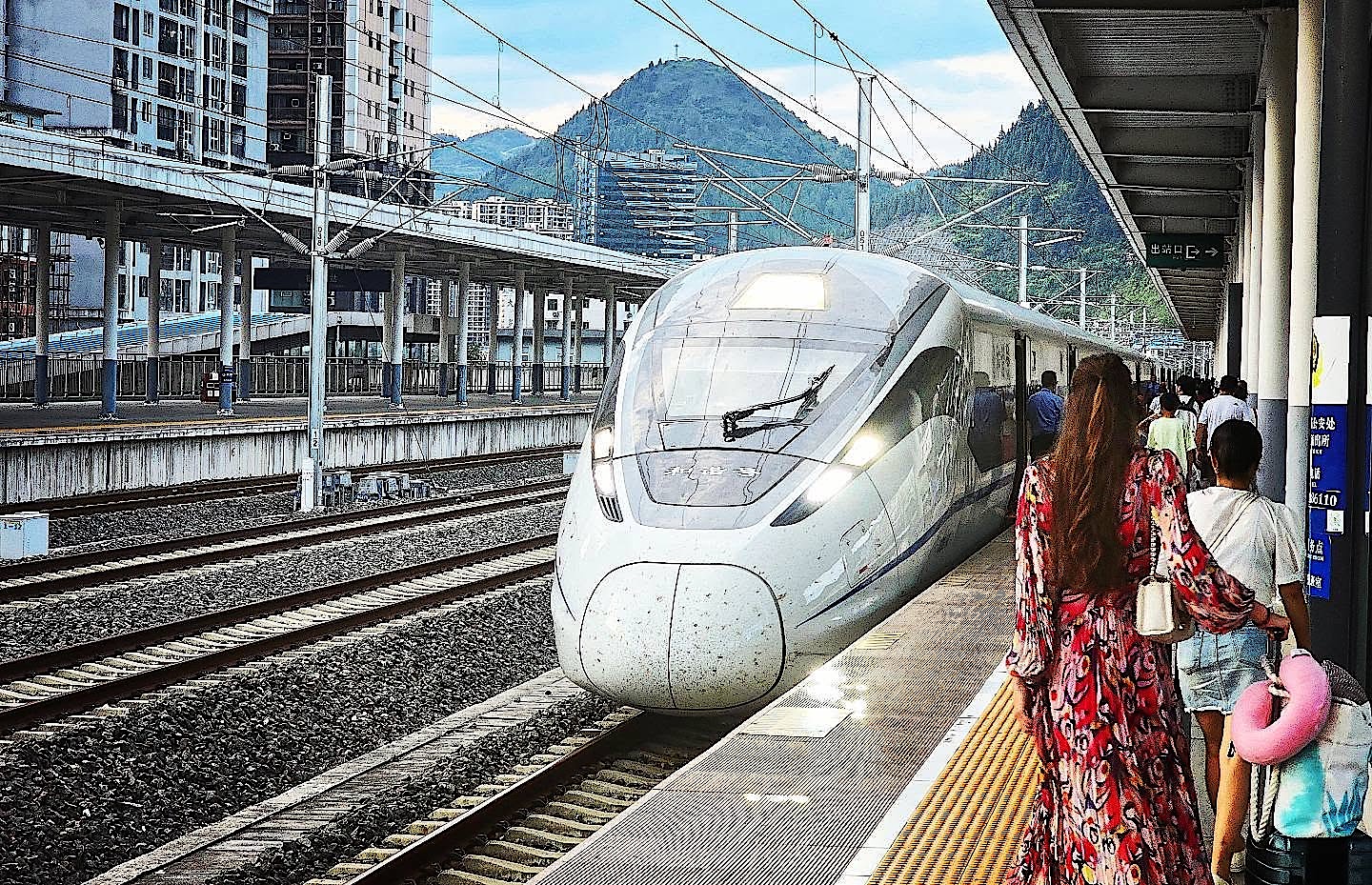
From Fenghuang we crossed into Guizhou to catch a bullet train at Tongren, a city best known as the gateway to the Buddhist mountain Fanjingshan. This time we only saw its station, and for once on this trip our transport was punctual.
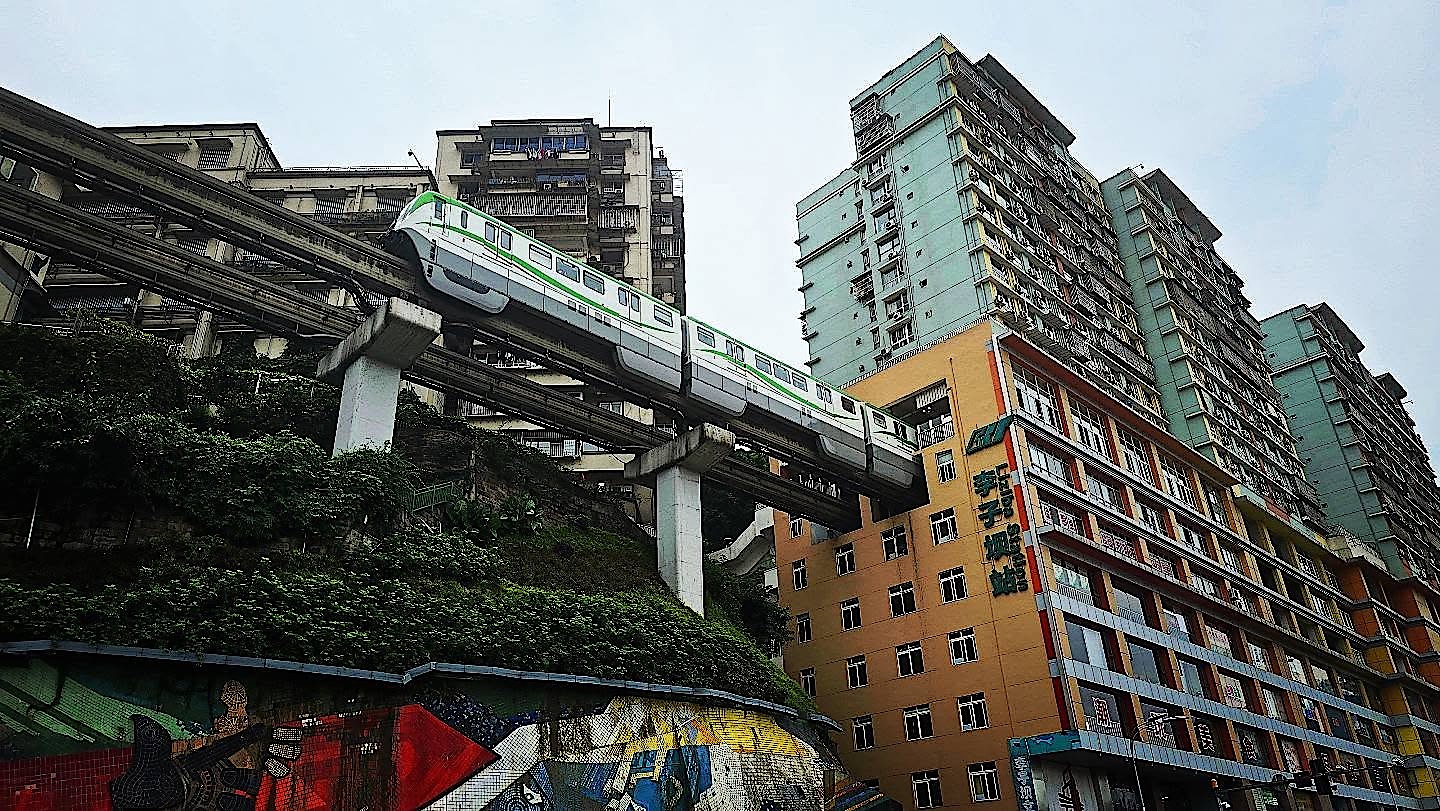
Chongqing is a different universe. The municipality has some 30 million inhabitants, although most of its area, roughly the size of Austria, is rural hills and farmland. The city itself is squeezed onto steep hills where the Jialing River meets the Yangtze, so roads, bridges and rail lines are stacked on top of each other. One monorail line runs straight through a residential building, with a station inside it, and one lift taught me that street level here can just as well be floor 22 as floor 0.
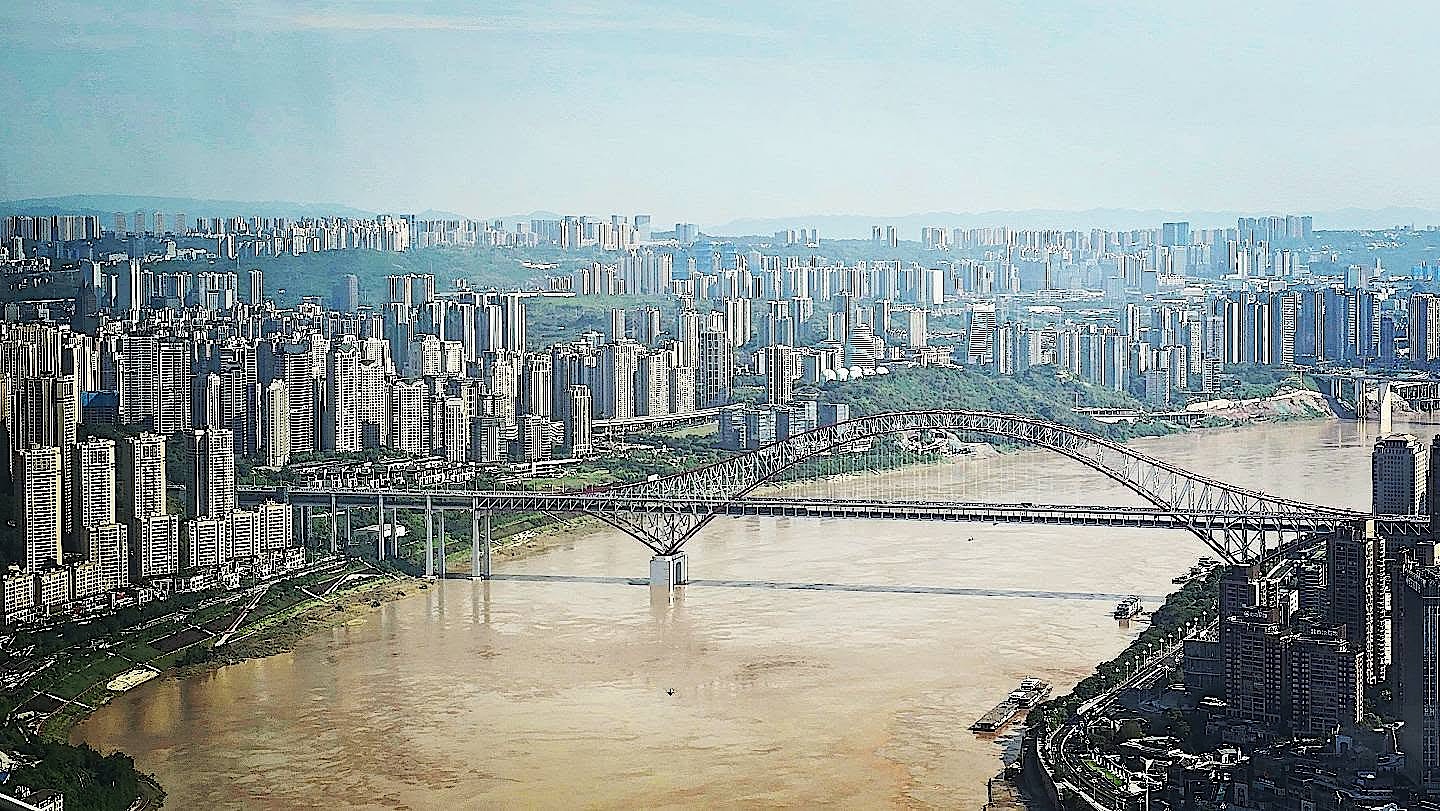
Luxury hotels in China are surprisingly affordable, so we stayed in a suite at the very top of one of the towers of Raffles City, a cluster of skyscrapers linked by a horizontal skybridge on the tip of the peninsula between the two rivers.
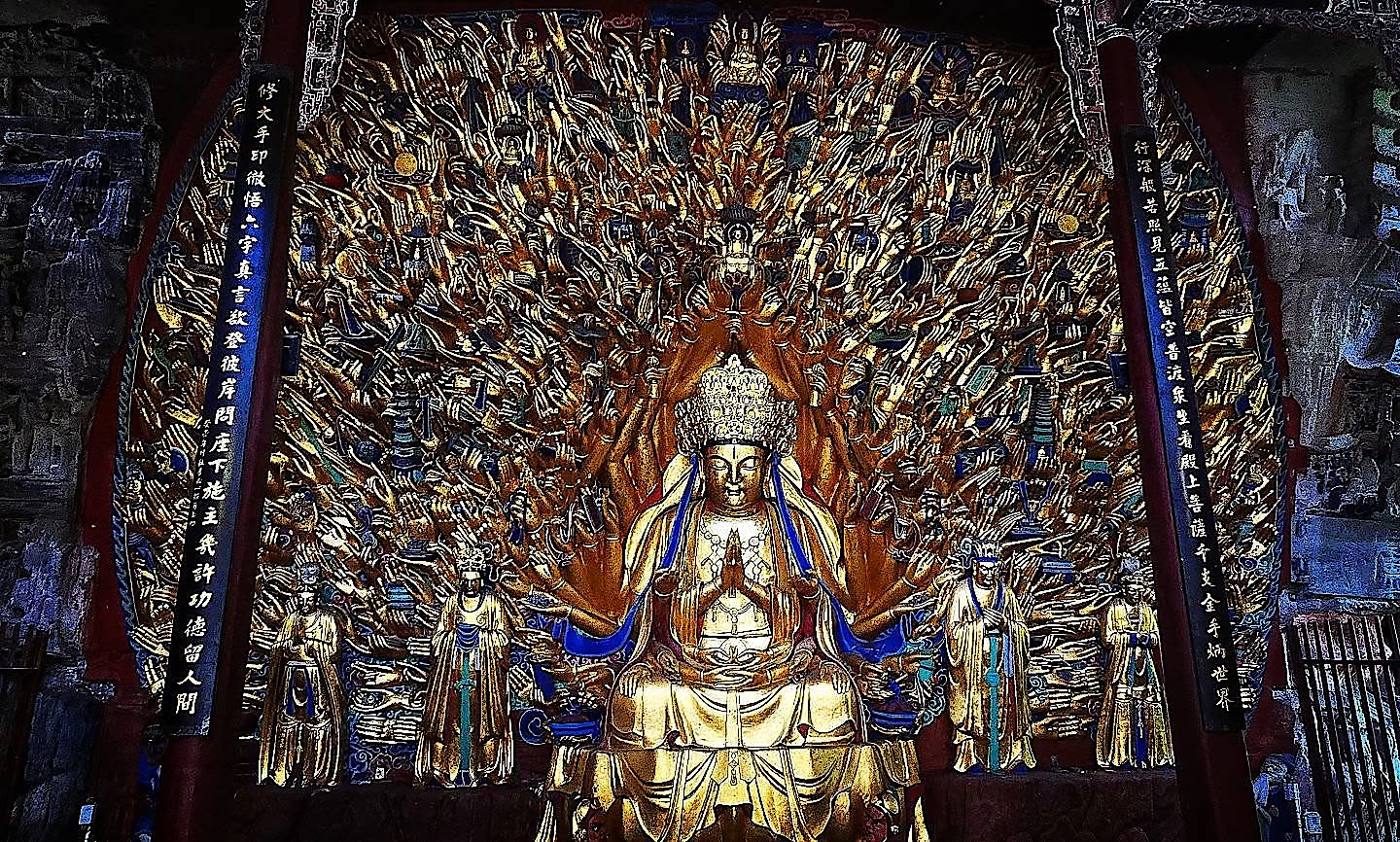
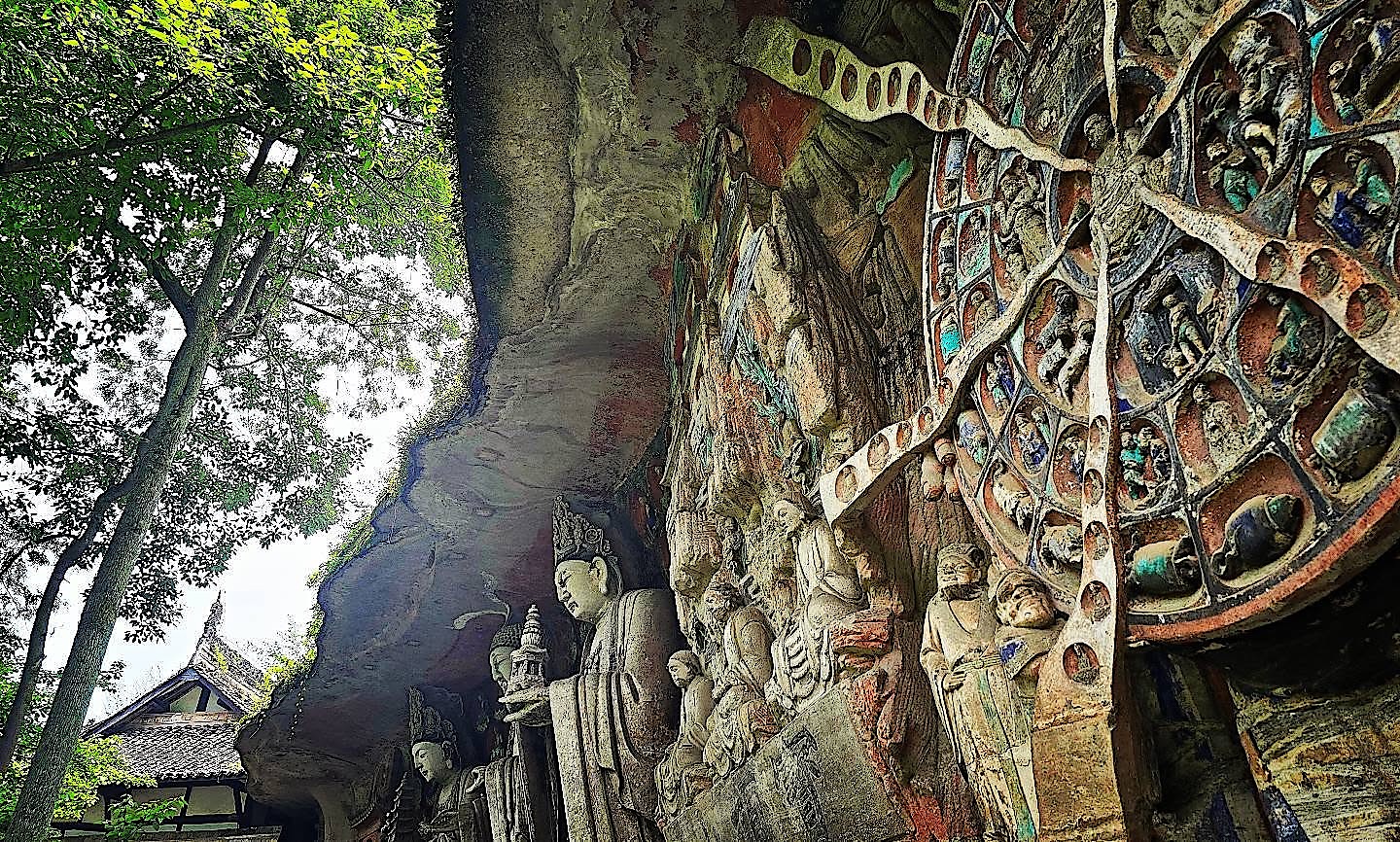
On our last day we made the trip out to the Dazu Rock Carvings. The gilded Thousand-Hand Guanyin, the Buddhist goddess of mercy, glows in the half-dark of its shelter with a fan of hands spreading out behind her. Outside, painted reliefs cover the cliffs, among them a huge wheel of rebirth.
The airlines had the last word. That evening our international connection was disrupted as well, and the next day was a very special one: Karyna's birthday, which we wanted to celebrate in Istanbul. At the last minute we managed to switch from China Southern to Air China business class at no extra cost, flying via Beijing instead of Guangzhou. Chinese airlines are not known for their business class, but I have rarely slept eight hours straight on a plane the way I did on that flight.
We would be back in China only two months later, for a journey from Chengdu to Tibet. First, though, came a weekend in Istanbul, and from there the journey continued to Nakhchivan.